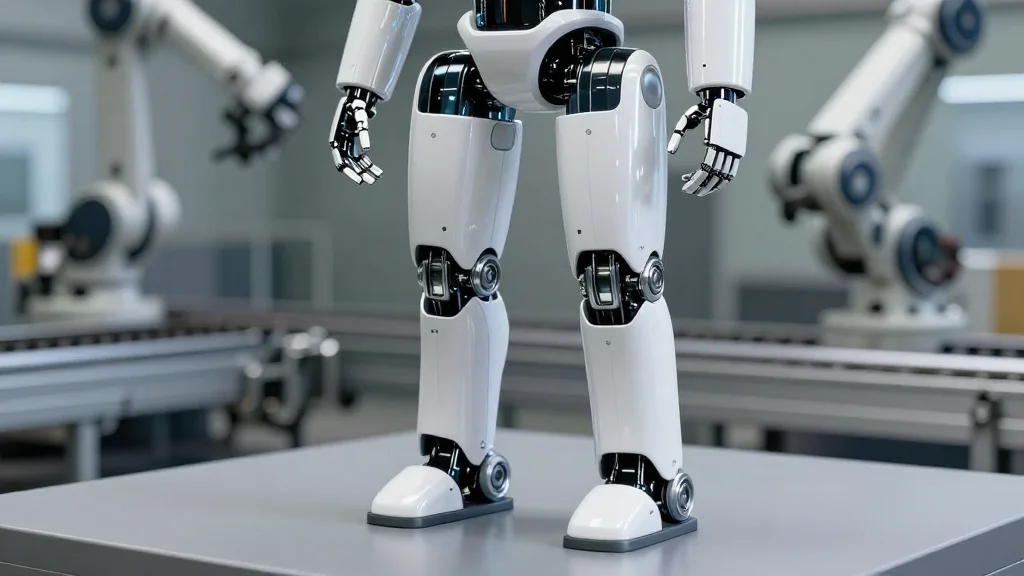
EngineAI Starts Mass Production of T800 Humanoid Robots at Shenzhen Plant

Why It Matters
The Shenzhen launch demonstrates that humanoid robots are moving beyond laboratory prototypes toward cost‑effective, high‑volume production. This shift could accelerate adoption in sectors that have been hesitant due to price and reliability concerns, such as retail, logistics, and public safety. Moreover, EngineAI’s integrated manufacturing model showcases how Chinese firms can leverage scale and supply‑chain coordination to challenge established Western players. If the T800 achieves the projected price reductions and reliability targets, it could trigger a cascade of new use‑cases, prompting enterprises to rethink labor automation strategies. The move also underscores the importance of domestic manufacturing capabilities in the AI‑driven robotics race, where control over hardware, software, and logistics can translate into faster market entry and stronger intellectual property protection.
Key Takeaways
- •EngineAI's Shenzhen base spans 12,000 sq m and can ship a T800 robot every 15 minutes.
- •The facility supports a scalable delivery capacity of 10,000 humanoid units per year.
- •CEO Zhao Tongyang highlighted the transition from pilot production to mass manufacturing.
- •Co‑founder Ren Guowen emphasized a networked manufacturing approach across Shenzhen and Henan.
- •Analysts project up to a 30% price reduction for the T800, potentially unlocking new commercial markets.
Pulse Analysis
EngineAI’s Shenzhen rollout is a watershed moment for the humanoid segment, which has long suffered from a mismatch between technical capability and economic viability. By embedding a closed‑loop, high‑throughput line within a single campus, EngineAI reduces the overheads that typically inflate robot prices. This mirrors the evolution seen in consumer electronics, where vertical integration and scale drove down costs dramatically. The 15‑minute cycle time suggests that the company has mastered both mechanical assembly precision and software validation, a combination that has eluded many competitors.
From a market perspective, the T800’s mass production could force incumbents like Boston Dynamics and Honda to reassess their pricing strategies or accelerate their own scaling efforts. The Chinese government's push for domestic AI and robotics leadership provides a supportive policy backdrop, but the real test will be whether the T800 can meet reliability standards in real‑world deployments. Early adopters in logistics and retail will serve as bellwethers; successful pilots could catalyze a broader shift toward humanoid labor in environments where dexterity and mobility are essential.
Looking ahead, EngineAI’s next steps—expanding capacity, adding new models, and building a regional service ecosystem—will determine if this initiative is a one‑off showcase or the foundation of a sustainable commercial ecosystem. If the company can sustain quality while scaling, it may set a new benchmark for how humanoid robots are manufactured, priced, and deployed globally.
EngineAI Starts Mass Production of T800 Humanoid Robots at Shenzhen Plant
Comments
Want to join the conversation?
Loading comments...