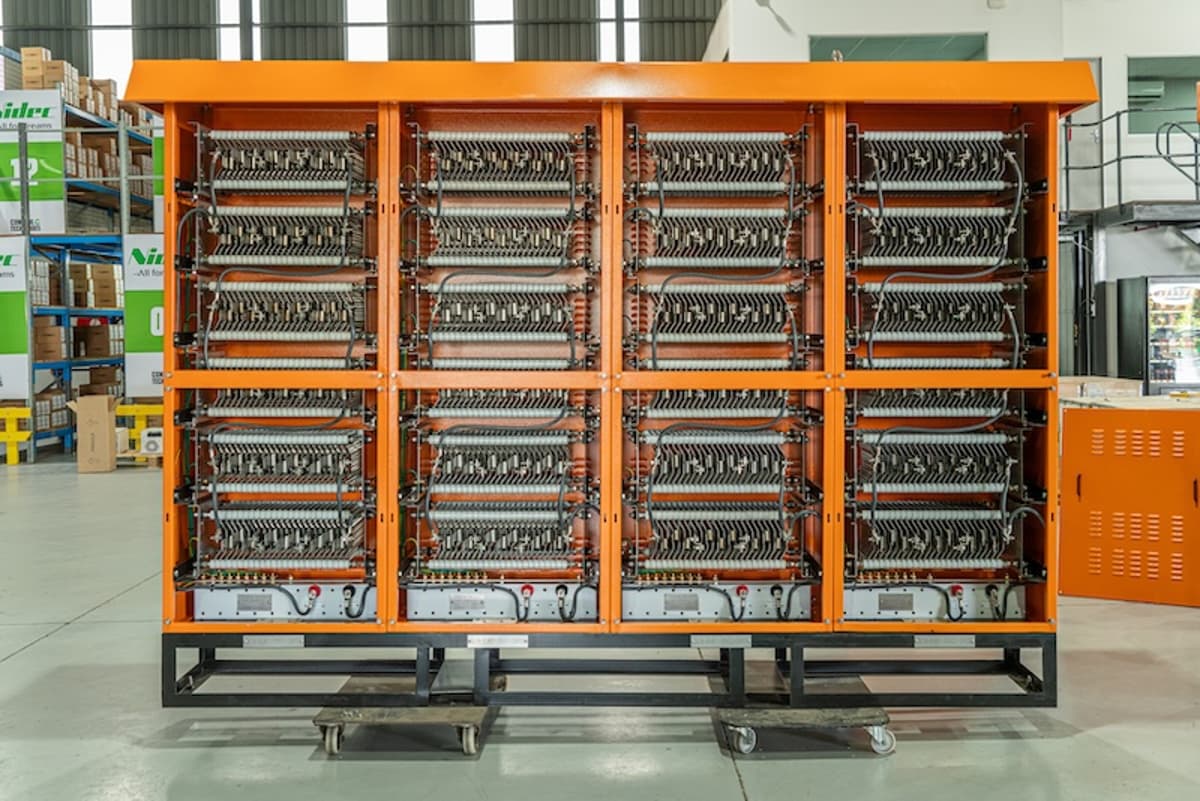
Engineering at the Edge: Nidec Powering the Future of Ship Loading at Dalrymple Bay
•February 10, 2026
0
Why It Matters
By modernising offshore loading equipment, the project cuts electrical hazards and operational downtime while improving energy utilization. It showcases how advanced VFD and safety technology can unlock reliable, scalable automation for remote industrial sites.
Key Takeaways
- •Nidec delivered 1 MW VFD MCC for offshore ship loader
- •System meets SIL 3 safety standards with dual Safe Torque Off
- •Modular design enables future upgrades and minimal downtime
- •Active Front End reconfigures to DC‑Bus for diesel generator
- •Ethernet/IP communication centralizes diagnostics across all VFD units
Pulse Analysis
The global push toward electrified, high‑efficiency offshore operations has placed stringent demands on power conversion equipment. Ship loaders such as the SL1A at Dalrymple Bay must handle up to 1 MW of regenerative energy while remaining connected to the 415 V Australian grid, a scenario that stresses conventional motor control centres. In addition, remote locations require robust protection, rapid fault isolation, and compliance with Safety Integrity Level 3 (SIL 3) standards. Meeting these requirements calls for advanced variable frequency drives (VFDs) and a control architecture that can seamlessly switch between grid and diesel power sources.
Nidec Drives Africa answered the challenge with an 18‑week design and build of a custom MCC built to IP44 and Form 4a specifications. The system houses two Active Front End (AFE) units, a 600 Vdc bus capable of 1800 A, and Control Techniques M702 VFDs equipped with dual Safe Torque Off (STO) to satisfy SIL 3 compliance. Ethernet/IP networking links each VFD, providing real‑time diagnostics and remote keypads. Withdrawable sliders allow technicians to access VFD power modules without dismantling the cabinet, dramatically reducing maintenance time and exposure to hazardous voltages.
The resulting installation delivers measurable business benefits: enhanced safety through dual STO, improved energy efficiency via automatic reconfiguration to an active DC‑bus when the diesel generator takes over, and a modular layout that supports future capacity upgrades with minimal disruption. For ports and offshore facilities, this project demonstrates how integrating sophisticated VFD technology can lower downtime, meet rigorous safety standards, and future‑proof critical infrastructure. As the maritime industry accelerates its shift toward greener, more automated operations, solutions like Nidec’s MCC are likely to become a benchmark for next‑generation offshore automation.
Engineering at the edge: Nidec powering the future of ship loading at Dalrymple Bay
0
Comments
Want to join the conversation?
Loading comments...