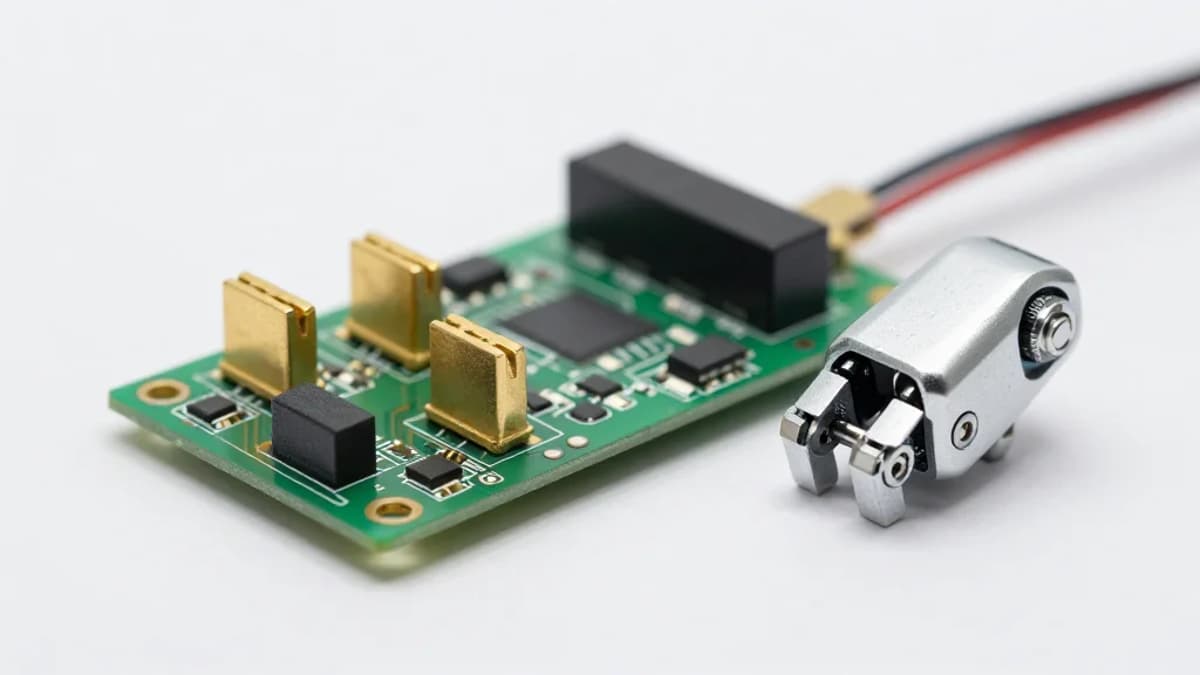
EPC Adds 3-Phase BLDC Motor Drive Inverter Evaluation Board for Humanoid Robot Joint Applications
•February 25, 2026
0
Why It Matters
The EPC91122 enables unprecedented power density and integration for robotic joints, accelerating the shift toward GaN‑based drive solutions in humanoid and drone platforms. Its compact, high‑frequency design reduces system size and improves dynamic performance, a critical advantage for next‑generation autonomous machines.
Key Takeaways
- •EPC91122 delivers 20 A RMS in 32 mm diameter
- •Integrated EPC33110 GaN stage switches up to 150 kHz
- •Includes STM32G431 MCU, encoder, RS‑485, power supplies
- •Fits inside robot joint, lowering loop inductance
- •Priced at $470, available immediately via Digi‑Key
Pulse Analysis
GaN technology is reshaping power electronics by offering higher switching speeds and lower losses than traditional silicon. In robotics, where space and weight constraints are paramount, these attributes translate into tighter integration and superior dynamic response. The EPC91122 leverages these benefits, embedding a three‑phase GaN inverter directly within a robot joint, which shortens current loops and boosts power density—key factors for achieving fluid, human‑like motion in humanoid platforms.
From a technical standpoint, the EPC91122’s EPC33110 module combines three monolithic GaN half‑bridges with built‑in gate drivers, enabling operation up to 150 kHz. This high‑frequency capability permits the use of smaller passive components, reducing overall board footprint and thermal load. Coupled with a pre‑programmed STM32G431 controller, precise current sensing, and a 1,024‑pulse encoder, developers gain a turnkey solution that accelerates prototyping while maintaining tight control over torque and position.
Commercially, the board’s $470 price point and immediate availability through Digi‑Key lower entry barriers for OEMs and research labs. By providing full design resources—schematics, BOM, and Gerbers—EPC shortens time‑to‑market for advanced robotic actuators. As manufacturers seek to embed intelligence and efficiency into compact form factors, the EPC91122 positions GaN as a mainstream choice for next‑generation e‑mobility, drone, and humanoid applications, potentially reshaping supply chains and design standards across the sector.
EPC adds 3-phase BLDC motor drive inverter evaluation board for humanoid robot joint applications
0
Comments
Want to join the conversation?
Loading comments...