ETM Brings Its Transverse Flux Motor Technology to Robotics
•February 4, 2026
0
Companies Mentioned


Why It Matters
The technology tackles robotics’ SWaP‑C2 constraints, giving manufacturers a performance edge while reducing reliance on external component suppliers.
Key Takeaways
- •TFM delivers up to 10× torque density
- •Licensing lets OEMs keep manufacturing control
- •Motor size and cost reduced significantly
- •Improves thermal reliability without sacrificing performance
- •Enables faster robotics development amid supply chain volatility
Pulse Analysis
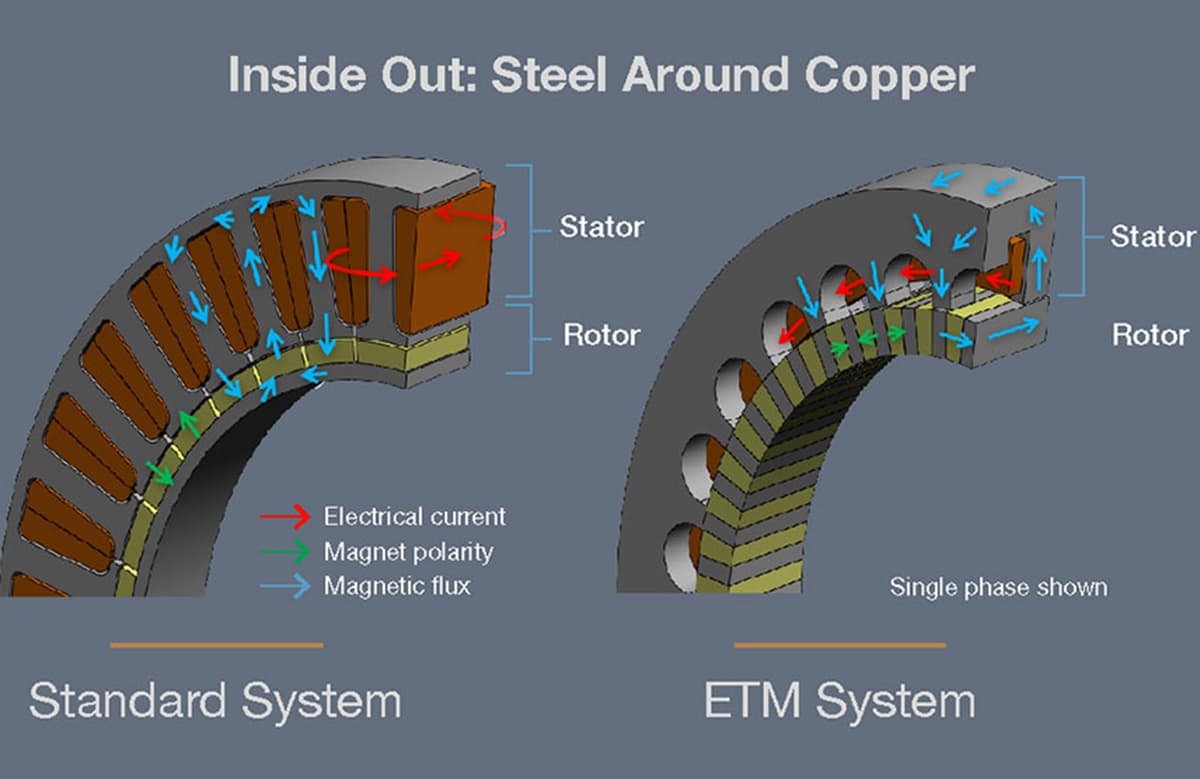
Robotics manufacturers are under mounting pressure to squeeze more torque out of ever‑smaller packages while keeping heat under control. Traditional high‑ratio actuators achieve torque density at the expense of efficiency, creating thermal bottlenecks that erode battery life and limit duty cycles. ETM’s transverse flux motor flips the conventional architecture—placing the steel stator around a low‑resistance circular coil—so magnetic flux is decoupled from the windings. This design delivers the torque density of high‑ratio systems but retains the low‑heat, high‑efficiency profile of low‑ratio drives, directly addressing the size‑weight‑power‑cost‑cooling (SWaP‑C2) triad that defines modern robot design.
From a technical standpoint, the TFM’s patented flux‑decoupling yields up to ten times the torque per unit volume of standard motors, while its simplified coil reduces copper usage and manufacturing steps. The result is a motor that can be made smaller, lighter, and cheaper without sacrificing thermal performance. Compared with direct‑drive alternatives, which often balloon in size to meet power demands, the TFM offers a more compact solution that integrates easily into existing robotic platforms, enabling higher payloads or longer runtimes for mobile units.
Beyond engineering gains, ETM’s licensing model reshapes the supply chain dynamics for robot OEMs. By allowing partners to produce the motor on‑site, companies retain full control over margins, intellectual property, and production schedules, mitigating the volatility that has plagued component sourcing in recent years. This approach accelerates time‑to‑market, lowers technical risk, and turns a once‑commodity motor into a differentiating asset. As robotics applications expand—from warehouse automation to autonomous marine vessels—the ability to embed high‑performance, cost‑effective actuation in‑house could become a decisive competitive advantage.
ETM brings its transverse flux motor technology to robotics
0
Comments
Want to join the conversation?
Loading comments...