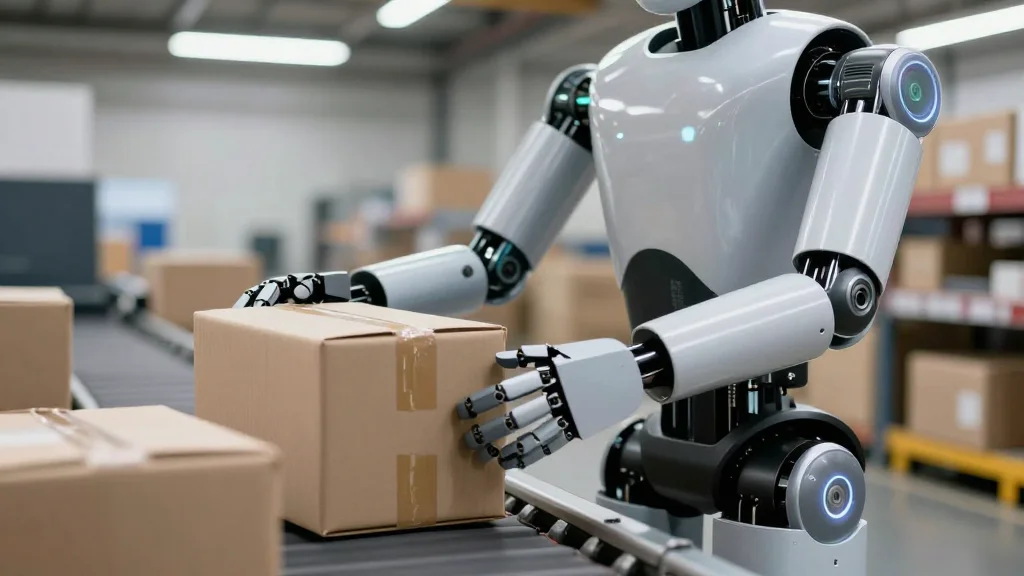
Figure AI's Helix-02 Robots Run Full 8‑Hour Shift at Human Speed

Companies Mentioned


Why It Matters
Figure AI’s eight‑hour autonomous shift demonstrates that humanoid robots can now operate at human‑level speed for an entire workday, a milestone that could reshape labor dynamics in manufacturing and logistics. By eliminating reliance on cloud‑based inference, the Helix‑02 platform offers lower latency, higher reliability, and reduced operational costs, making it attractive for facilities that cannot guarantee constant connectivity. The breakthrough also raises competitive pressure across the robotics sector. Companies that have focused on specialized arms or tethered systems must now contend with a mobile, dexterous platform capable of handling a broad range of tasks. If Figure AI can commercialize the technology at scale, it could accelerate the displacement of low‑skill manual jobs while creating demand for new roles in robot supervision, maintenance, and AI training. Furthermore, the demonstration validates the viability of training sophisticated humanoid policies with relatively modest data—just eight hours of curated demonstrations derived from a larger 500‑hour dataset. This efficiency could lower the barrier to entry for other firms seeking to develop task‑specific robot intelligence, potentially democratizing advanced automation. Overall, the event signals a shift from proof‑of‑concept prototypes to production‑ready humanoids, setting a new performance baseline for the industry.
Key Takeaways
- •Figure AI’s Helix‑02 robots completed an eight‑hour autonomous shift on May 13, 2026, matching human package‑sorting speed (~3 seconds per item).
- •The system runs two onboard neural networks: a 7–9 Hz vision‑language model (S2) and a 200 Hz visuomotor policy (S1) controlling 35 joints.
- •Only eight hours of curated demonstration data, drawn from a 500‑hour tele‑operated dataset, were needed to train the warehouse‑ready policy.
- •Helix‑02 eliminated roughly 109,000 lines of legacy code, simplifying the software stack and enabling cloud‑free operation.
- •Figure AI plans a live fulfillment‑center pilot later this summer and a developer kit release in early 2027.
Pulse Analysis
Figure AI’s Helix‑02 marks a watershed in the convergence of robotics hardware and on‑board AI. Historically, humanoid platforms have struggled with latency and reliability because they relied on external compute clusters for perception and planning. By embedding a two‑layer neural architecture directly on the robot, Figure AI sidesteps bandwidth constraints and reduces failure points, a design choice that could become the new industry norm. The 200 Hz control loop, in particular, offers a granularity that rivals human reflexes, enabling smooth manipulation of delicate objects—a capability that has long been a differentiator for human workers.
From a market perspective, the demonstration intensifies the arms race among established players. Agility Robotics’ Cassie and Boston Dynamics’ Atlas have demonstrated impressive locomotion, but neither has yet shown sustained, high‑throughput manipulation at human speed in a production setting. Figure AI’s claim of parity with human operators on a repetitive sorting task could force competitors to accelerate their own AI integration efforts or risk obsolescence. Investors are likely to view this as a validation of the $200‑plus million capital influx into humanoid robotics over the past two years, potentially unlocking another round of funding for firms that can match or exceed Helix‑02’s performance.
The broader economic implications hinge on scalability. If Helix‑02 can be produced at a cost comparable to high‑end industrial arms and maintain reliability across diverse environments, manufacturers may opt for a single, versatile robot instead of a fleet of specialized machines. This could compress supply chains, reduce floor space, and lower total cost of ownership. However, the technology also raises labor policy questions: rapid adoption could accelerate job displacement in low‑skill roles, prompting calls for reskilling programs and regulatory frameworks. The next six months—when Figure AI moves from lab to live‑site trials—will be the true test of whether the Helix‑02 platform can deliver on its promise and reshape the economics of modern manufacturing.
Figure AI's Helix-02 Robots Run Full 8‑Hour Shift at Human Speed
Comments
Want to join the conversation?
Loading comments...