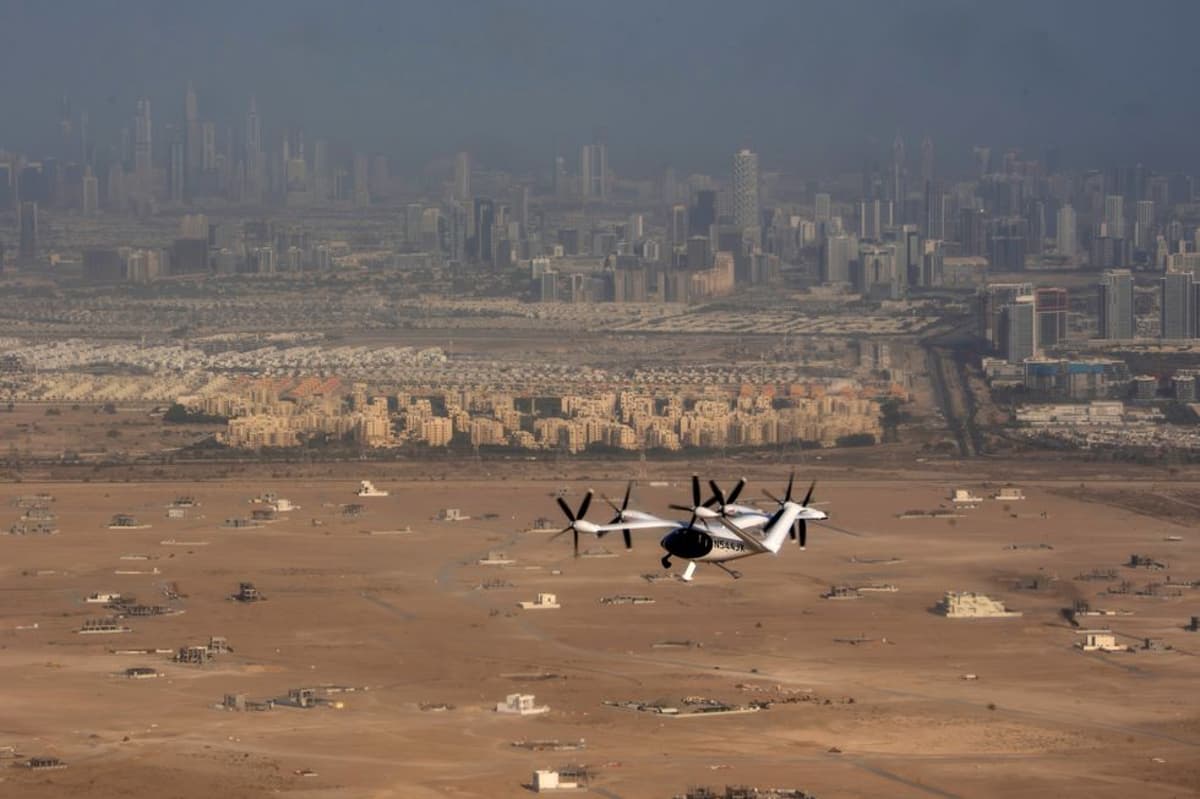
First Air Taxi Service to Launch in Dubai in 2026
•December 28, 2025
0
Companies Mentioned


Why It Matters
Dubai’s early adoption gives Joby a competitive edge in the global eVTOL race, demonstrating viable urban air mobility and accelerating market acceptance before U.S. certification hurdles are cleared.
Key Takeaways
- •Joby secures six‑year exclusive air‑taxi rights in Dubai
- •Four vertiports planned at airport, mall, resort, university
- •$3 bn funding backs Joby’s S4 eVTOL development
- •Dubai’s regulatory support bypasses slower FAA certification
- •Early 2026 flights will be non‑paying passenger trials
Pulse Analysis
The eVTOL sector has moved from speculative concepts to tangible projects, largely spurred by Uber’s Elevate vision and substantial private capital. Joby Aviation, the most heavily funded U.S. developer, has attracted over $3 billion, with a notable $900 million commitment from Toyota, positioning it to commercialize its six‑motor S4 aircraft. This financial backing underpins rigorous testing, battery integration, and the software stack required for safe point‑to‑point urban flights, setting a benchmark for emerging competitors.
Dubai’s partnership with Joby illustrates how forward‑looking governments can accelerate advanced air mobility. The six‑year exclusive contract with the Roads and Transport Authority, coupled with Skyports’ design of four strategically located vertiports, creates a seamless physical and digital ecosystem. By approving limited non‑paying passenger operations before FAA type certification, the UAE demonstrates a pragmatic regulatory approach that balances safety with innovation, offering a template for other jurisdictions eager to capture early market share.
The launch’s ripple effects extend across the aviation and mobility landscapes. Early operational data from Dubai will inform certification pathways, influence aircraft design refinements, and validate business models for premium air‑taxi services. Competitors such as EHang and other Western startups must now accelerate their timelines or seek similar government alliances. For investors, Joby’s Dubai debut signals a de‑risking milestone, potentially unlocking broader financing rounds and spurring ancillary markets in vertiport construction, charging infrastructure, and urban air traffic management.
First Air Taxi Service to Launch in Dubai in 2026
0
Comments
Want to join the conversation?
Loading comments...