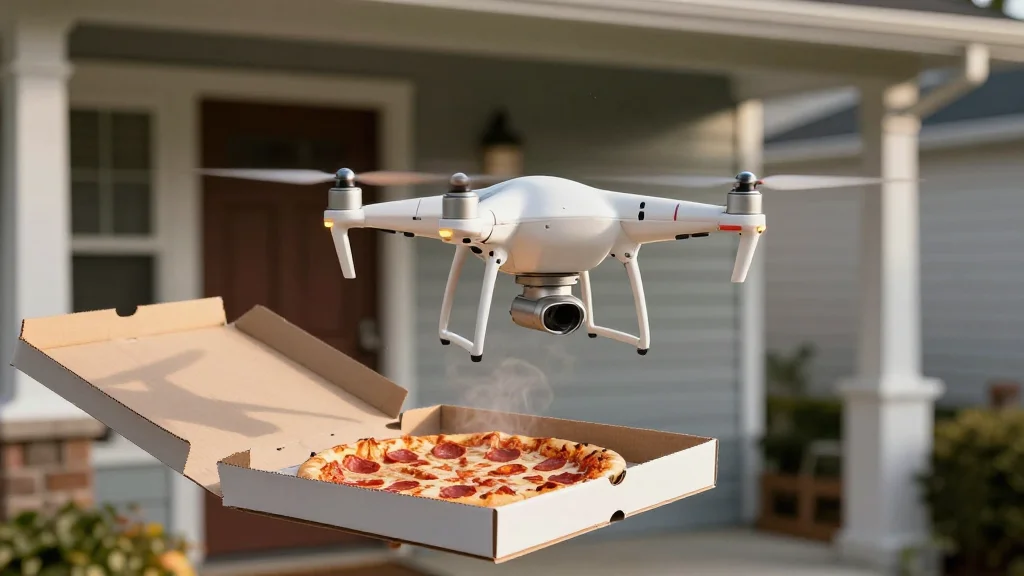
Flytrex and Little Caesars Launch Drone Pizza Delivery in Texas

Why It Matters
The Flytrex‑Little Caesars partnership demonstrates that autonomous aerial robotics can move beyond niche parcel delivery into mainstream consumer services. By delivering hot food in minutes, drones could reshape the economics of last‑mile logistics, reducing reliance on road vehicles and cutting delivery times dramatically. Success in this pilot could accelerate regulatory frameworks, encourage other food brands to explore drone integration, and spur investment in higher‑payload, AI‑driven drone platforms. Moreover, the service highlights a shift in consumer expectations: speed and convenience are becoming as critical as price. If drones can consistently meet these demands, traditional delivery models may need to adapt or risk losing market share. The rollout also provides valuable data on safety, noise, and community impact, informing future policy and technology development.
Key Takeaways
- •Flytrex partners with Little Caesars to deliver two large pizzas by drone in ~4.5 minutes
- •Service limited to a 4‑mile radius and 8.8‑lb payload in Wylie, Texas
- •Sky2 octocopter uses eight motors, dual batteries, and AI navigation for reliability
- •Flytrex has completed over 200,000 drone deliveries nationwide, with 1,000+ monthly orders in North Carolina
- •First direct POS integration between a drone platform and a restaurant chain
Pulse Analysis
Flytrex’s entry into the fast‑food arena signals a maturation of commercial drone logistics. Early pilots focused on medical supplies and lightweight parcels; today’s payload‑capable drones like Sky2 are engineered for the higher weight and temperature‑sensitive demands of food delivery. This evolution mirrors a broader industry trend where robotics firms are moving up the value chain, targeting higher‑margin services that can justify the regulatory and operational overhead.
Historically, the biggest barrier to drone delivery has been payload capacity and reliability. By introducing an octocopter with motor redundancy and dual‑battery power, Flytrex addresses both safety concerns and the need for heavier loads. The partnership with a national brand such as Little Caesars also provides a credible use case that can persuade regulators and investors alike. If the Wylie pilot demonstrates consistent on‑time performance and low incident rates, it could unlock a cascade of approvals for similar services in dense suburban markets across the United States.
From a competitive standpoint, the move pits Flytrex against well‑funded rivals like Wing (Alphabet) and Zipline, which have already secured contracts with grocery and pharmacy chains. However, Flytrex’s focus on a high‑frequency, low‑value product—pizza—offers a different growth trajectory. Pizza orders are frequent, predictable, and have a narrow delivery window, making them an ideal proving ground for rapid‑turnaround logistics. Success here could pave the way for expansion into other high‑volume food categories, creating a new revenue stream for robotics firms and reshaping the economics of the last‑mile delivery market.
Flytrex and Little Caesars Launch Drone Pizza Delivery in Texas
Comments
Want to join the conversation?
Loading comments...