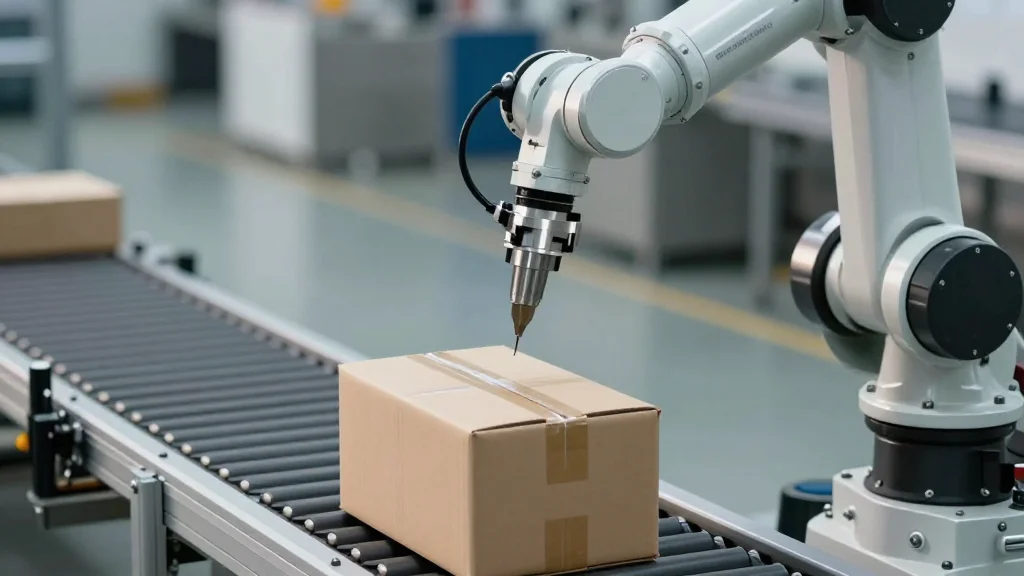
From Prototype to Deployment: Robotics Lessons Learned on the Shop Floor
Why It Matters
These deployment lessons underscore the need for more resilient, user‑friendly automation solutions, a factor that could accelerate U.S. manufacturing productivity and narrow the global robot gap.
Key Takeaways
- •Ultra Robotics added KVMs after early reset failures
- •Fauna Robotics tests carpet friction to refine reinforcement‑learning policies
- •Shipping label adhesion issues revealed lab‑testing gaps
- •U.S. installed 295k robots in 2024, far behind China’s 2.6M
- •Simpler, plug‑and‑play robots aim to reduce integration costs
Pulse Analysis
Deploying industrial robots is more than a technical sprint; it is a systems engineering challenge that surfaces only when machines leave the controlled lab environment. Startups like Ultra Robotics discovered that seemingly minor omissions—a missing keyboard‑video‑mouse (KVM) interface or a gripper that strips fresh shipping labels—can cause costly downtime. These incidents push companies to embed self‑diagnostic capabilities and robust hardware safeguards, turning failure modes into design criteria. The lesson resonates across the sector: real‑world variables such as label adhesion timing, floor friction, and chemical exposure demand exhaustive field testing before scaling.
The disparity between U.S. and Chinese robot adoption amplifies the urgency of these insights. In 2024, China installed roughly 295,000 industrial robots—nearly nine times the United States’ deployment—fueling its manufacturing edge. Analysts attribute the gap to U.S. firms’ risk aversion and the perceived expense of hiring specialized integrators. By simplifying robot interfaces to an iPhone‑like plug‑and‑play experience, startups aim to lower integration barriers, making automation accessible to midsize manufacturers who lack deep robotics expertise. This shift could democratize productivity gains and help the U.S. regain competitiveness.
Looking ahead, best practices are crystallizing: incorporate KVMs or remote reset mechanisms, use easily shippable battery packs, and validate performance on diverse floor types and material environments. Reinforcement‑learning policies must be trained on a spectrum of real‑world surfaces, while sealing solutions should withstand aggressive chemicals common in certain industries. Companies that embed these safeguards early will not only reduce field failures but also accelerate adoption cycles, positioning themselves as reliable partners in the next wave of manufacturing automation.
From prototype to deployment: Robotics lessons learned on the shop floor
Comments
Want to join the conversation?
Loading comments...