From Research Lab to Factory Floor: Why Humanoid Robots Need an Enterprise-Grade Foundation
Why It Matters
A unified hardware‑software foundation enables humanoid robots to meet industrial safety, uptime, and compliance demands, unlocking scalable commercial use beyond showcase events.
Key Takeaways
- •Intel Core Ultra integrates CPU, GPU, and NPU on one SoC
- •RHEL’s PREEMPT_RT kernel keeps control loops under 30 µs jitter
- •Unified stack simplifies updates across thousands of robots
- •Open standards like ROS 2, OpenVINO avoid vendor lock‑in
- •Circulus uses the platform to run a Unitree G1 in production
Pulse Analysis
The hype around humanoid robots often stops at the demo stage, where impressive locomotion and perception mask a deeper engineering problem: delivering deterministic, mixed‑critical performance at the edge. Production robots must juggle kilohertz‑level balance loops, multi‑sensor fusion, and AI inference on power‑constrained hardware, all while maintaining safety certifications and long‑term reliability. Traditional approaches stitch together separate CPUs, GPUs, and accelerators, creating fragmented toolchains that cannot scale to fleet‑wide deployments.
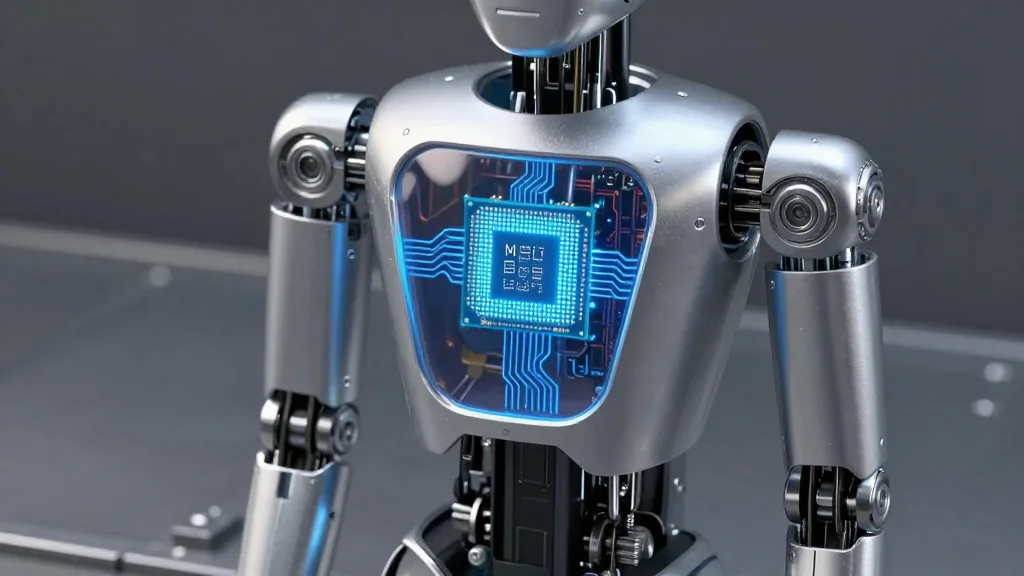
Intel’s Core Ultra (Series 3) tackles this by unifying compute resources on a single SoC. The CPU cores handle hard real‑time tasks and ROS 2 orchestration, the integrated Arc GPU accelerates vision pipelines, and the on‑die NPU processes low‑power AI workloads such as voice detection. Shared memory and common APIs—OpenVINO and oneAPI—let developers allocate work to the optimal engine without rewriting code for disparate platforms, delivering sustained performance for 16‑hour shifts on a factory floor.
Red Hat Enterprise Linux adds the operating‑system discipline needed for enterprise robotics. Its PREEMPT_RT kernel guarantees sub‑30 µs jitter, while long‑term support, stable ABI, and SELinux‑based security meet the rigorous compliance demands of human‑shared environments. By integrating with ROS 2 and supporting containerized workloads, RHEL enables consistent software delivery from a developer’s workstation to thousands of robots. The Circulus‑Unitree G1 demonstration at Red Hat Summit 2026 illustrates how this open, enterprise‑grade stack can bridge the gap from prototype to scalable, secure robot fleets.
From research lab to factory floor: Why humanoid robots need an enterprise-grade foundation
Comments
Want to join the conversation?
Loading comments...