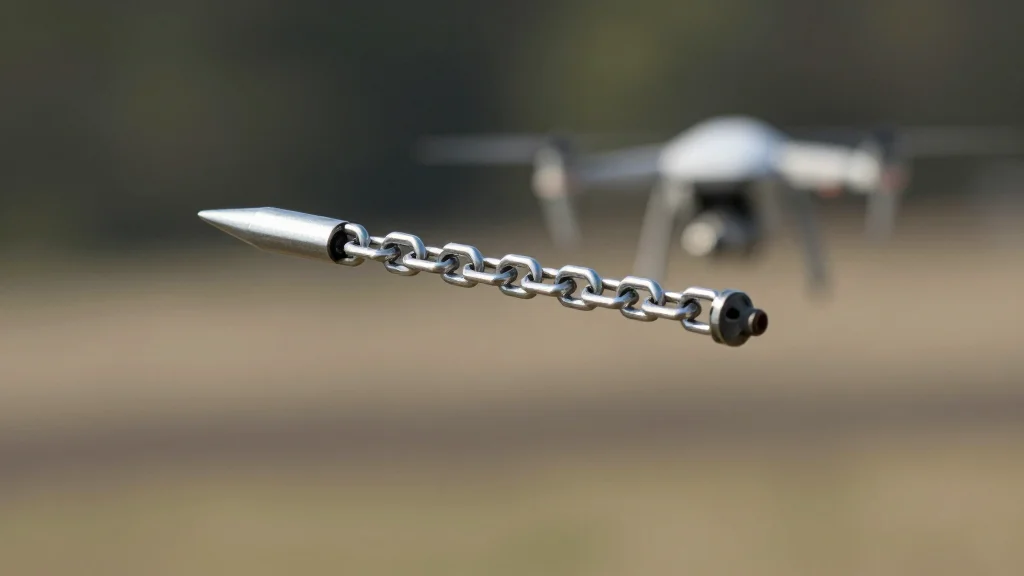
German Researchers Unveil Chain‑Firing Drone Interceptor to Counter UAV Threats

Why It Matters
The chain‑firing interceptor addresses a growing security gap: the proliferation of inexpensive, off‑the‑shelf drones that can threaten airports, power plants and public events. By offering a non‑lethal, low‑cost method to neutralise UAVs, the technology could reduce reliance on expensive electronic jamming or kinetic weapons, lowering barriers for smaller operators to protect critical assets. Moreover, the approach sidesteps the legal and safety concerns tied to explosive counter‑measures, potentially easing regulatory approval and accelerating deployment. If adopted widely, the system could reshape the counter‑UAV market, prompting incumbents to explore hybrid solutions that blend kinetic and electronic defenses. It also signals a broader trend in robotics research: repurposing simple mechanical principles for high‑tech security challenges, which may inspire further low‑tech innovations across the defence and civilian safety sectors.
Key Takeaways
- •KIT researchers unveiled a chain‑firing drone interceptor prototype on May 6, 2026.
- •Chains are 3‑4 mm thick and wrap around UAV rotors, stopping propeller motion instantly.
- •Germany logged over 1,000 suspicious drone incidents in 2025, highlighting demand for affordable defenses.
- •The system avoids explosives and complex electronics, offering a cheaper alternative to existing counter‑UAV tech.
- •Field trials with German federal agencies are planned for later 2026, with potential licensing deals on the horizon.
Pulse Analysis
The KIT chain interceptor reflects a pragmatic pivot in the counter‑UAV sector, where cost, regulatory compliance and rapid deployment have become as critical as raw performance. Traditional solutions—radio‑frequency jammers, high‑energy lasers, and kinetic projectiles—carry hefty price tags and often require extensive certification, limiting their use to well‑funded military or large‑scale commercial operators. By leveraging a simple mechanical principle, KIT sidesteps these hurdles, offering a solution that can be manufactured at scale with minimal electronic components. This could democratise drone defence, allowing municipal authorities and private facilities to field effective protection without draining budgets.
Historically, kinetic counter‑UAV methods have relied on nets or tethered projectiles, which can be cumbersome and pose collateral risks. The chain approach improves on these designs by using a slender, high‑strength metal that can be launched quickly and accurately, reducing the risk of unintended damage. Its reliance on physics rather than electronics also means it is less vulnerable to counter‑measures such as signal spoofing. As drone technology continues to evolve—smaller, faster, and more autonomous—the need for adaptable, low‑signature defenses will intensify. KIT’s prototype could catalyse a wave of similar low‑tech innovations, prompting established defence firms to rethink product roadmaps and potentially leading to a hybrid market where kinetic and electronic solutions coexist.
Looking ahead, the key to commercial success will be validation in real‑world environments. Field trials with German federal agencies will test the system against a variety of UAV platforms, weather conditions, and engagement distances. If the trials confirm reliability, we can expect licensing agreements with security contractors and possibly a surge of start‑ups aiming to refine the launch mechanism, integrate AI‑guided targeting, or adapt the concept for maritime or ground‑based drone threats. In a market projected to exceed $3 billion by 2028, a low‑cost, physics‑based solution could capture a sizable niche, especially among operators who have been priced out of existing technologies.
German Researchers Unveil Chain‑Firing Drone Interceptor to Counter UAV Threats
Comments
Want to join the conversation?
Loading comments...