German Startup SWARM Biotactics Deploys Cyborg Cockroach Swarms for Defense

Companies Mentioned
Why It Matters
The debut of SWARR Biotactics' cyborg insect swarm signals a shift toward bio‑hybrid platforms that blend living organisms with electronic control. Such systems could provide militaries with ultra‑stealthy reconnaissance capabilities, reducing reliance on larger, more detectable drones. At the same time, the approach raises profound ethical questions about the manipulation of sentient life for combat purposes, potentially prompting new regulatory frameworks. Beyond defense, the underlying technology—miniaturized sensors, low‑power communication, and neuro‑stimulation—could inspire civilian applications in disaster response, environmental monitoring, and infrastructure inspection, where navigating tight spaces is critical. The commercial viability of these insects will hinge on reliability, scalability, and public acceptance of bio‑engineered surveillance tools.
Key Takeaways
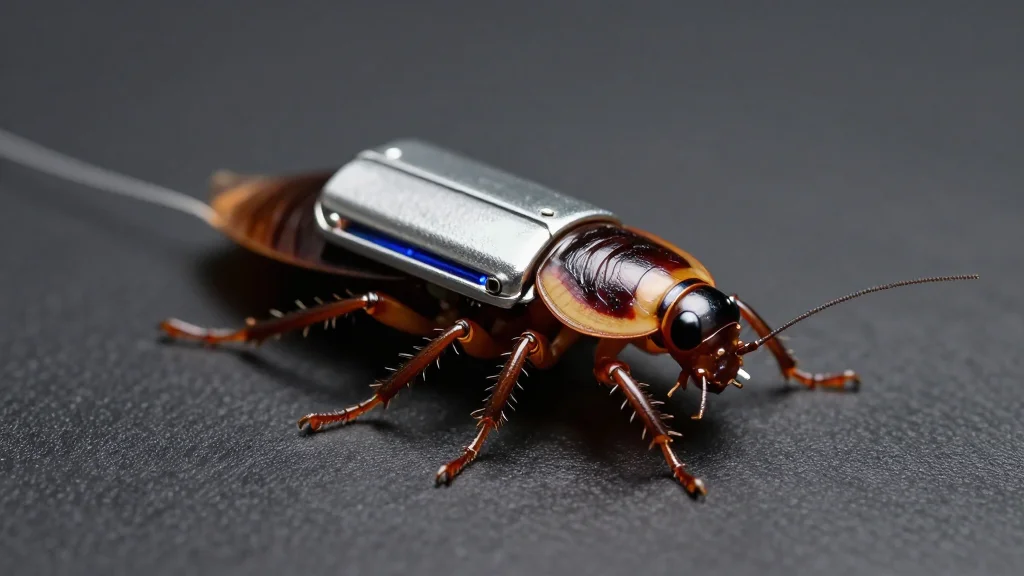
- •SWARM Biotactics, founded in 2024, demonstrated a swarm of Madagascar hissing cockroaches equipped with electrodes and micro‑backpacks.
- •Electrodes are implanted in the antennae; handheld joysticks deliver calibrated pulses to steer the insects.
- •Backpacks weigh <1 gram and contain a low‑power radio, GPS‑assisted navigation, and a miniature camera.
- •Experts Coby Schal and Alper Bozkurt highlighted decades‑old DARPA research as the foundation for this work.
- •Planned field trials with the German Bundeswehr aim to cover a 500‑meter radius and stream live video.
Pulse Analysis
The emergence of cyborg insect swarms reflects a broader trend where defense innovators are turning to biology to overcome the size and acoustic limits of traditional robotics. Historically, DARPA's HI‑MEMS program proved that insects could carry micro‑electronics, but scaling those prototypes proved costly and unreliable. SWARR Biotactics appears to have cracked a cost‑effective niche by using readily available hissing cockroaches and off‑the‑shelf micro‑electronics, potentially lowering the per‑unit price to a few dollars—a stark contrast to the tens of thousands required for a small UAV.
From a market perspective, the defense sector is hungry for low‑observable platforms that can infiltrate dense urban environments. If SWARR's technology can deliver consistent performance, it could spawn a new class of suppliers focused on bio‑robotic components, from specialized electrode manufacturers to micro‑battery developers. However, the path to adoption is fraught with regulatory and ethical hurdles. International humanitarian law does not yet address the use of living organisms as weapons, and public backlash could impede funding.
Strategically, the technology could erode the advantage of traditional ISR (intelligence, surveillance, reconnaissance) assets, forcing adversaries to develop counter‑measures such as insect‑specific detection nets or chemical deterrents. In the longer term, civilian sectors may co‑opt the tech for infrastructure inspection—think pipe‑line checks or collapsed‑building searches—where the insects' natural agility offers a unique advantage. The key to broader acceptance will be transparent governance and clear boundaries between defensive surveillance and offensive weaponization.
German Startup SWARM Biotactics Deploys Cyborg Cockroach Swarms for Defense
Comments
Want to join the conversation?
Loading comments...