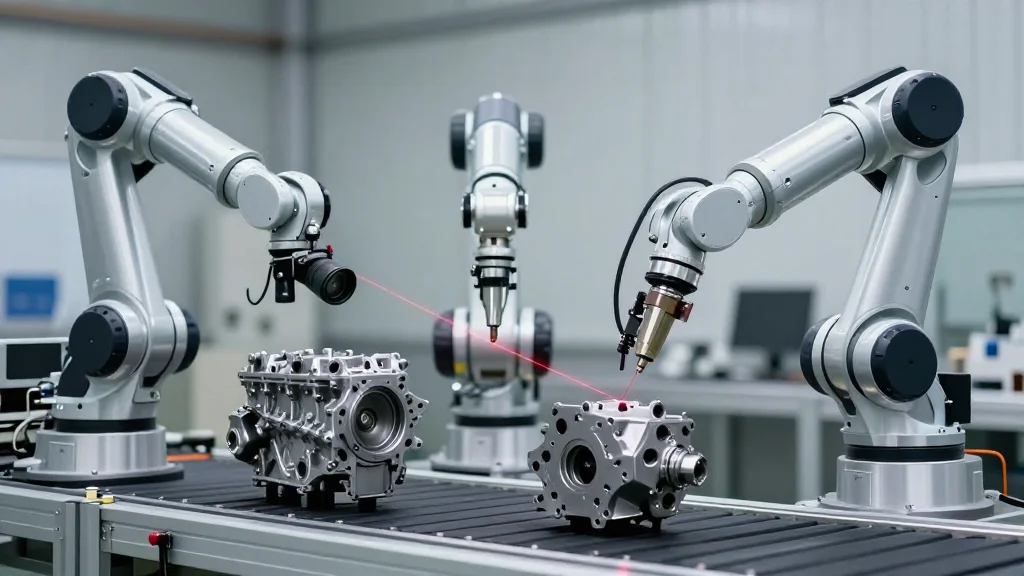
GFT Technologies Deploys AI‑Driven Robotic Arms to Remove Defective Auto Parts

Companies Mentioned
Why It Matters
The ability to automatically remove defective parts at line speed addresses a long‑standing bottleneck in automotive manufacturing: the lag between detection and corrective action. By eliminating manual extraction, factories can keep throughput high while dramatically reducing the risk of defective components reaching downstream assembly stages, which historically trigger costly recalls. Moreover, the cloud‑linked inspection data creates a continuous learning loop, allowing manufacturers to identify systemic issues and adjust processes before they become widespread problems. If GFT’s model proves scalable, it could accelerate the broader adoption of autonomous quality‑control systems across other high‑volume sectors such as aerospace, consumer electronics, and medical device manufacturing. The technology also underscores the growing convergence of AI, robotics and edge‑cloud architectures, highlighting a pathway for legacy manufacturers to modernize without overhauling existing production lines.
Key Takeaways
- •GFT launched a three‑robot AI system that inspects, tags and physically removes defective auto parts.
- •The solution is already deployed at a large U.S. automaker, with plans for broader rollout.
- •Each recalled vehicle can cost manufacturers $500+ per unit, potentially reaching tens of millions in total.
- •GFT leverages cloud‑based image storage and an AI root‑cause agent to continuously improve defect detection.
- •The system builds on GFT’s 35‑year history of integrating AI into automotive manufacturing.
Pulse Analysis
GFT’s integrated robotic suite arrives at a moment when the automotive industry is under pressure to tighten quality controls while maintaining the high output demanded by electric‑vehicle production ramps. Historically, AI has excelled at pattern recognition but struggled to translate insights into physical actions without human mediation. By closing that loop, GFT not only differentiates itself from pure‑vision vendors but also creates a defensible moat: the synergy of hardware, cloud infrastructure and proprietary AI models is difficult for newcomers to replicate quickly.
From a market perspective, the move could force OEMs to reassess existing inspection contracts. Suppliers that only offer detection software may find themselves at a competitive disadvantage unless they partner with robotics firms or develop complementary actuation capabilities. This could spark a wave of M&A activity, as robotics specialists seek to acquire AI analytics teams, or vice‑versa, to offer end‑to‑end solutions.
Looking ahead, the true test will be scalability and cost‑effectiveness. If GFT can demonstrate that the total cost of ownership—hardware, integration, cloud services—pays for itself through reduced scrap and recall avoidance, the model could become the de‑facto standard for high‑mix, high‑volume manufacturing. The next milestone will be quantifying those savings in a publicly disclosed case study, which will likely drive broader industry adoption.
GFT Technologies Deploys AI‑Driven Robotic Arms to Remove Defective Auto Parts
Comments
Want to join the conversation?
Loading comments...