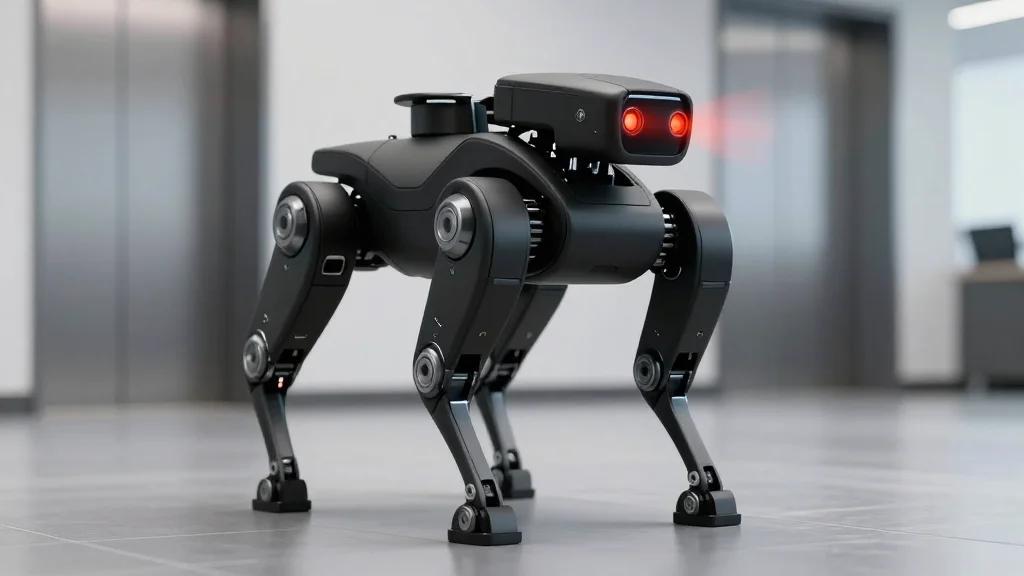
GoLabs Deploys Unitree Quadruped Robots for 24/7 Security Patrols

Companies Mentioned
Why It Matters
The GoLabs launch signals a tangible move from experimental robotics to commercial security solutions that can be deployed at scale. By offering a turnkey service that includes hardware, software and integration, GoLabs lowers the entry barrier for organizations that lack robotics expertise, potentially accelerating adoption across sectors that prioritize safety and continuous monitoring. If the platform proves reliable, it could reshape labor dynamics in the security industry, reducing reliance on human patrols for routine monitoring while freeing personnel to focus on higher‑order threat assessment. Moreover, the ability to operate in hazardous environments expands the scope of security coverage to facilities previously deemed too risky for human guards, such as nuclear plants or high‑altitude installations.
Key Takeaways
- •GoLabs announced a commercial security line built on Unitree quadruped robots on May 8, 2026.
- •Robots feature HD, thermal and IR cameras, 4D LiDAR and SLAM for autonomous navigation.
- •Service includes hardware setup, calibration, software integration and ongoing support.
- •Domestic sourcing eliminates international shipping costs, shortening deployment timelines.
- •Field trial with a Midwest logistics hub scheduled for Q3 2026 to validate performance.
Pulse Analysis
GoLabs’ entry into the security robotics niche reflects a broader industry trend where autonomous mobile platforms are moving beyond warehouse logistics into high‑value, high‑risk domains. The company’s strategy of bundling hardware with end‑to‑end deployment services mirrors successful models in the industrial IoT space, where vendors differentiate themselves through integration expertise rather than pure component sales. By localizing the supply chain for Unitree’s quadrupeds, GoLabs not only cuts shipping lead times but also sidesteps import‑tariff uncertainties that have plagued other U.S. adopters of Chinese‑made robotics.
The competitive landscape is still fragmented. Established security firms such as Johnson Controls and Honeywell have begun piloting wheeled patrol robots, yet few have embraced quadruped platforms that can traverse stairs, uneven terrain and confined spaces. GoLabs’ focus on these capabilities could carve out a defensible niche, especially if the company can demonstrate reliability in extreme environments. However, scaling the service model will require a robust support network; the current press release does not detail staffing or regional service centers, which could become a bottleneck as demand grows.
Looking ahead, the success of GoLabs will hinge on two factors: the technical robustness of its autonomous navigation stack and the ability to integrate with existing security ecosystems. If the Q3 field trial validates the robots’ endurance and data‑fusion accuracy, the firm could attract larger contracts from critical‑infrastructure operators, accelerating the shift toward autonomous security. Conversely, any high‑profile failure—such as navigation errors in complex facilities—could reinforce skepticism about replacing human guards with machines. The next six months will therefore be pivotal in determining whether GoLabs becomes a catalyst for widespread adoption or a niche experiment in the evolving robotics market.
GoLabs Deploys Unitree Quadruped Robots for 24/7 Security Patrols
Comments
Want to join the conversation?
Loading comments...