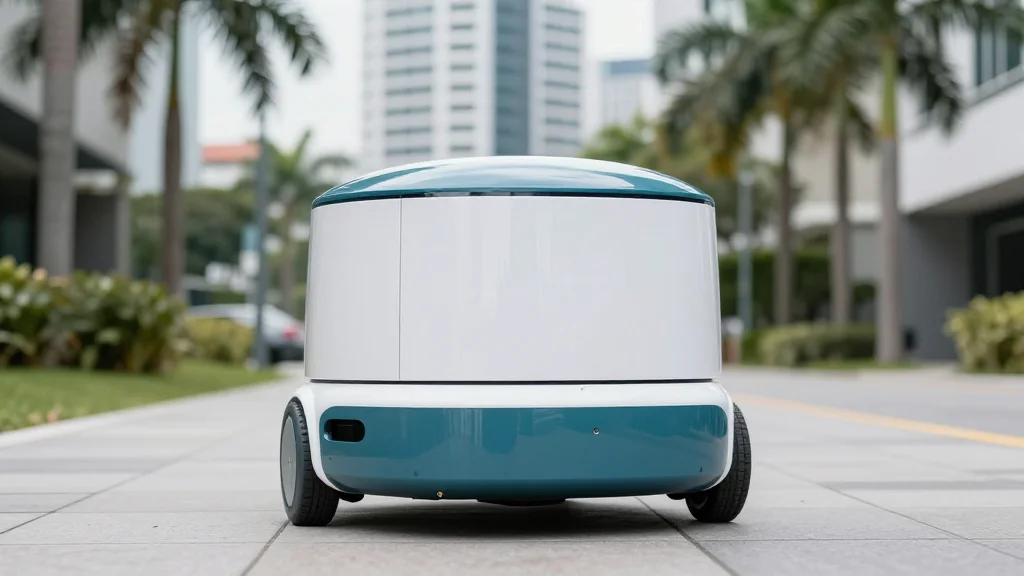
Grab Deploys Carri Delivery Robot in Singapore’s Punggol District

Why It Matters
The Carri deployment demonstrates that a dominant consumer platform can leverage its data, logistics network and AI expertise to pioneer autonomous delivery in emerging markets. By proving the economics of robot‑enabled last‑mile fulfillment, Grab could accelerate adoption across Southeast Asia, where labor costs are low but driver shortages and safety concerns persist. The rollout also forces competitors to either develop in‑house robots or partner with third‑party providers, reshaping the regional robotics supply chain. Moreover, Grab’s 1+n strategy highlights a collaborative model for robotics innovation, where incumbents test external hardware while retaining core software control. If successful, this approach could become a template for other super‑apps seeking to add physical AI capabilities without the heavy capital outlay of building every robot from scratch.
Key Takeaways
- •Grab launches Carri delivery robot in Singapore’s Punggol district, the first major commercial robot rollout in Southeast Asia
- •Grab reported $2.8 billion in revenue in 2025, up from $469 million in 2020
- •Company runs over 1,000 AI models across its platform, including a 90 % accurate translation engine
- •Grab acquired Foodpanda’s Southeast Asian business for $600 million, expanding its restaurant network
- •CTO Suthen Paradatheth describes a “1+n” strategy that mixes Grab’s own robots with third‑party hardware
Pulse Analysis
Grab’s entry into autonomous delivery is less about a single robot and more about cementing a data‑driven logistics moat. The company already commands a massive, multi‑service user base; adding robot‑generated delivery data enriches its AI models, improves route optimization, and reduces reliance on human couriers. Historically, logistics firms that have integrated robotics—such as Amazon with its Scout robot—have seen incremental cost reductions and higher service reliability, but they also faced steep capital expenditures and regulatory hurdles. Grab sidesteps much of the capital risk by adopting a 1+n approach, allowing it to trial multiple hardware platforms while keeping the software stack proprietary.
The Southeast Asian market presents a unique paradox: high demand for on‑demand services paired with fragmented infrastructure and tight economic constraints. By deploying Carri in a controlled district, Grab can fine‑tune its robots for the region’s narrow alleyways and variable traffic conditions, data that would be costly for a newcomer to gather. If the pilot proves cost‑effective—delivering orders faster and at lower marginal cost than human couriers—Grab could leverage its scale to negotiate favorable terms with robot manufacturers, further driving down costs.
Competitors will feel pressure to accelerate their own robotics programs or to form strategic alliances. Gojek, for instance, has hinted at a partnership with a Japanese robot maker, but lacks Grab’s integrated AI ecosystem. The success of Carri could also prompt regulators across the region to formalize safety standards for autonomous delivery, potentially raising the barrier to entry for smaller players. In the longer term, Grab’s robot fleet could become a platform for additional services—such as contactless health kit delivery or micro‑warehouse fulfillment—expanding the company’s revenue streams beyond its current super‑app model.
Grab Deploys Carri Delivery Robot in Singapore’s Punggol District
Comments
Want to join the conversation?
Loading comments...