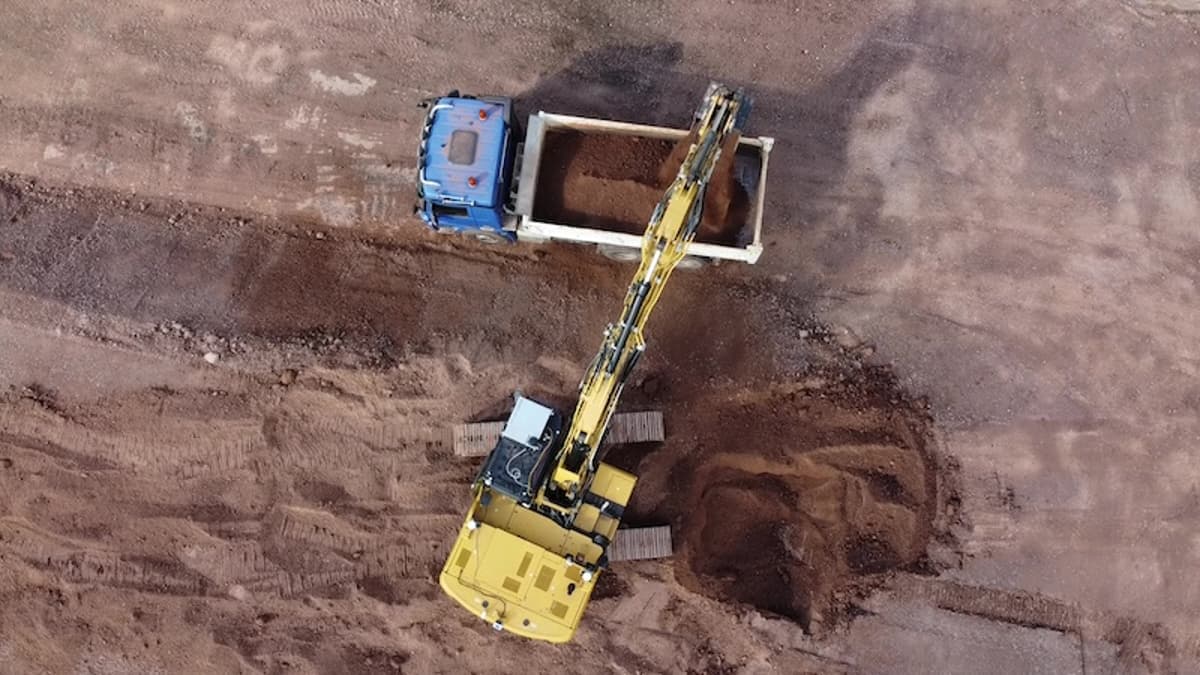
Gravis Robotics Expands Into US with Autonomous Construction Equipment Platform
•March 8, 2026
0
Why It Matters
The launch gives U.S. contractors a scalable AI solution to offset a looming labor shortage while delivering measurable productivity and cost benefits. It also signals a shift toward physical‑AI platforms becoming mainstream in heavy construction.
Key Takeaways
- •Gravis launches US commercial autonomy at CONEXPO 2026
- •Partners Hitachi, Develon showcase autonomous trenching, excavation
- •30% productivity boost, $74k annual savings per machine
- •Gravis Copilot offers autonomy‑ready guidance without workflow changes
- •US labor shortage drives demand for AI‑driven construction tools
Pulse Analysis
Gravis Robotics’ entry into the U.S. market reflects a broader acceleration of physical‑AI adoption in heavy industry. By leveraging a sensor‑fusion stack that combines LiDAR, cameras, GNSS and hydraulic feedback, Gravis delivers real‑time perception that lets machines "feel" the soil and adjust instantly. This capability, proven on projects from a 60‑mile pipeline in Argentina to quarry automation in Europe, positions the firm as a pioneer of production‑scale autonomy, differentiating it from legacy automation that relies on pre‑programmed paths.
The debut of Gravis Copilot at CONEXPO‑2026 addresses a critical bottleneck: the construction sector’s tightening labor pool. With 41% of the workforce projected to retire by the early 2030s, contractors need tools that amplify operator efficiency without demanding extensive retraining. Copilot overlays terrain visualization, depth guidance, and human‑form recognition onto existing control interfaces, allowing crews to maintain command while the AI handles precision tasks. Reported gains of up to 30% in operator productivity and $74,000 in annual savings per machine illustrate the tangible ROI that AI‑augmented guidance can deliver.
Industry observers see Gravis’ U.S. rollout as a catalyst for broader AI integration across construction fleets. OEM partnerships, such as with Hitachi’s LANDCROS initiative, suggest a future where autonomy‑ready hardware becomes a standard offering rather than a niche retrofit. As contractors adopt Copilot incrementally—starting with guidance and scaling to full autonomy—the competitive landscape will likely shift toward firms that can provide data‑driven, safety‑enhanced solutions at speed. Continued investment, like the recent $23 million round, will fuel further R&D, cementing Gravis’ role in shaping the next generation of smart construction sites.
Gravis Robotics expands into US with autonomous construction equipment platform
0
Comments
Want to join the conversation?
Loading comments...