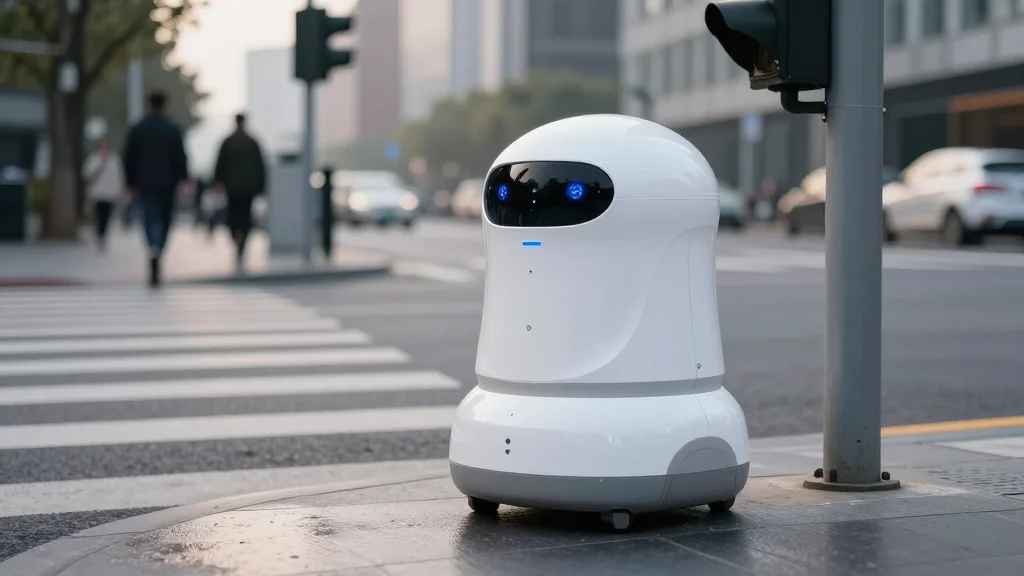
Hangzhou Deploys 15 Robot Police for Labor Day, Expanding China’s AI‑Powered Urban Safety

Why It Matters
The Hangzhou deployment demonstrates that AI‑enabled robotics can move from pilot projects to city‑wide operational use within weeks, reshaping how urban authorities manage traffic safety and public order. By offloading routine monitoring to machines, police forces can allocate human expertise to higher‑risk situations, potentially improving overall response quality. At the same time, the visible presence of robot officers raises questions about surveillance, data handling and the future role of human officers in a landscape increasingly mediated by algorithms. If the model proves effective, other megacities worldwide may look to China’s approach as a template for scaling autonomous public‑safety assets, accelerating a global shift toward AI‑augmented urban governance. The technology’s success—or any shortcomings—will inform regulatory frameworks, investment decisions and public perception of robotic law enforcement.
Key Takeaways
- •Hangzhou deployed 15 intelligent traffic‑management robots on May 1 for the Labor Day holiday.
- •Robots use large‑language‑model interfaces, visual‑recognition algorithms and millisecond‑level traffic‑light synchronization.
- •Kashgar operates one robot; Ordos operates two, all working 8‑9 hours per day.
- •Human officers report reduced workload, allowing focus on complex duties.
- •Deployments are part of a national push to embed AI and robotics in urban governance.
Pulse Analysis
China’s rapid rollout of robot police units underscores a strategic bet on AI to solve chronic urban challenges—congestion, accidents and staffing shortages. Historically, Chinese cities have leveraged technology for public‑service efficiency, from digital payment systems to smart‑city sensors. The current wave builds on that legacy, but the scale is unprecedented: a single city fielding a squadron of fifteen autonomous officers signals confidence in both the hardware reliability and the underlying AI models.
From a market perspective, the deployments create a clear demand pipeline for domestic robotics firms, sensor manufacturers and AI‑software providers. Companies that can deliver integrated solutions—hardware, cloud analytics and real‑time traffic‑control interfaces—stand to capture sizable municipal contracts. International players may find entry barriers high, given China’s preference for homegrown platforms and the strategic importance of public‑safety applications.
Looking ahead, the key variables will be performance metrics (violation detection accuracy, response latency) and public acceptance. If the robots demonstrably reduce traffic incidents without infringing on privacy, they could become a staple of Chinese urban policy and a blueprint for other nations. Conversely, any high‑profile failures or privacy breaches could trigger regulatory pushback, slowing adoption. The Labor Day trial thus serves as both a proof‑point and a litmus test for the broader vision of AI‑augmented law enforcement.
Hangzhou Deploys 15 Robot Police for Labor Day, Expanding China’s AI‑Powered Urban Safety
Comments
Want to join the conversation?
Loading comments...