Hello Robot Unveils Stretch 4.0, Pushing Personal Robots Into Homes

Companies Mentioned
Why It Matters
Stretch’s debut illustrates a turning point where robotics moves from research labs into the domestic sphere, directly addressing unmet needs in home assistance and disability support. By gathering real‑world usage data, Hello Robot can train more robust AI models, potentially lowering the barrier for other startups to develop functional household robots. The launch also pressures larger players—such as Amazon’s Astro or iRobot’s Roomba—to broaden their product roadmaps beyond cleaning to more versatile assistance, reshaping the competitive landscape. Moreover, the robot’s human‑in‑the‑loop design challenges the prevailing narrative that full autonomy is the ultimate goal. By emphasizing controllability and safety, Hello Robot may set new standards for liability and regulatory compliance, influencing how future consumer robots are certified and insured.
Key Takeaways
- •Hello Robot released Stretch 4.0, its fourth‑gen home‑assistant robot, in June 2026.
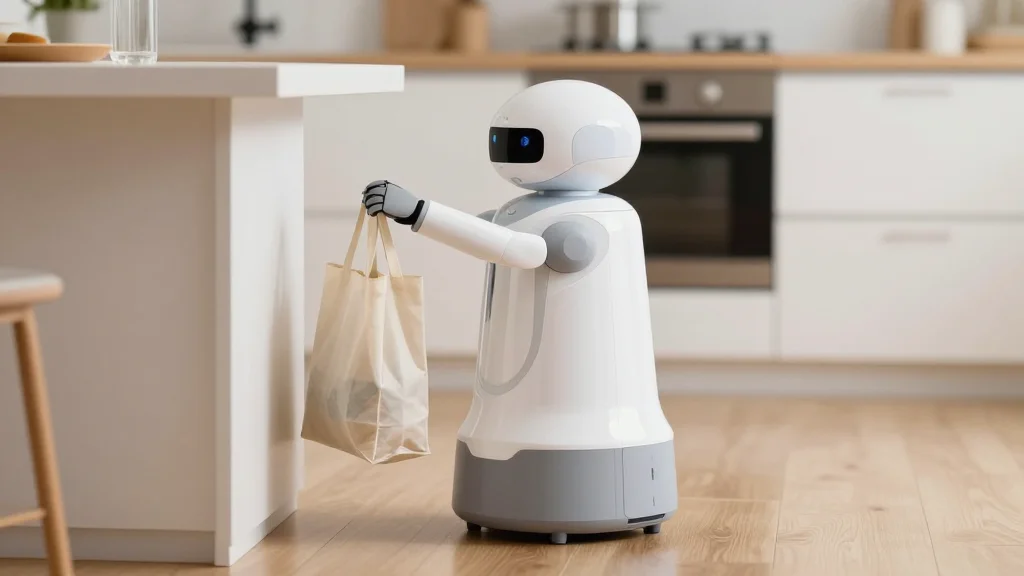
- •Stretch combines a humanoid torso, sensor‑rich head, and a telescoping arm with pinchers on an omnidirectional base.
- •Board member Keith Platt, a quadriplegic, reduced a two‑hour task to minutes using Stretch’s voice‑controlled app.
- •Bullhound Capital highlights first‑mover advantage in real‑world deployment as a competitive moat.
- •Hardware challenges remain; heavy limbs require high‑energy balancing despite AI advances.
Pulse Analysis
Hello Robot’s Stretch 4.0 arrives at a moment when the robotics market is grappling with the classic AI‑hardware mismatch. While AI models have exploded in capability, the physical embodiment of those models lags, especially in cost‑effective, lightweight designs suitable for homes. Hello Robot’s strategy—prioritizing real‑world deployment over speculative AI—mirrors a broader industry shift toward data‑driven product iteration. By embedding the robot in actual households, the company not only validates its hardware but also creates a proprietary dataset that can accelerate future AI improvements, effectively building a defensible moat.
The competitive response will be telling. Large tech firms have the capital to iterate quickly, but they often lack the nuanced understanding of home‑care workflows that Hello Robot gains through its occupational‑therapy collaborations. If Stretch can demonstrate reliability and a clear ROI for users—especially those with disabilities—it could catalyze a wave of niche‑focused robots that address specific household pain points rather than attempting a one‑size‑fits‑all solution. This could fragment the market, leading to specialized ecosystems akin to the early smartphone accessory boom.
Looking ahead, scaling production while reducing weight and power consumption will be critical. Investors will watch for cost reductions that bring the robot into the price range of mainstream consumers. If Hello Robot can achieve economies of scale without sacrificing performance, it may set a new benchmark for consumer robotics, prompting incumbents to accelerate their own home‑assistant offerings. The next 12‑18 months will reveal whether Stretch’s early adopter success can translate into broader market traction, potentially redefining how households interact with intelligent machines.
Hello Robot Unveils Stretch 4.0, Pushing Personal Robots Into Homes
Comments
Want to join the conversation?
Loading comments...