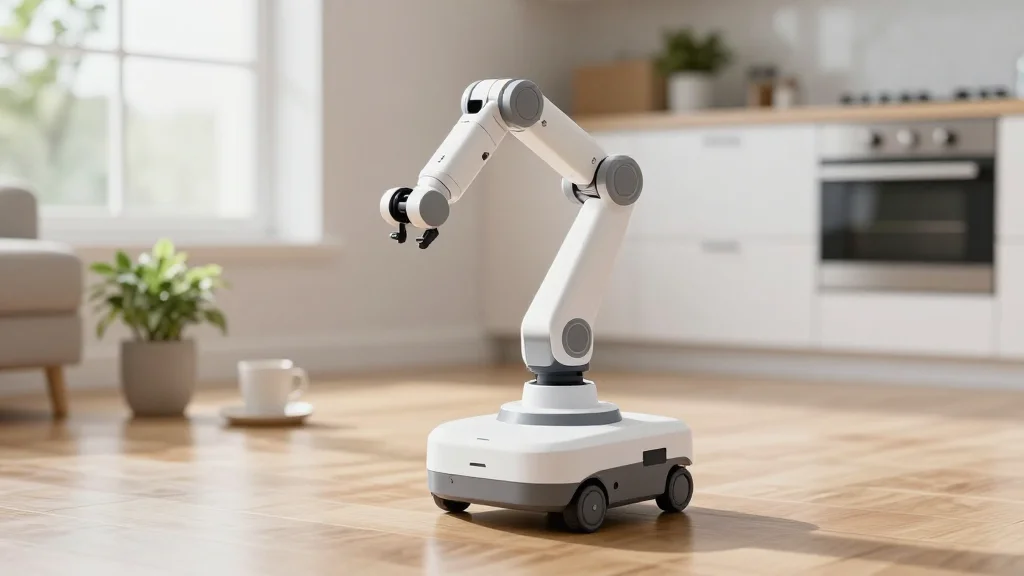
Hello Robot's Stretch 4 Rolls Out Wheeled Home Assistant

Why It Matters
Stretch 4 illustrates a strategic pivot in domestic robotics toward reliability and ease of integration. By sidestepping the engineering hurdles of bipedal balance, Hello Robot can deliver a robot that moves confidently in cluttered, real‑world spaces, a prerequisite for any meaningful consumer adoption. The platform’s sensor suite also demonstrates how perception advances can compensate for simpler locomotion, offering a template for future assistants that prioritize safety and task performance over human‑like appearance. If the home‑pilot program validates the robot’s ability to handle everyday chores, it could unlock a new market segment that bridges enterprise research tools and mass‑market appliances. This would encourage venture capital and corporate R&D to fund more wheeled designs, potentially reshaping the competitive landscape that has been dominated by high‑profile humanoid projects.
Key Takeaways
- •Hello Robot introduced Stretch 4, a wheeled home‑assistant robot with an omnidirectional base.
- •The robot combines lidar, wide‑field cameras and a wrist‑mounted depth sensor for advanced perception.
- •Stretch 4 is marketed for research and lab use but will be tested in limited home pilot deployments.
- •Design leverages powered‑wheelchair wheel technology to improve stability and navigation in cluttered homes.
- •The launch signals a shift from humanoid prototypes toward functional, market‑ready wheeled robots.
Pulse Analysis
The introduction of Stretch 4 arrives at a moment when the robotics sector is wrestling with the commercial viability of humanoid platforms. While legged robots capture headlines, they remain expensive, fragile and difficult to certify for safe operation around people. Hello Robot’s decision to focus on a wheeled chassis reflects a pragmatic assessment of market demand: consumers and enterprises need dependable helpers now, not speculative prototypes that may arrive years later.
Historically, the most successful domestic robots—such as robotic vacuums—have embraced simplicity and reliability over anthropomorphic form. Stretch 4 builds on that legacy by adding a manipulable arm and sophisticated perception, effectively merging the cleaning‑robot model with a service‑robot capability set. This hybrid approach could lower the barrier to entry for developers who want to experiment with object handling without building a full‑scale humanoid platform.
Looking forward, the key to scaling Stretch 4 will be the data gathered from its pilot deployments. Real‑world performance metrics—success rates in object retrieval, navigation error margins, user satisfaction—will inform both hardware refinements and software updates. If Hello Robot can demonstrate consistent, safe operation across diverse home layouts, it may attract partnerships with smart‑home providers, opening a pathway to integrated ecosystems where a single robot coordinates lighting, climate control and physical assistance. Such integration would not only broaden the robot’s utility but also create recurring revenue streams through software services, a model that has proven lucrative in other IoT domains.
Overall, Stretch 4 could act as a catalyst for a new wave of consumer‑focused robotics that prioritize function over form. By proving that wheels, advanced sensors and a capable arm can deliver tangible household value, Hello Robot may compel larger players to diversify their portfolios beyond the spectacle of walking machines, accelerating the arrival of truly useful home robots.
Hello Robot's Stretch 4 Rolls Out Wheeled Home Assistant
Comments
Want to join the conversation?
Loading comments...