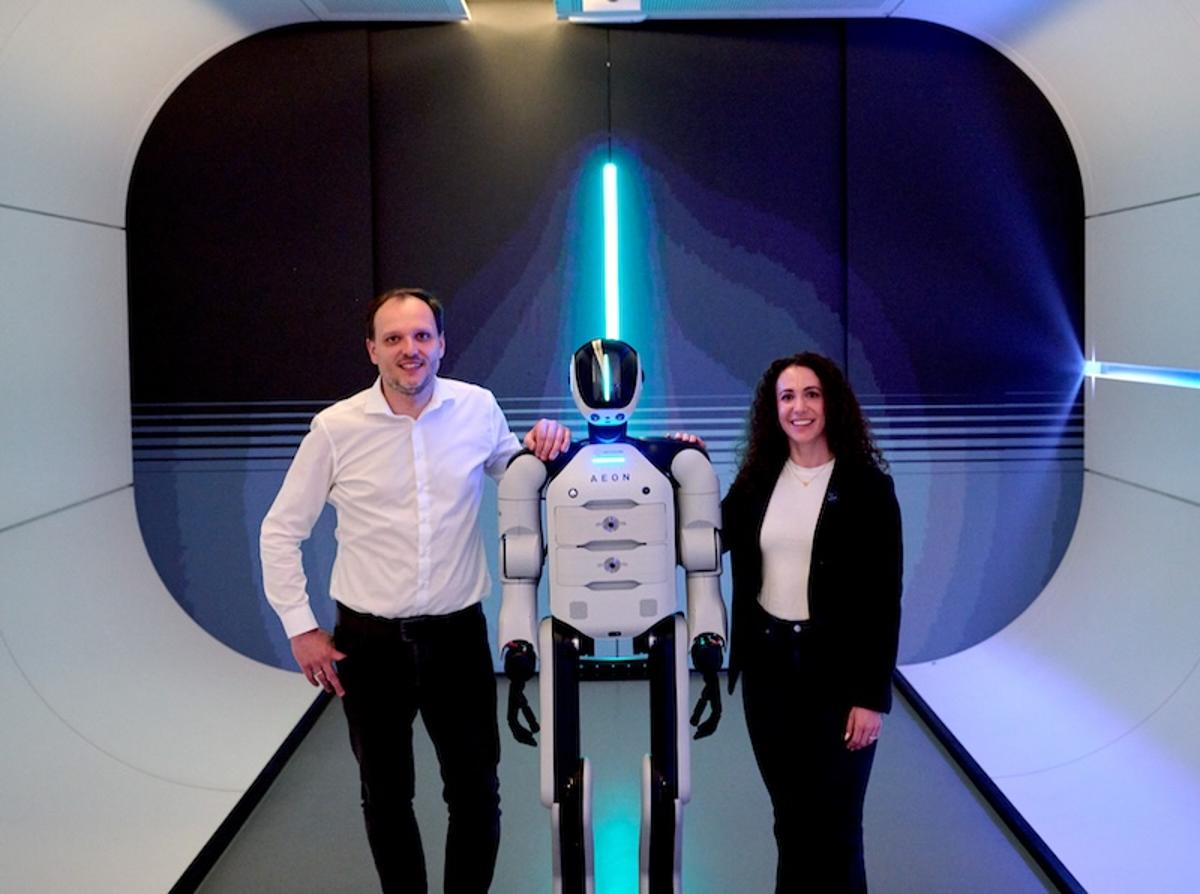
Hexagon and Fill Maschinenbau Partner to Advance Manufacturing Autonomy Using Humanoids
Why It Matters
The partnership showcases a tangible step toward combining humanoid robotics with traditional automation, promising faster ROI and greater flexibility for manufacturers facing diverse, precision‑driven workloads.
Key Takeaways
- •AEON will pilot in Austria to test humanoid integration with Fill’s solutions
- •Humanoid robots aim to boost autonomy in high‑mix, precision assembly
- •Collaboration provides real‑world data on performance, safety, and ROI
- •Hexagon and Fill target workforce productivity gains through physical AI
Pulse Analysis
The rise of humanoid robotics marks a new frontier in industrial automation, moving beyond fixed‑point arms to mobile, sensor‑rich agents capable of handling varied tasks. Industry analysts note that the global market for collaborative robots is projected to exceed $30 billion by 2028, driven by demand for flexible solutions in high‑mix, low‑volume production. Hexagon’s AEON, a multi‑purpose humanoid equipped with advanced sensor‑fusion and spatial intelligence, exemplifies this shift, offering wheel‑base locomotion and manipulation abilities that can complement existing automation stacks.
In the Hexagon‑Fill partnership, AEON will be deployed on a client site in Gurten, Austria, where it will perform machine‑tending, inspection and data‑capture functions alongside Fill’s manufacturing platforms. The pilot focuses on real‑world integration challenges—such as interfacing with legacy PLCs, ensuring safety in shared workspaces, and measuring productivity gains. By leveraging AEON’s ability to navigate complex shop floors and adapt to varying part geometries, Fill aims to demonstrate measurable improvements in cycle time and labor utilization, providing a data‑driven case study for other manufacturers.
If successful, the collaboration could accelerate broader adoption of humanoid robots across sectors that require dexterous, adaptable automation, such as aerospace, medical device assembly and specialty electronics. It also signals a strategic move by traditional automation vendors to embed physical AI into their portfolios, potentially reshaping competitive dynamics. Customers stand to benefit from reduced reliance on specialized human operators for repetitive tasks, while gaining the flexibility to reconfigure production lines quickly in response to market shifts. The pilot’s outcomes will likely inform standards for safety, integration and ROI assessment in the emerging humanoid robotics ecosystem.
Hexagon and Fill Maschinenbau partner to advance manufacturing autonomy using humanoids
Comments
Want to join the conversation?
Loading comments...