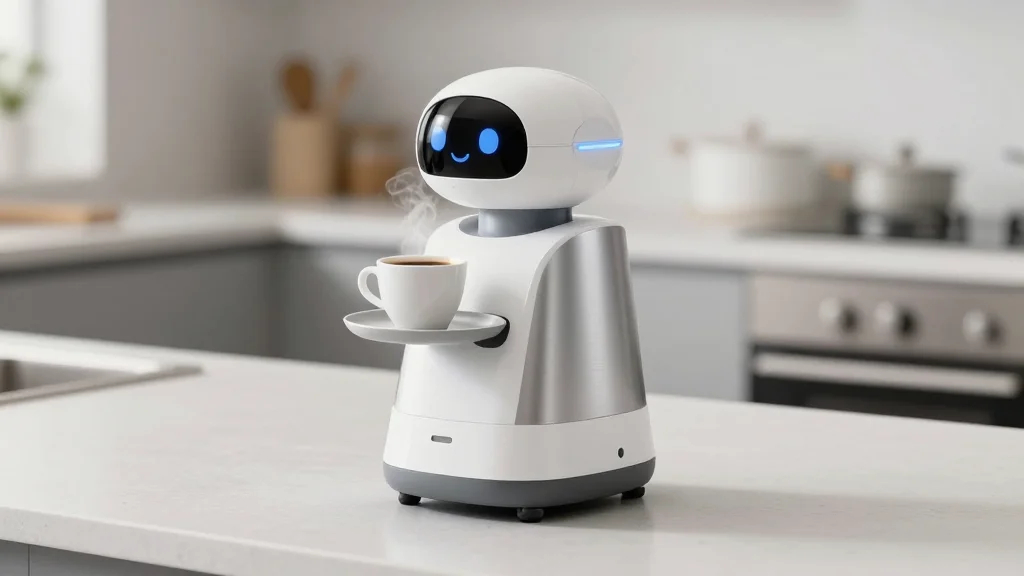
Home Robots Go Mainstream: Mabu AI Assistant and UniX AI’s Panther Debut

Companies Mentioned

Why It Matters
The arrival of Mabu and Panther marks the first wave of truly autonomous, conversational robots designed for everyday household chores. Their capabilities go beyond voice assistants by adding physical interaction, which could reshape how consumers think about home automation and reduce reliance on fragmented single‑purpose devices. If privacy concerns are mitigated and pricing becomes accessible, these robots could accelerate the convergence of AI software and robotics hardware, prompting traditional appliance manufacturers to partner with AI firms or develop in‑house solutions. The shift may also trigger new standards for data handling, safety certifications, and insurance policies specific to embodied AI in private residences.
Key Takeaways
- •Mabu integrates OpenAI’s chatbot API, offering health tips and a morning briefing via voice.
- •UniX AI’s Panther stands 5'3"–5'9" tall, weighs ~170 lb, lifts 26 lb, and runs 6–12 hours on a charge.
- •Both robots aim to replace multiple single‑purpose devices with a single, general‑purpose platform.
- •Privacy risks highlighted include law‑enforcement subpoenas, potential hacking of API traffic, and data reuse.
- •UniX AI is conducting real‑home trials; full commercial certification expected by late 2026.
Pulse Analysis
The simultaneous debut of Mabu and Panther reflects a strategic inflection point where conversational AI meets embodied robotics. Historically, home automation has been dominated by passive devices—speakers, thermostats, and vacuums—that react to commands but lack agency. By embedding large‑language models in a physical chassis, manufacturers are betting that consumers will value the convenience of a robot that can both converse and act.
Mabu’s approach is incremental: it repurposes existing smart‑speaker functionality and layers a personality on top, effectively testing market appetite for embodied assistants without a massive hardware overhaul. Its biggest hurdle is trust; the blog post underscores that even tech‑savvy early adopters are wary of data capture. Companies that can offer end‑to‑end encryption, on‑device processing, or clear data‑use policies will likely capture the bulk of the market.
Panther, by contrast, is a bold attempt to deliver a truly general‑purpose robot. Its sensor suite and articulated arms suggest a hardware platform that could be updated via software, mirroring the smartphone model. However, the engineering challenges of reliable object manipulation in unstructured homes remain significant. If UniX AI can demonstrate consistent performance at scale, it could force incumbents like iRobot and Dyson to accelerate their own embodied AI roadmaps, potentially sparking a wave of M&A activity. In the short term, both products will serve as litmus tests for consumer willingness to pay for autonomy versus the comfort of familiar, single‑task gadgets.
Home Robots Go Mainstream: Mabu AI Assistant and UniX AI’s Panther Debut
Comments
Want to join the conversation?
Loading comments...