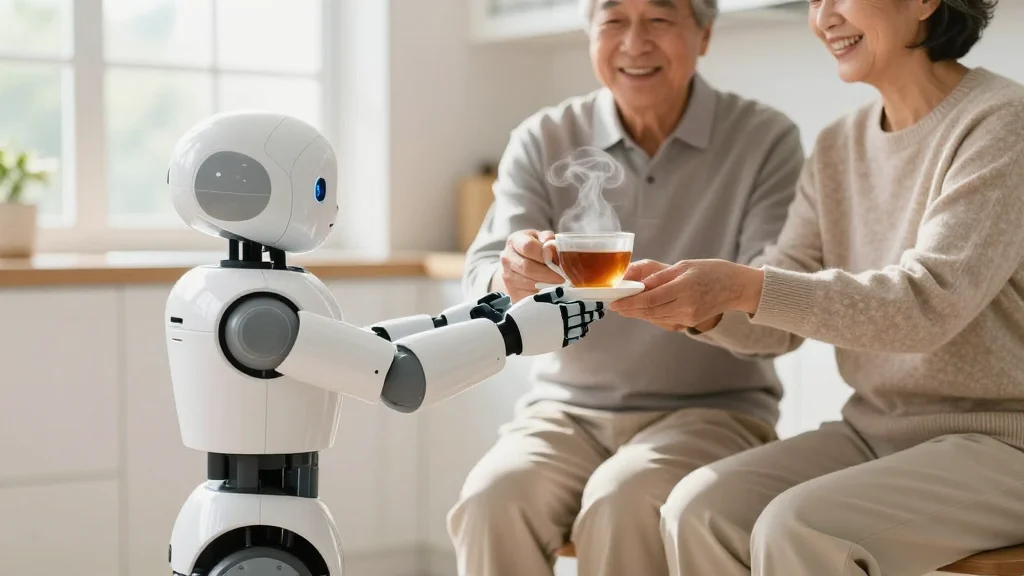
Home‑care Robot ‘Robby’ Assists Elderly Couple, Signaling Rise of Consumer Service Robots

Why It Matters
Robbie illustrates how socially assistive robotics can move from laboratory prototypes to everyday homes, directly addressing a looming caregiver shortage. By proving that a modest, task‑focused robot can improve daily routines for people with cognitive and physical impairments, the project validates a market segment that has been largely speculative. If the technology scales, it could reshape the economics of home care, lowering costs for families and insurers while extending the independence of older adults. The deployment also offers a data‑rich testbed for policymakers to assess safety standards, privacy safeguards, and reimbursement models for robotic assistance.
Key Takeaways
- •UNH lab deployed a Stretch 4 robot, nicknamed Robbie, in a Durham, NH home for daily assistance.
- •Funding came from the National Institute on Aging, highlighting federal interest in assistive robotics.
- •Robbie can fetch water, cue exercise videos, and remind users to eat, blending physical help with social prompting.
- •CEO Aaron Edsinger emphasized a pragmatic design over humanoid aesthetics to meet real‑world expectations.
- •A multi‑site field trial is planned for early 2027 to evaluate health outcomes and scalability.
Pulse Analysis
Robbie’s rollout signals a pivot from novelty to utility in the consumer robotics sector. Early service‑robot pilots often stumbled on high expectations for humanoid interaction, only to reveal that reliability and task execution matter more to end users. Hello Robot’s decision to strip away the glossy exterior and focus on a sturdy, wheeled platform aligns with a growing consensus that functional simplicity drives adoption, especially among older adults who prioritize safety over aesthetics.
The timing is crucial. With the baby‑boom cohort entering the 80‑plus bracket, the home‑care labor market faces a supply‑demand mismatch that could cost the economy billions in lost productivity and increased institutionalization. A modestly priced, easily programmable robot like Stretch 4 could fill niche gaps—hydration reminders, medication prompts, and light‑handed mobility assistance—without the liability concerns that accompany larger humanoids. Venture capitalists are already eyeing this sweet spot, as evidenced by recent seed rounds in companies that blend AI with low‑cost hardware.
Looking ahead, the key challenge will be integrating robots like Robbie into existing health‑care workflows. Data interoperability, privacy compliance, and clear liability frameworks will determine whether pilots evolve into reimbursable services. If regulators and insurers can establish standards that balance innovation with patient safety, the sector could see a cascade of deployments, turning today’s experimental hallway robot into a mainstream household appliance within the next five years.
Home‑care robot ‘Robby’ assists elderly couple, signaling rise of consumer service robots
Comments
Want to join the conversation?
Loading comments...