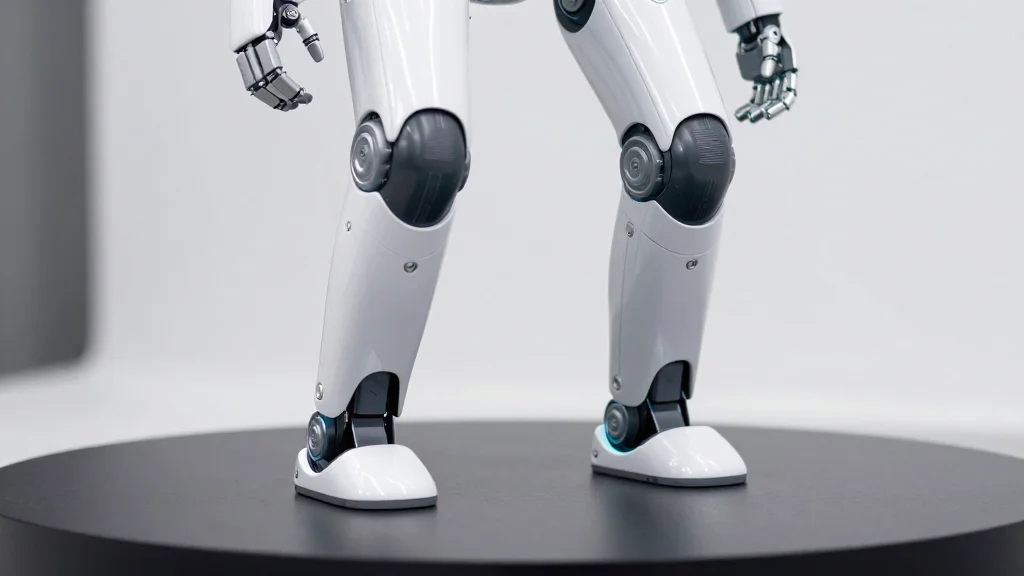
Honda’s 1996 P2 Humanoid Robot Earns IEEE Milestone, Cementing Its Legacy in Bipedal Locomotion

Companies Mentioned

Why It Matters
The IEEE Milestone status elevates the P2 from a corporate showcase to a documented piece of engineering heritage, offering a benchmark for future research in dynamic balance and gait control. By formally recognizing the robot’s contributions, the award encourages academia and industry to revisit and build upon the control architectures that made autonomous bipedal walking possible. In a market where legged robots are increasingly viewed as commercial solutions for last‑mile delivery and hazardous‑environment inspection, the P2’s legacy provides a technical foundation that can accelerate development cycles. The honor also reinforces the role of standards organizations in legitimizing long‑term R&D, potentially influencing funding bodies to allocate more resources to fundamental robotics research rather than only application‑specific projects.
Key Takeaways
- •Honda’s 1996 P2 humanoid robot officially designated an IEEE Milestone on April 28, 2026.
- •The IEEE Milestones program has recognized 293 achievements worldwide since 1983.
- •Professor Toshio Fukuda, former IEEE President, presented the milestone plaque at Honda’s Wako Building in Saitama.
- •P2’s control technology enabled real‑time gait adjustment, balance on uneven terrain, and disturbance recovery.
- •The award highlights the lasting impact of foundational locomotion research on today’s commercial legged‑robot market.
Pulse Analysis
Honda’s P2 receiving IEEE Milestone status is more than a nostalgic nod; it signals a strategic affirmation of the value of deep, decades‑long research programs in robotics. While many firms chase rapid product releases, Honda’s approach—investing in a platform that took a full generation to mature—has yielded a body of knowledge that continues to inform modern legged systems. This contrasts sharply with the venture‑capital‑driven model prevalent among start‑ups, where funding cycles often pressure teams to demonstrate market‑ready prototypes within a few years. The P2’s recognition may therefore encourage investors to consider longer horizons for robotics R&D, especially in areas like dynamic balance that lack immediate commercial payoff but are essential for reliable humanoid operation.
The timing of the award dovetails with a surge in corporate and governmental interest in legged robots for logistics and disaster response. As supply‑chain bottlenecks push firms toward autonomous delivery, the ability to navigate stairs, uneven sidewalks, and cluttered indoor spaces becomes a competitive differentiator. Honda’s historic expertise, now publicly validated by IEEE, positions it to leverage legacy technology in new product lines, potentially accelerating time‑to‑market for next‑generation humanoids.
Finally, the ceremony underscores the importance of cross‑institutional collaboration. Professor Fukuda’s involvement bridges academia, industry, and standards bodies, illustrating how shared recognition can catalyze joint research initiatives. Honda’s announced partnership with Nagoya University to explore bio‑inspired balance algorithms could produce breakthroughs that lower energy consumption—a critical metric for commercial viability. In sum, the IEEE Milestone not only honors past achievement but also creates a platform for future innovation, reinforcing the notion that today’s breakthroughs are often built on the shoulders of yesterday’s engineering milestones.
Honda’s 1996 P2 Humanoid Robot Earns IEEE Milestone, Cementing Its Legacy in Bipedal Locomotion
Comments
Want to join the conversation?
Loading comments...