How AI and Robotics Are Redefining Precision Feed Management in Large-Scale Livestock Farms
•January 14, 2026
0
Why It Matters
Precise feed measurement drives significant cost savings, animal health benefits, and sustainability, giving producers a competitive edge. It also accelerates broader automation and data‑analytics adoption across agribusiness.
Key Takeaways
- •Load cells deliver real‑time kilogram accuracy for feed dispensing
- •AI models use weight data, reducing forecast error to 3%
- •Robotic feeders adjust auger speed via load‑cell feedback loops
- •Annual cell replacement costs $200‑$500, offset by waste reduction
- •Edge gateways translate signals to Modbus, Ethernet/IP for AI
Pulse Analysis
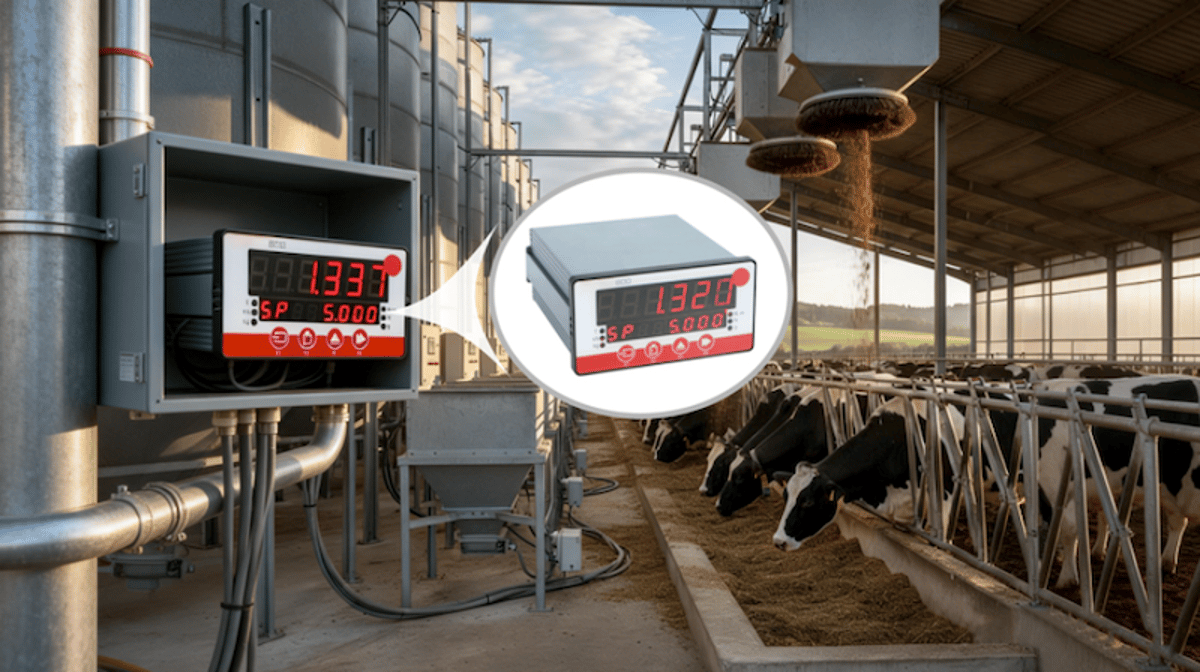
The shift toward data‑driven precision feeding is reshaping large‑scale livestock operations. Modern load cells, typically strain‑gauge S‑beam or compression designs, are housed in IP68‑rated stainless steel enclosures to survive dust, ammonia, and wash‑down chemicals. Installed under silos, hoppers, and robotic dispensers, they provide kilogram‑level resolution—often detecting changes as small as 10 kg on a 20‑ton silo. This hardware reliability creates a trustworthy “ground truth” that eliminates the guesswork of traditional visual estimates and forms the backbone of automated feeding workflows.
AI and edge computing amplify the value of those weight readings. Raw millivolt signals are amplified, digitized, and transmitted via 4–20 mA loops or Modbus/Ethernet‑IP to local controllers that filter noise and timestamp each measurement. Neural networks ingest this high‑frequency data alongside RFID, temperature, and humidity inputs to forecast daily intake, adjust rations, and schedule deliveries. Farms report forecasting error reductions from roughly 8 % to 3 % and feed waste cuts of 15‑22 %, translating into millions of dollars saved annually. A Midwest swine operation, for example, trimmed over‑fills by 22 percent, saving about $52 per animal each year.
Scaling these systems requires disciplined maintenance and phased deployment. Quarterly calibration, rodent‑proof conduit, and annual cell replacement—costing $200‑$500 per unit—are modest compared with the financial upside of reduced waste and improved feed conversion ratios. As open communication protocols simplify integration, more producers are layering robotics, vision, and AI atop the load‑cell foundation. The result is a more sustainable, profitable, and resilient livestock sector that leverages precise measurement to meet rising global protein demand.
How AI and Robotics Are Redefining Precision Feed Management in Large-Scale Livestock Farms
0
Comments
Want to join the conversation?
Loading comments...