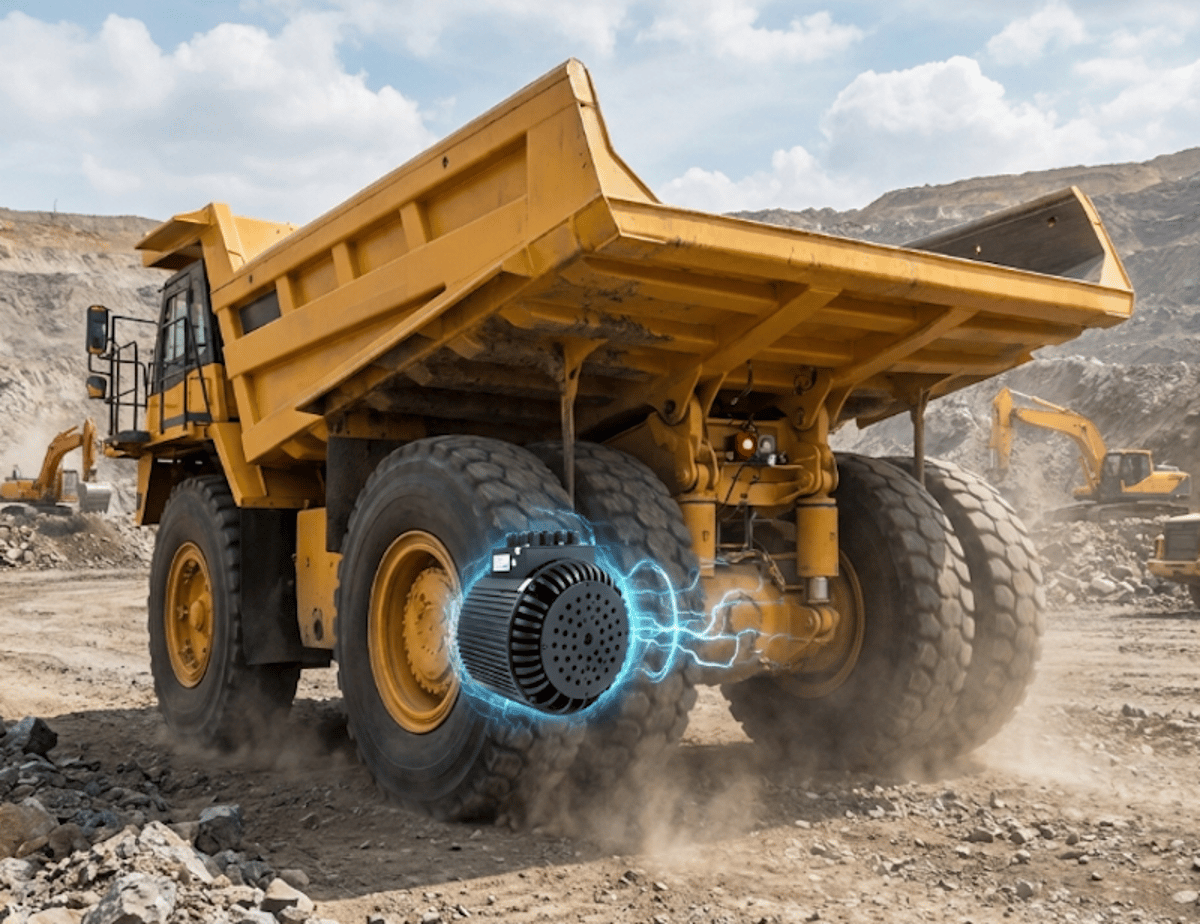
How EV-Grade BLDC Motors Perform in Heavy-Duty Automated Industrial Vehicles
•January 28, 2026
0
Why It Matters
The superior thermal margin and efficiency of EV‑grade BLDC motors lower operating costs and downtime, making them essential for electrifying heavy‑duty material‑handling fleets. Their reliability accelerates adoption of clean, autonomous industrial mobility.
Key Takeaways
- •EV-grade BLDC motors handle 60‑80% load 16 hrs daily
- •Thermal margins 20‑30°C improve lifespan in continuous duty
- •Efficiency >90% cuts energy use and downtime
- •Integrated cooling (air/liquid) sustains high torque output
- •System-level alignment required; peak power alone insufficient
Pulse Analysis
The push toward fully electric material‑handling fleets has exposed a gap between automotive‑grade motor performance and the demands of industrial automation. Standard BLDC motors, built for intermittent use, often overheat when subjected to the relentless acceleration‑deceleration cycles of AGVs and forklifts. By contrast, EV‑grade designs incorporate higher continuous temperature ratings and robust thermal management, allowing them to operate at 70‑80% load for sixteen hours or more without the temperature‑drift that forces controller derating. This reliability translates directly into reduced maintenance schedules and longer equipment uptime.
Beyond durability, the power density of EV‑grade BLDC motors reshapes vehicle architecture. A 20 kW unit can produce roughly 80 N·m of torque in a compact package, freeing space for larger battery packs or additional payload. Coupled with efficiencies that regularly exceed 90%, these motors cut energy consumption and lower heat generation, which in turn lessens cooling infrastructure requirements. Liquid‑cooled variants further tighten thermal margins, keeping winding temperatures well below critical limits and extending motor life in harsh, dust‑laden environments typical of factories and construction sites.
Successful deployment, however, hinges on system‑level integration. Engineers must match motor specifications with compatible controllers, power electronics, and cooling solutions, rather than selecting based solely on peak power. As power‑electronics continue to improve and battery energy densities rise, EV‑grade BLDC motors are poised to become the backbone of next‑generation industrial mobility, delivering the torque, efficiency, and resilience needed for truly autonomous, zero‑emission operations.
How EV-Grade BLDC Motors Perform in Heavy-Duty Automated Industrial Vehicles
0
Comments
Want to join the conversation?
Loading comments...