How Human Motion Is Fueling the Robot Revolution — by Teaching Robots Like Atlas to Move in Lifelike Ways
•January 15, 2026
0
Companies Mentioned


Why It Matters
The ability to teach robots via motion capture and large‑scale simulation shortens development cycles, making humanoid automation viable for manufacturing, logistics, and consumer applications.
Key Takeaways
- •Boston Dynamics uses motion capture to teach Atlas movements
- •Xsens suits convert human motion into robot-compatible data
- •Simulated training enables thousands of robots to learn quickly
- •Retargeted kinematics let robots find efficient movement paths
- •Scalable pipeline could accelerate humanoid robots in industry
Pulse Analysis
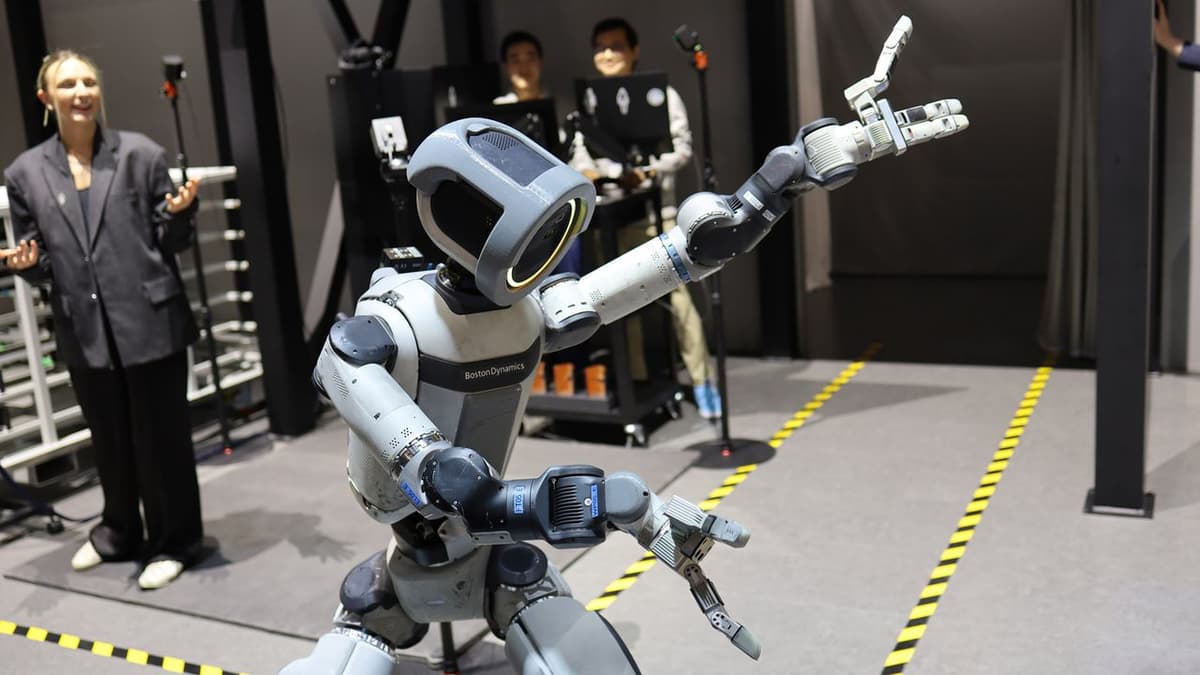
The robotics landscape is undergoing a paradigm shift as companies move from rigid, scripted control to adaptive learning systems. Boston Dynamics’ latest Atlas demonstration at CES 2026 illustrates this trend, with the robot executing movements that mirror human biomechanics despite its non‑human anatomy. By outfitting human performers with Xsens motion‑capture suits or immersive VR rigs, engineers translate nuanced gestures—such as a martial‑arts stance or a precise squat—into digital streams. These streams are then retargeted to Atlas, allowing the machine to interpret and replicate complex actions without hand‑coding each joint trajectory.
The core of the workflow resides in high‑fidelity simulation. Thousands of virtual Atlases run the captured motion, stumbling and correcting in real time, while a centralized learning algorithm aggregates successful patterns. This ‘hive mind’ approach rapidly converges on the most energy‑efficient and stable gait, which is subsequently uploaded to physical robots. Because the training occurs in a sandbox, a fleet can acquire a new skill—such as handling a production‑line tool—in an afternoon, dramatically reducing the engineering labor traditionally required for each unit.
Scalable, data‑driven motion teaching opens doors across sectors. In manufacturing, humanoid robots could flexibly retool for short‑run production without extensive reprogramming. Logistics centers may deploy fleets that learn to navigate cluttered warehouses by observing human workers. Even consumer robotics stands to benefit, as lifelike assistants become capable of safe, intuitive interaction. However, challenges remain in ensuring safety, handling edge‑case motions, and translating simulation success to real‑world reliability. As the technology matures, investors and OEMs are likely to accelerate funding, positioning motion‑capture‑driven robots as a cornerstone of the next automation wave.
How human motion is fueling the robot revolution — by teaching robots like Atlas to move in lifelike ways
0
Comments
Want to join the conversation?
Loading comments...