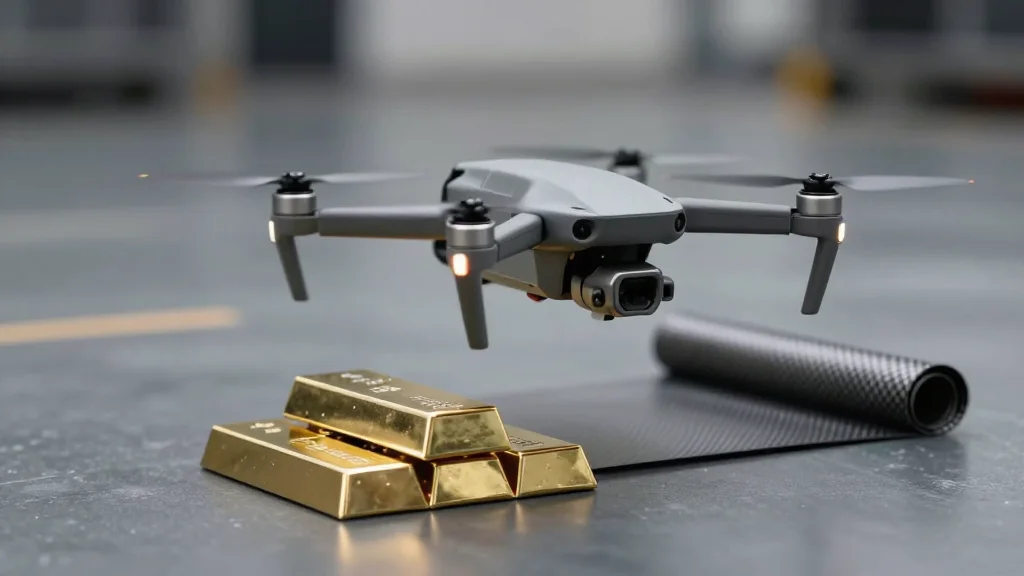
How to Avoid Supply Chain Issues as Drone and Robot Production Increases Exponentially
Companies Mentioned
Why It Matters
Supply‑chain bottlenecks in rare‑earths and advanced composites could slow the rapid commercialization of drones and robots, affecting defense, logistics, and decarbonization initiatives. Early mitigation can safeguard U.S. manufacturing competitiveness and reduce geopolitical reliance on offshore material sources.
Key Takeaways
- •Drone production could rise tenfold, robot output up to 100× by 2030s
- •Neodymium‑praseodymium demand may exceed U.S. 2024 usage by 20%
- •Carbon fiber and magnesium shortages possible if high‑end demand spikes
- •Aluminum offers a cheaper, abundant alternative for lightweight frames
- •Integrating drone supply chains with EV battery networks boosts resilience
Pulse Analysis
The next decade promises a seismic shift in autonomous systems, with analysts forecasting a tenfold increase in commercial drones and a hundred‑fold rise in humanoid and quadruped robots by the late 2030s. This surge is driven by expanding use cases in logistics, agriculture, defense, and consumer services, creating a new wave of demand for the specialized materials that power motors, batteries, and structural components. While the overall raw‑material outlook appears manageable, the sheer scale of production will test the capacity of existing supply networks, especially for high‑performance alloys and composites that have traditionally served niche markets.
Among the 18 materials examined, neodymium‑praseodymium (NdPr) emerges as the most vulnerable. The study estimates that building one million large robots annually would push U.S. NdPr consumption 20 % above 2024 levels, a figure that could quickly outpace domestic mining and processing capabilities. Carbon fiber and magnesium, prized for their strength‑to‑weight ratios, also pose risk if premium‑grade applications accelerate. However, aluminum’s abundance and lower cost provide a viable fallback for many frame designs, potentially diffusing pressure on the tighter‑supply commodities. Geopolitical considerations amplify these concerns, as much of the world’s rare‑earth output remains concentrated in a few countries, making supply diversification a strategic priority.
To avert material shortages, the authors propose three actionable pathways. First, drone and robot manufacturers should align with the already‑scaled electric‑vehicle battery supply chain, leveraging shared demand for NdPr, lithium, and copper. Second, designing for recyclability—given the relatively short service life of drones (3‑5 years) and robots (5‑10 years)—can create a circular loop that recovers critical metals before they exit the market. Finally, fostering early, cross‑disciplinary dialogue between engineers, material scientists, and policy makers will enable rapid substitution strategies when a material becomes scarce. Together, these measures can embed resilience into the emerging autonomous‑technology ecosystem, ensuring growth does not outpace supply.
How to avoid supply chain issues as drone and robot production increases exponentially
Comments
Want to join the conversation?
Loading comments...