How to Teach the Same Skill to Different Robots
Why It Matters
The technology cuts re‑programming time and expertise needed when upgrading or swapping robot hardware, boosting operational efficiency and reducing costs for manufacturers and end‑users alike.
Key Takeaways
- •Kinematic Intelligence converts demos into robot-agnostic movement strategies
- •Three distinct commercial robots replicated a single human‑demonstrated task
- •Framework classifies joint limits to ensure safe, feasible execution
- •Potential for plug‑and‑play robots in factories and homes
Pulse Analysis
In modern factories, adding or replacing robots typically requires rewriting code for each new platform, a process that inflates labor costs and delays production upgrades. The root of the problem lies in the diverse kinematic architectures—different joint configurations, reach limits, and payload capacities—that prevent a single program from being universally applicable. As manufacturers chase sustainability and rapid scaling, a method that abstracts a skill from its hardware constraints has become a strategic priority.
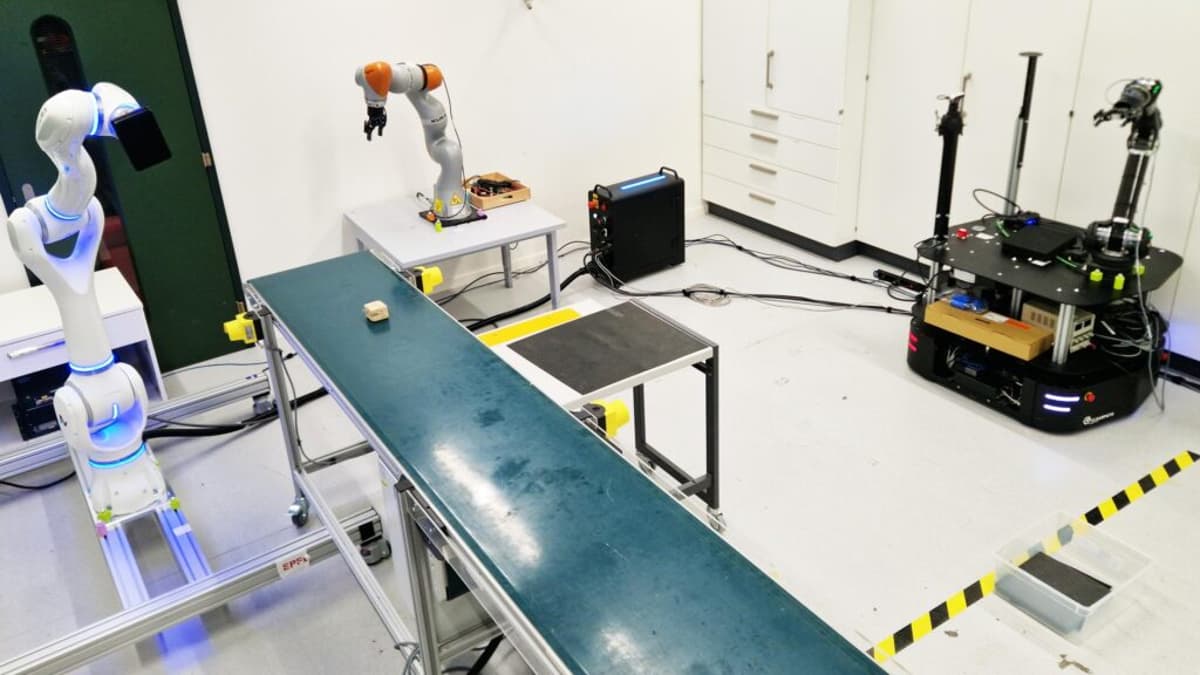
Kinematic Intelligence tackles this challenge by first capturing a human‑performed task with motion‑capture sensors, then converting the trajectory into a generalized movement policy independent of any specific robot geometry. The framework builds a systematic classification of each robot’s joint ranges and stability zones, automatically reshaping the policy to respect those constraints. In a proof‑of‑concept experiment, three unrelated commercial robots—each with unique arm designs—successfully executed a push‑place‑throw sequence originally demonstrated by a human, demonstrating both safety and reliability without manual retuning.
The broader impact reaches beyond the shop floor. By eliminating the need for specialized programming, companies can deploy robots faster, lower training overhead, and more readily adopt emerging hardware platforms. Home‑assistant robots could respond to simple voice commands, and collaborative cobots could learn tasks on the fly from human workers. As robotic hardware continues to evolve, Kinematic Intelligence offers a scalable pathway to maintain continuity of operations, positioning firms that adopt it at a competitive advantage in the accelerating automation market.
How to teach the same skill to different robots
Comments
Want to join the conversation?
Loading comments...