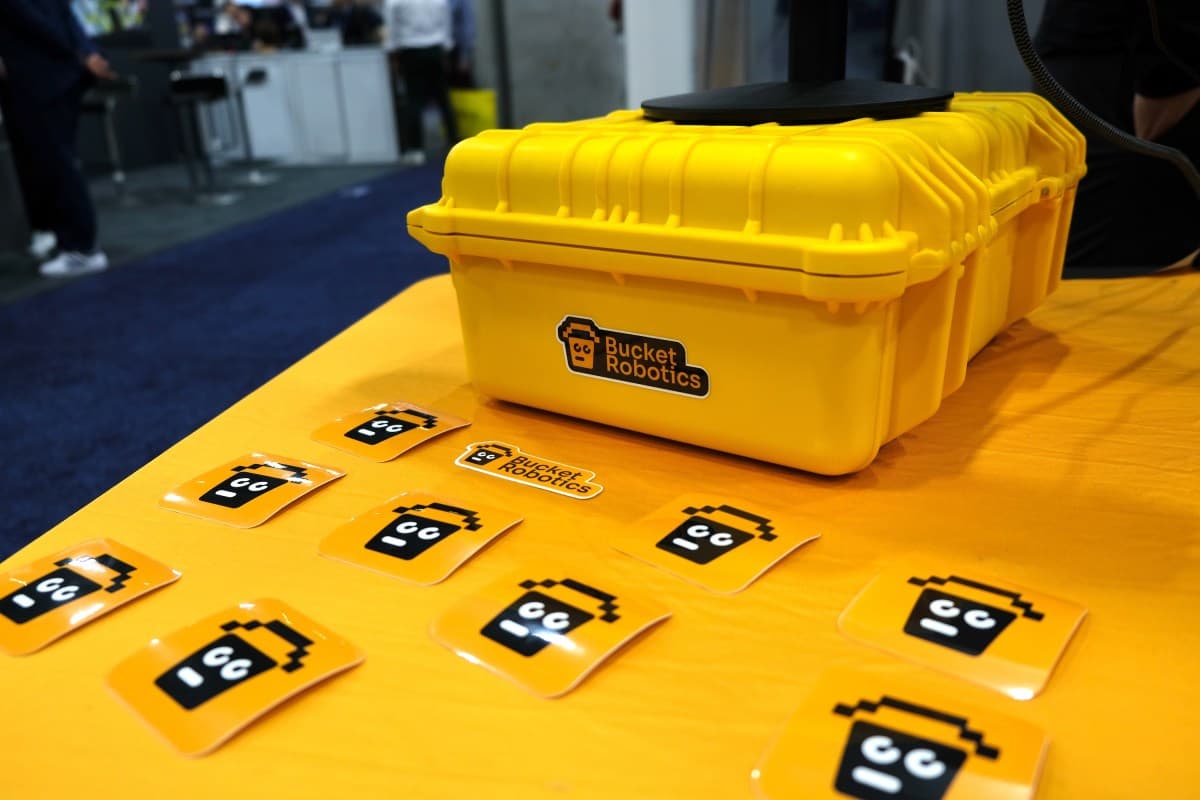
How YC-Backed Bucket Robotics Survived Its First CES
•January 18, 2026
0
Companies Mentioned


Why It Matters
Automating surface quality inspection reduces reliance on manual labor and speeds onshoring of manufacturing, offering a competitive edge to auto and defense producers. The technology’s plug‑and‑play model lowers adoption barriers, accelerating industry digitization.
Key Takeaways
- •YC-backed Bucket Robotics debuted at CES 2026 with live demo
- •Founder drove 12 hours, avoiding flight delays, secured booth
- •Vision system inspects surfaces using CAD‑generated defect simulations
- •No new hardware needed; integrates into existing production lines
- •Attracted automotive and defense customers, positioning as dual‑use startup
Pulse Analysis
The decision to physically attend CES, despite logistical hurdles, underscores how early‑stage hardware startups still rely on face‑to‑face exposure to validate technology and attract capital. While many startups opt for virtual booths, Bucket Robotics’ hands‑on demo allowed investors and potential clients to witness real‑time defect detection, building credibility that a slide deck alone cannot convey. This tactile approach often translates into higher conversion rates during the post‑event follow‑up phase.
Bucket Robotics’ core innovation lies in marrying computer‑generated defect libraries with advanced computer‑vision algorithms. By ingesting CAD models, the platform synthesizes a spectrum of surface anomalies—burn marks, scratches, deformations—eliminating the need for costly, manually labeled datasets. The AI can then be deployed within minutes on existing assembly lines, flagging imperfections without installing new sensors or hardware. This rapid‑deployment capability addresses a longstanding bottleneck in manufacturing: the trade‑off between inspection accuracy and line downtime.
The broader market implications are significant. As automakers and defense contractors pursue onshoring to mitigate supply‑chain risks, a plug‑and‑play inspection solution accelerates that transition by reducing labor‑intensive quality checks. Dual‑use applicability also opens revenue streams across regulated sectors, enhancing the startup’s valuation narrative for future fundraising rounds. If Bucket Robotics can scale its models across diverse part geometries, it could set a new standard for smart factory automation, prompting incumbents to adopt similar AI‑driven inspection frameworks.
How YC-backed Bucket Robotics survived its first CES
0
Comments
Want to join the conversation?
Loading comments...