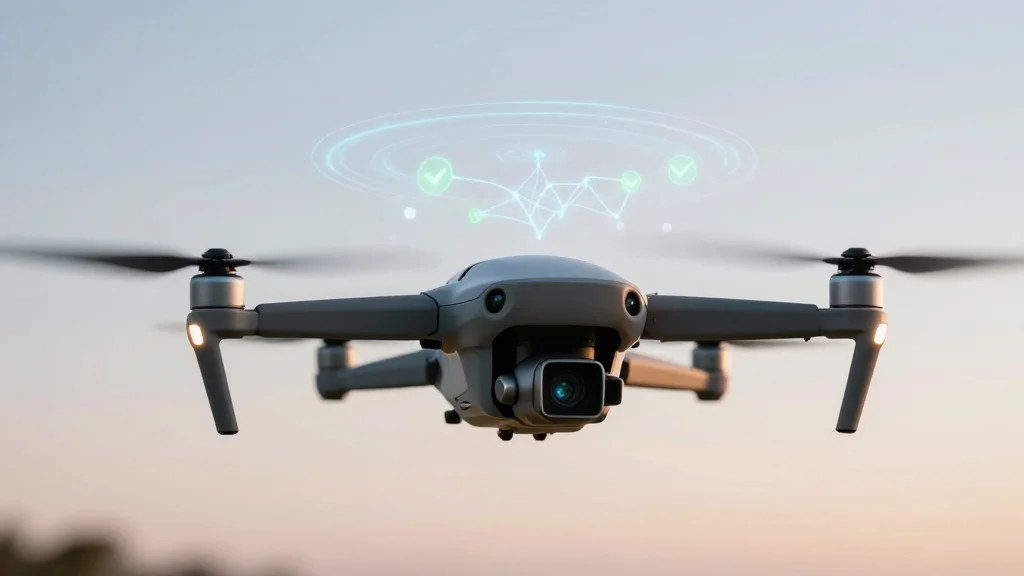
Human-Centered Autonomous Drone Deployments: A Comprehensive Survey on Applications, Challenges, and Future Directions
Why It Matters
A unified pipeline accelerates industry adoption by standardizing how drones are designed, evaluated, and accepted by users, reducing deployment risk and fostering large‑scale applications.
Key Takeaways
- •Survey maps fragmented drone research into a unified deployment pipeline.
- •Highlights AI-driven interfaces improving human‑drone interaction.
- •Identifies gaps in explainability and consistent evaluation across platforms.
- •Calls for scalable testing to enable massive multi‑drone deployments.
Pulse Analysis
The rapid expansion of drone technology—spanning aerial, ground, and underwater platforms—has outpaced the cohesion of research efforts. Academics and engineers have traditionally operated in silos, focusing on isolated aspects such as sensor arrays, navigation algorithms, or user interfaces. This fragmentation hampers the ability of firms to translate breakthroughs into reliable, market‑ready solutions. By framing the field through a deployment‑oriented pipeline, the new survey provides a roadmap that aligns sensing architectures, multimodal interaction models, and evaluation practices, offering a clearer path from prototype to production.
Key insights from the survey highlight the rise of AI‑driven interfaces that enable more intuitive human‑drone collaboration, from gesture‑based commands to natural‑language control. Advances in distributed sensing—leveraging swarms of cameras, LiDAR, and acoustic arrays—enhance situational awareness and resilience in complex environments. However, the authors expose critical gaps: drone behavior remains opaque to operators, and evaluation metrics lack consistency across different vehicle types. These shortcomings impede regulatory approval and public trust, especially in sectors like logistics, infrastructure inspection, and environmental monitoring where safety and social acceptance are paramount.
For industry stakeholders, the survey’s unified framework signals a shift toward standardized testing protocols and scalable validation methods. Companies that adopt these guidelines can accelerate time‑to‑market, reduce costly redesign cycles, and better demonstrate compliance with emerging safety standards. Moreover, the emphasis on explainable autonomous behavior positions firms to meet growing demand for transparent AI systems, a factor increasingly scrutinized by regulators and investors alike. As multi‑drone deployments move from experimental pilots to large‑scale operations, the survey’s recommendations will likely shape the next wave of commercial drone ecosystems.
Human-Centered Autonomous Drone Deployments: A Comprehensive Survey on Applications, Challenges, and Future Directions
Comments
Want to join the conversation?
Loading comments...