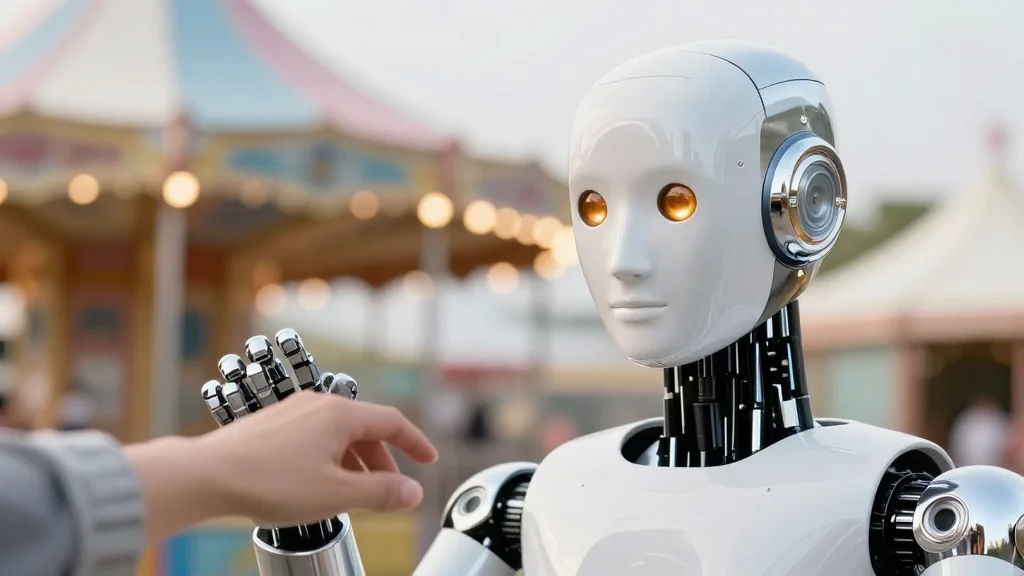
Humanoid Robot Ameca Debuts at San Mateo County Fair, Showcasing Multilingual Interaction

Why It Matters
Ameca’s public debut illustrates how conversational robotics are moving from research labs into everyday venues, testing user comfort levels and gathering real‑world interaction data. Multilingual capability reduces cultural friction, a key hurdle for global robot deployments, and could accelerate adoption in service industries that rely on diverse customer bases. The event also highlights the importance of human‑centric design in robotics. By emphasizing approachable facial expressions and sociable dialogue, Engineered Arts is positioning Ameca as a bridge between novelty gadgets and functional assistants, potentially reshaping consumer expectations for future home and public robots.
Key Takeaways
- •Ameca performed live at the San Mateo County Fair on June 6, engaging visitors in over 50 languages.
- •Engineered Arts' Leo Chen emphasized the robot’s mission to create approachable, sociable machines.
- •The robot’s expressive facial gestures were highlighted as a differentiator for human‑robot interaction.
- •Data privacy details were not disclosed, prompting questions about speech processing in public settings.
- •Engineered Arts plans further public demonstrations and a potential retail rollout later in 2026.
Pulse Analysis
Engineered Arts is leveraging Ameca’s fair debut as a low‑cost, high‑visibility field test. Historically, humanoid robots have struggled to gain traction beyond novelty exhibitions; Ameca’s multilingual fluency and emotive facial rigging address two critical adoption barriers: language accessibility and emotional resonance. By placing the robot in a family‑friendly environment, the company can observe naturalistic engagement patterns that differ from controlled lab settings, informing iterative improvements in speech latency, gesture synchronization, and safety protocols.
From a market perspective, Ameca’s appearance could catalyze a wave of consumer‑focused robotics ventures seeking to emulate its social design language. Competitors such as SoftBank Robotics and Hanson Robotics have long touted conversational abilities, but few have demonstrated the breadth of language support Ameca offers. If Engineered Arts can translate fair‑day enthusiasm into commercial contracts—particularly in hospitality or retail—the robot could become a template for next‑generation service bots that blend entertainment with functional assistance.
However, the path forward is not without challenges. Public perception of robots remains mixed, especially amid broader AI hype and concerns over data privacy. Engineered Arts must articulate clear data governance policies to assuage privacy worries, especially as it scales deployments beyond controlled events. Moreover, the cost of producing a high‑fidelity humanoid with advanced speech processing remains steep, potentially limiting early adoption to premium venues. Success will hinge on the company’s ability to balance technical sophistication with price accessibility, while delivering consistent, safe interactions across diverse cultural contexts.
Humanoid Robot Ameca Debuts at San Mateo County Fair, Showcasing Multilingual Interaction
Comments
Want to join the conversation?
Loading comments...