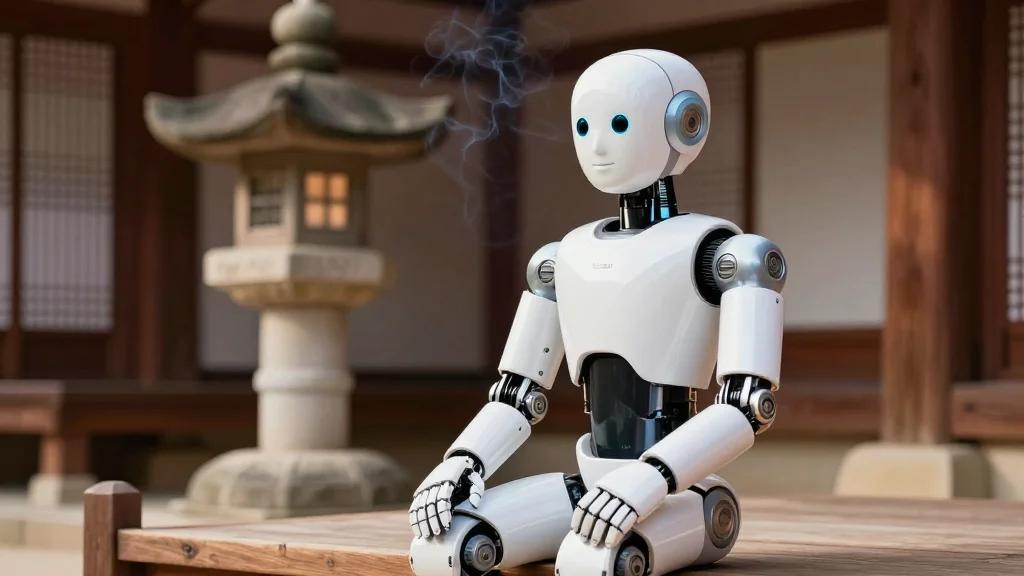
Humanoid Robot Gabi Ordained as Buddhist Monk in Seoul, Sparking Ethics Debate

Companies Mentioned
Why It Matters
The ordination of Gabi blurs the line between spiritual tradition and emerging technology, forcing religious leaders, ethicists, and policymakers to confront questions of robot personhood and the appropriateness of AI in sacred contexts. For the robotics industry, the high‑profile ceremony offers a powerful marketing narrative that positions humanoid robots as socially acceptable companions, potentially unlocking new markets in hospitality, education, and public services. Beyond commercial angles, the event highlights a cultural shift in South Korea, where declining religious participation is prompting institutions to adopt unconventional outreach methods. If successful, the Jogye Order’s strategy could inspire other faiths worldwide to experiment with AI‑enhanced rituals, reshaping how societies negotiate the coexistence of technology and belief.
Key Takeaways
- •Unitree G1 robot Gabi, valued at $13,500, was ordained as a Buddhist monk at Jogyesa Temple on May 6, 2026.
- •The robot recited five adapted Buddhist precepts, including a rule against overcharging its battery.
- •South Korea’s Buddhist affiliation has fallen to 16% overall and 8% among 20‑year‑olds, prompting innovative outreach.
- •The ceremony’s viral video surpassed one million views, raising global awareness of Unitree’s humanoid platform.
- •U.S. officials have warned that Chinese‑made robots could pose national‑security risks, adding a geopolitical layer to the event.
Pulse Analysis
The Gabi ordination is less a theological milestone than a strategic branding exercise for both the Jogye Order and Unitree Robotics. For the temple, the spectacle offers a tangible hook for a generation that consumes content through algorithms and viral videos. By embedding a robot in a centuries‑old ritual, the order signals openness to digital transformation, potentially reversing its membership decline. However, the move also risks alienating traditionalists who view the act as a dilution of sacred practice.
From a market perspective, the ceremony functions as a live product demonstration on a global stage. Unitree’s G1, already praised for its mobility and open‑source software stack, now enjoys a narrative that transcends pure engineering—one that ties the robot to cultural relevance and ethical discourse. This could accelerate adoption in sectors that value public trust, such as elder‑care or hospitality, where a robot’s perceived benevolence can be a differentiator. Yet the security concerns raised by U.S. lawmakers about Chinese‑origin hardware may temper enthusiasm among risk‑averse buyers, prompting Unitree to consider stricter supply‑chain transparency or partnerships with Western firms.
Looking ahead, the success of Gabi will be measured not by the number of beads placed around its neck but by concrete metrics: temple attendance, social‑media engagement, and any uptick in Unitree sales linked to the publicity. If the experiment proves profitable, we may see a wave of AI‑augmented religious ceremonies worldwide, prompting regulators to draft new guidelines on the use of autonomous agents in sacred spaces. The convergence of robotics and ritual could become a defining feature of the next decade’s cultural‑tech landscape.
Humanoid Robot Gabi Ordained as Buddhist Monk in Seoul, Sparking Ethics Debate
Comments
Want to join the conversation?
Loading comments...