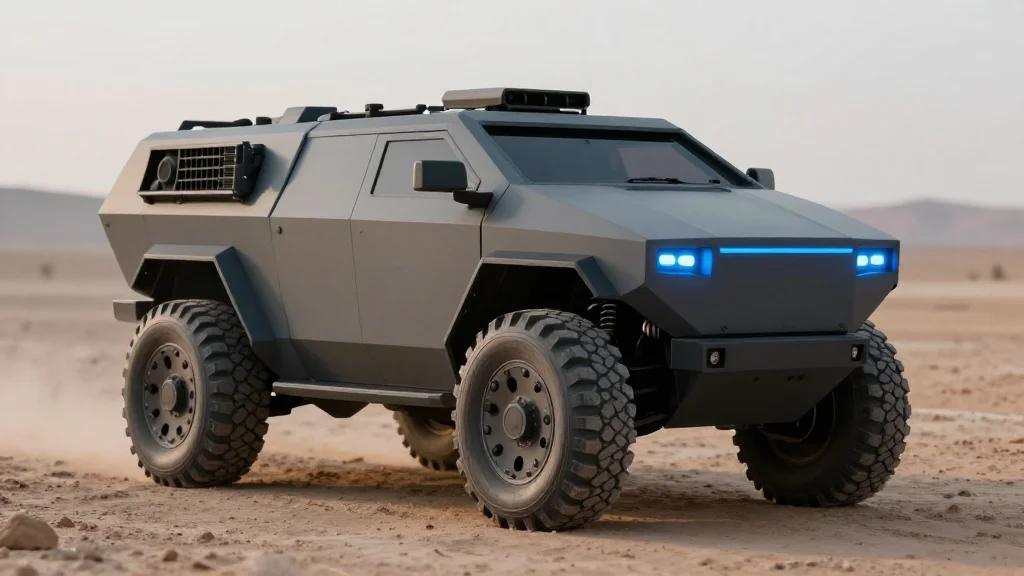
Hypercraft Debuts Razorback UGV with 38 kW Power Output for Laser Weapons

Why It Matters
The Razorback addresses a critical bottleneck in the adoption of directed‑energy weapons: reliable, field‑deployable power. By delivering 38 kW from a mobile platform, Hypercraft removes the need for static generators or vehicle‑mounted power packs, potentially reshaping how armies protect forward positions against aerial threats. Moreover, the UGV’s dual role as a drone charger and command hub could streamline supply lines, reducing the number of support vehicles required in contested zones. If the Razorback’s hybrid diesel‑electric system proves robust, it may catalyze a new class of high‑energy UGVs across allied forces, prompting competitors to accelerate development of similar platforms. The ripple effect could extend to civilian sectors such as disaster response, where portable high‑power solutions are equally valuable.
Key Takeaways
- •Hypercraft unveiled the Razorback UGV, a 300‑hp diesel‑hybrid vehicle.
- •The platform can export 38 kW of power, sufficient for tactical laser weapons.
- •Razorback can travel 280 miles on a single charge and reach speeds of 60 mph.
- •Designed to charge drones, power ISR and electronic‑warfare gear, and host a mobile command post.
- •Field trials with the U.S. Army are scheduled for later 2026, with production aimed for 2027.
Pulse Analysis
Hypercraft’s Razorback arrives at a moment when the U.S. Department of Defense is aggressively pursuing energy‑dense, autonomous solutions for the contested battlespace. Historically, the rollout of high‑power laser systems has been hampered by the lack of portable generators that can keep up with the rapid tempo of modern operations. By embedding a 38‑kilowatt export capability into a rugged UGV, Hypercraft sidesteps the logistical nightmare of hauling separate power units, effectively turning the vehicle into a moving power plant.
The strategic value of such a platform extends beyond pure firepower. In a theater where drones are proliferating as both sensors and weapons, the ability to recharge them on the move reduces turnaround time and expands operational reach. This could force adversaries to rethink their own drone‑countermeasure tactics, knowing that friendly forces can sustain aerial assets without returning to a base.
Competitors are unlikely to sit idle. Companies like General Dynamics and BAE Systems have hinted at high‑energy UGV concepts, but none have publicly disclosed a power export figure comparable to Razorback’s 38 kW. If Hypercraft can demonstrate reliability under combat conditions, it may capture a niche market that bridges the gap between traditional logistics vehicles and emerging autonomous combat platforms. The next few months of testing will be decisive, and the outcome could set the standard for how the U.S. and its allies power the next generation of battlefield technology.
Hypercraft Debuts Razorback UGV with 38 kW Power Output for Laser Weapons
Comments
Want to join the conversation?
Loading comments...