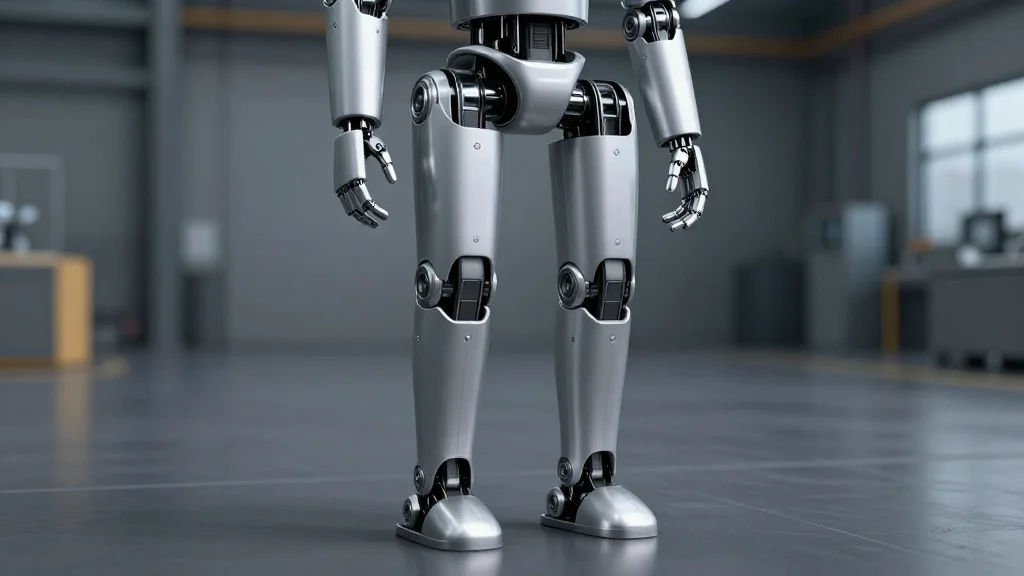
Hyundai Motor Group Accelerates Atlas Humanoid Robot Mass Production for AI‑Driven Factories

Companies Mentioned


Why It Matters
Hyundai’s decision to mass‑produce a humanoid robot marks a watershed in industrial automation, moving the technology from research labs into everyday manufacturing. By coupling Atlas with a proprietary AI‑driven software platform, Hyundai aims to create factories that can reconfigure themselves on the fly, reducing downtime and labor costs. The initiative also strengthens Hyundai’s position in the broader robotics ecosystem, giving it leverage over traditional automation vendors and opening new revenue streams from robot sales and software services. If Hyundai can achieve cost‑effective scale, the Atlas robot could become a standard tool for tasks that are currently too complex or unsafe for traditional industrial arms. This would accelerate the adoption of AI‑enabled manufacturing across sectors such as automotive, electronics and consumer goods, reshaping global supply chains and workforce requirements.
Key Takeaways
- •Hyundai designates its Georgia Metaplant America (HMGMA) facility as the lead site for Atlas humanoid robot mass production.
- •New Software‑Defined Factory (SDF) division created, led by Alpesh Patel, to integrate AI across production, quality and logistics.
- •Robotics Parts Procurement Office launched to secure actuators, grippers and head modules, with a potential 350,000‑unit annual actuator plant.
- •Initial pilot deployments expected Q4 2026, with scaling to low‑thousands of Atlas units by 2028.
- •"Hyundai is no longer a fast follower," said Donald G. Southerton, highlighting the strategic shift toward advanced robotics.
Pulse Analysis
Hyundai’s Atlas push is more than a hardware rollout; it is a strategic bet on vertical integration of robotics, AI software and supply‑chain control. Historically, automakers have outsourced robot procurement to specialists like ABB or KUKA, limiting their ability to tailor hardware to specific production challenges. By bringing Atlas in‑house and pairing it with a proprietary SDF platform, Hyundai can iterate faster, customize robot behavior for its own assembly lines, and monetize the software stack across third‑party manufacturers.
The competitive landscape is fragmented. While Boston Dynamics provides the most advanced humanoid platform, its commercial viability has been hampered by high unit costs and limited production capacity. Hyundai’s partnership leverages Boston Dynamics’ expertise while using Hyundai Mobis’ mass‑production capabilities to drive down costs. If Hyundai can achieve the projected 30% cost reduction, it could undercut traditional collaborative robot pricing, forcing rivals to accelerate their own humanoid programs or risk obsolescence.
From a market perspective, the move aligns with a broader shift toward AI‑centric factories, where data, digital twins and autonomous decision‑making replace static, human‑driven processes. Companies that fail to adopt such integrated systems may face higher labor expenses and slower time‑to‑market. Hyundai’s aggressive timeline—piloting in late 2026 and scaling by 2028—sets a clear benchmark for the industry. The success of this initiative will likely influence capital allocation decisions across the manufacturing sector, prompting investors to favor firms that can demonstrate end‑to‑end AI‑enabled production capabilities.
In the longer term, Hyundai’s model could spawn a new ecosystem of robot‑as‑a‑service offerings, where factories lease Atlas units and pay for the accompanying AI software on a subscription basis. This would democratize access to advanced robotics for midsize manufacturers, potentially reshaping the global competitive balance in manufacturing and accelerating the transition to fully autonomous production lines.
Hyundai Motor Group Accelerates Atlas Humanoid Robot Mass Production for AI‑Driven Factories
Comments
Want to join the conversation?
Loading comments...