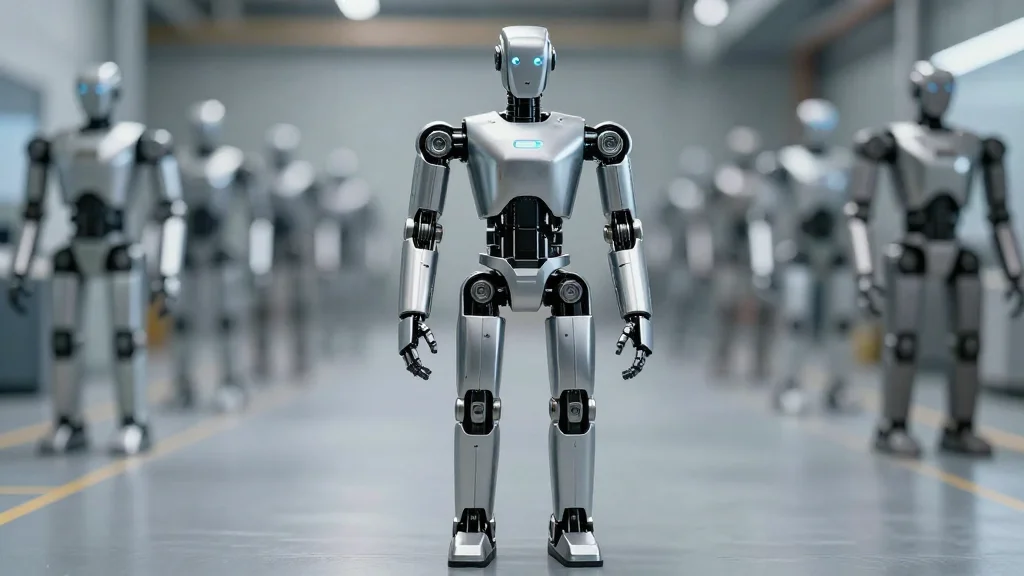
Hyundai Pushes for Tens of Thousands of Boston Dynamics Atlas Robots, Accelerating Mass Production

Companies Mentioned

Why It Matters
Hyundai’s push for mass‑produced Atlas robots signals a turning point where large‑scale manufacturers treat humanoid robots as core assets rather than experimental tools. By committing to tens of thousands of units, Hyundai is betting that advanced mobility and manipulation can deliver measurable efficiency gains in automotive assembly, logistics, and even after‑sales services. The move also forces other robotics firms to accelerate their own production capabilities, potentially compressing development cycles across the sector. Moreover, the leadership upheaval at Boston Dynamics highlights the growing pains of transitioning from a research‑focused lab to a commercial mass‑production entity. How the company manages this shift will set precedents for future robotics startups seeking to scale under the scrutiny of corporate owners and fierce competition from tech giants like Tesla.
Key Takeaways
- •Hyundai demands "tens of thousands" of Atlas robots for its factories within the next few years.
- •Boston Dynamics showcased a production‑ready Atlas at CES with a target of 30,000 units per year.
- •CEO Robert Playter retired; CTO and CFO also left, prompting a restructuring to support mass production.
- •Kia plans to deploy Atlas at Metaplant America in 2028 and AutoLand Georgia in 2029 as part of a $3.7 billion investment.
- •Boston Dynamics currently builds four Atlas units per month while scaling up manufacturing.
Pulse Analysis
Hyundai’s aggressive procurement reflects a broader industry shift: automakers are no longer content with incremental automation; they want fully mobile, adaptable robots that can handle a variety of tasks across the production line. This strategy mirrors the software‑defined vehicle trend, where hardware becomes a platform for continuous updates. By locking in a large volume of Atlas units, Hyundai can amortize the high upfront R&D costs of humanoid robotics and potentially achieve a cost per unit comparable to traditional industrial arms.
The leadership turnover at Boston Dynamics is a double‑edged sword. On one hand, fresh executives may bring the operational rigor needed for high‑volume manufacturing. On the other, the loss of seasoned engineers could slow innovation, risking the company’s competitive edge against Tesla’s Optimus and other emerging humanoids. The board’s focus on scaling suggests that short‑term production targets may outweigh longer‑term research ambitions, a trade‑off that could reshape Boston Dynamics’ product roadmap.
If Hyundai succeeds, it will set a precedent for other heavy‑industry players to adopt humanoid robots at scale, potentially unlocking new use cases in warehousing, maintenance, and even customer‑facing roles. Conversely, failure to meet the delivery timeline could erode confidence in large‑scale humanoid deployment, reinforcing the dominance of more conventional robotic arms. The next quarter will be critical as Boston Dynamics reveals its detailed production plan and Hyundai decides whether to double‑down on the Atlas platform or diversify its robotics portfolio.
Hyundai Pushes for Tens of Thousands of Boston Dynamics Atlas Robots, Accelerating Mass Production
Comments
Want to join the conversation?
Loading comments...