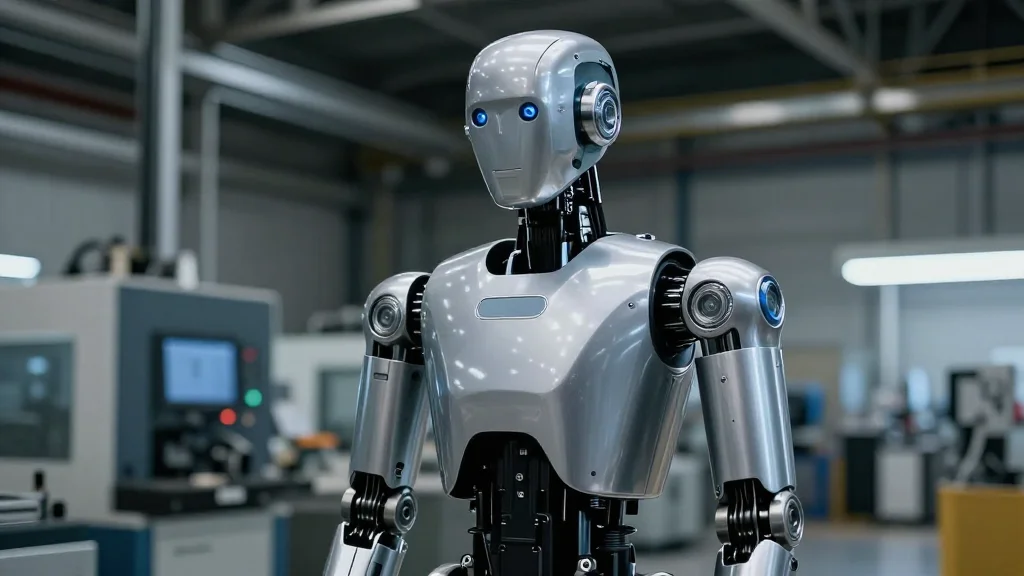
Hyundai to Deploy 25,000 Atlas Humanoid Robots by 2028, Union Pushes Back

Companies Mentioned

Why It Matters
The scale of Hyundai’s planned Atlas deployment could redefine the economics of humanoid robotics, turning what has been a niche technology into a mainstream production tool. A successful rollout would validate the commercial viability of high‑cost, AI‑enabled robots and could accelerate investment across the supply chain, from sensor manufacturers to software providers. Conversely, the union’s resistance underscores the social and political challenges that accompany rapid automation. If labor negotiations stall or lead to restrictive agreements, other automakers may hesitate to pursue similarly ambitious robot programs, potentially slowing the overall pace of industrial AI adoption. The outcome will therefore influence both market dynamics and policy debates around future work.
Key Takeaways
- •Hyundai plans to install >25,000 Atlas humanoid robots by 2028.
- •Annual production target set at 30,000 Atlas units and 300,000 actuators.
- •Union demands a labor‑management deal before any robot is introduced.
- •First deployments slated for Metaplant America and Kia AutoLand in Georgia.
- •Rollout could outpace any existing humanoid robot program in the auto industry.
Pulse Analysis
Hyundai’s commitment to a massive Atlas fleet signals a strategic bet that the cost curve for humanoid robots will steeply decline as volume scales. By anchoring production in the United States, the company not only taps into a robust supply chain but also positions itself to meet rising demand for flexible automation in high‑mix, low‑volume vehicle lines. The projected 30,000‑unit annual output suggests Hyundai expects a rapid amortization of R&D spend, potentially driving down unit costs to a level where smaller OEMs could consider similar deployments.
However, the labor backlash illustrates a classic adoption dilemma: technology can outpace the social contract governing work. The Korean Metal Workers’ Union’s demand for a formal agreement mirrors earlier disputes in the steel and shipbuilding sectors, where automation sparked collective bargaining over job guarantees and retraining. If Hyundai concedes to stringent worker consent clauses, it may set a precedent that could raise compliance costs for other firms, dampening the speed of robot integration.
In the broader market, investors are likely to watch Hyundai’s progress as a bellwether for the next wave of industrial AI. Success could unlock a new asset class of robot manufacturers and component suppliers, while a stalled rollout would reinforce the view that humanoid robots remain a high‑risk, low‑return venture. The coming months of labor negotiations will therefore be as pivotal as the engineering milestones in determining whether Hyundai’s Atlas ambition reshapes the manufacturing landscape or becomes a cautionary tale.
Hyundai to Deploy 25,000 Atlas Humanoid Robots by 2028, Union Pushes Back
Comments
Want to join the conversation?
Loading comments...