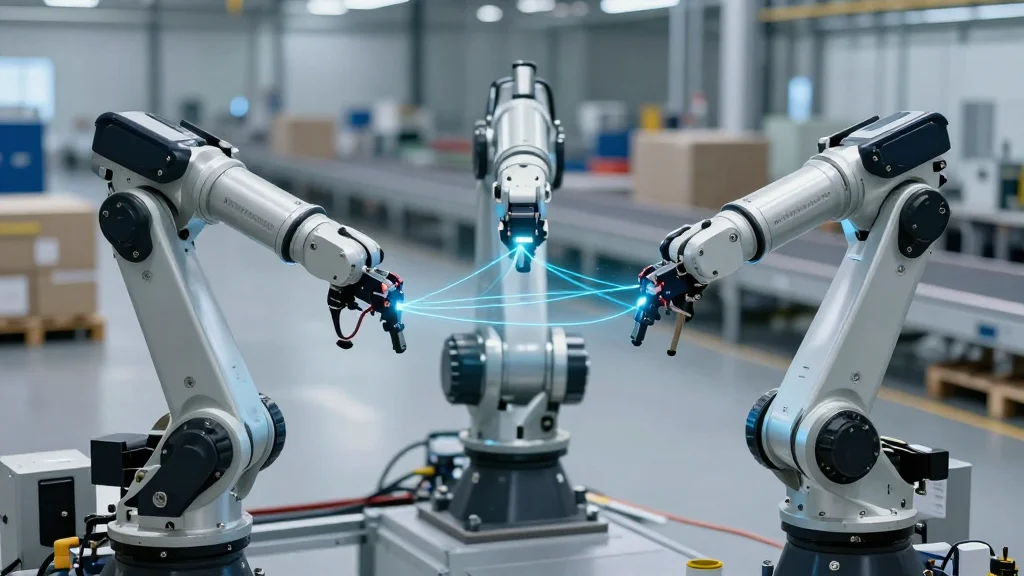
IEEE Explores Future of ‘Networked AI’ Where Robots Learn Collectively
Why It Matters
Networked AI promises real‑time self‑optimization for robot fleets, cutting latency and maintenance costs while boosting resilience in dynamic industrial settings. The IEEE initiative signals a coordinated push toward distributed intelligence that could reshape automation across logistics, manufacturing, and autonomous transport.
Key Takeaways
- •Networked AI enables robots to share data and learn together
- •Distributed intelligence reduces reliance on centralized cloud processing
- •Multi‑agent systems can self‑optimize in real‑time environments
- •Industry fleets benefit from collective adaptation and reduced downtime
- •IEEE call invites research on edge‑cloud LLMs and adaptive signal processing
Pulse Analysis
Networked AI represents a paradigm shift from siloed automation to a collaborative ecosystem where robots continuously exchange insights. By merging adaptive signal processing with deep learning, these systems can adjust algorithms on the fly, mirroring how human teams share knowledge. The IEEE’s new special issue formalizes this emerging field, encouraging scholars to explore mechanisms for coordinated sensing, online model‑drift detection, and cognitive communications that keep performance stable in non‑stationary environments.
For industry, the move toward distributed intelligence translates into tangible gains. Warehouse robot fleets can reallocate tasks instantly when a unit fails, autonomous vehicles can harmonize routes without cloud latency, and production lines can fine‑tune parameters as raw material qualities shift. Edge‑embedded AI reduces bandwidth demands and enhances data privacy, while collective learning curtails the need for frequent human‑driven re‑training. However, orchestrating thousands of agents raises challenges in security, synchronization, and standards compliance, prompting a surge in research on robust network protocols and fault‑tolerant architectures.
Looking ahead, the IEEE call sets a research agenda that aligns with commercial trends such as industry‑specific large language models and scene‑adaptive autonomous driving. As papers mature into prototypes, early adopters could gain competitive edges through lower downtime and faster innovation cycles. The June 2026 deadline offers a narrow window for academics to shape the technology roadmap, while the planned January 2027 publication will likely become a reference point for both academia and enterprise. Stakeholders should monitor the emerging literature to anticipate breakthroughs that may redefine the economics of robotics and AI deployment.
IEEE explores future of ‘networked AI’ where robots learn collectively
Comments
Want to join the conversation?
Loading comments...