Interpack 2026 Unveils Heavy‑Load AMRs, Schneider’s Lexium Cobot and AI‑Powered Packing Software

Companies Mentioned
Why It Matters
The Interpack 2026 announcements illustrate how the packaging sector is confronting two intertwined challenges: a shrinking pool of skilled operators and the need for faster, more customized production runs. Heavy‑load AMRs like Omron’s HD‑1500 and Formic’s swarm system promise to automate the physically demanding transport of machinery and bulk goods, freeing human workers for higher‑value tasks. At the same time, collaborative cobots and AI‑driven software lower the technical expertise required to program and maintain robotic cells, making automation accessible to small‑ and medium‑sized enterprises that previously could not justify large capital outlays. By marrying robust material handling with intuitive, AI‑enhanced control, these technologies could reshape supply‑chain economics. Faster changeovers, tighter packing densities and reduced downtime translate into lower per‑unit costs and a smaller carbon footprint, aligning with broader sustainability mandates. If adoption scales as projected, the packaging industry may see a measurable dip in labour‑related expenses and a surge in throughput, reshaping competitive dynamics across Europe, North America and Asia.
Key Takeaways
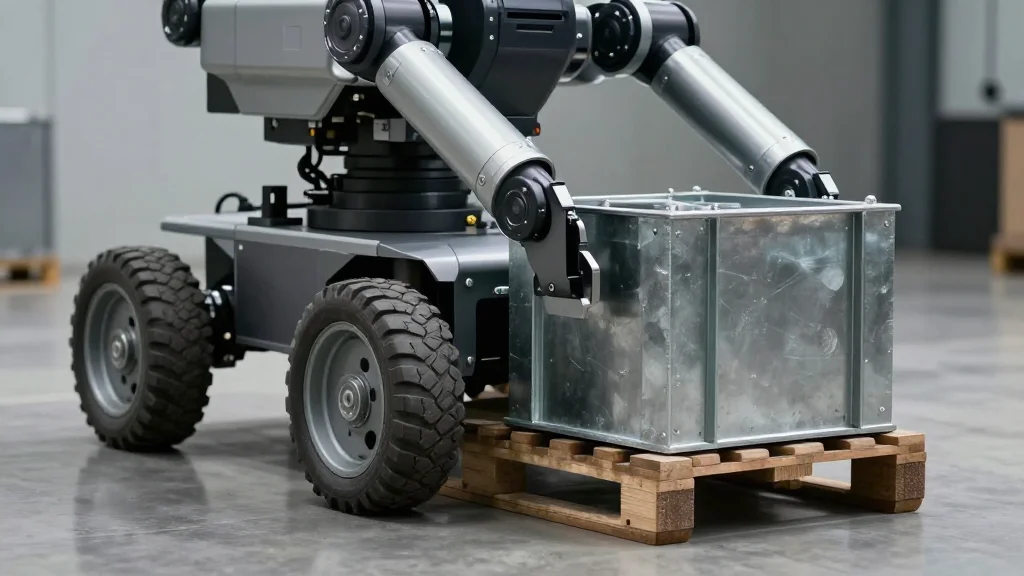
- •Omron unveiled the HD‑1500 AMR, lifting 1.5 tonnes – a three‑fold increase over its previous model.
- •Formic’s swarm of up to 15 vehicles can collectively lift 40 tonnes, enabling remote relocation of production equipment.
- •Schneider Electric introduced the Lexium cobot family, offering 3‑18 kg payloads and up to 40 % space savings versus traditional robots.
- •Fraunhofer IPA’s bin‑packing software can arrange up to 1,300 items per hour, improving load efficiency and sustainability.
- •ABB highlighted AI‑driven depalletising that combines vision, robotics and intuitive programming to reduce skill barriers.
Pulse Analysis
Interpack 2026 marks a watershed in packaging automation by aligning three historically separate trajectories: heavy‑load autonomous transport, safe human‑robot collaboration, and AI‑centric software. Historically, manufacturers faced a trade‑off – either invest in massive, fixed AMR fleets for bulk movement or adopt lightweight cobots for precision tasks. The simultaneous rollout of Omron’s HD‑1500 and Formic’s swarm suggests a convergence where the same production line can flexibly switch between moving entire machines and handling palletised goods, blurring the line between intralogistics and assembly.
The strategic emphasis on ease of programming, voiced by ABB’s Daniel Navarro, reflects a broader industry acknowledgement that the scarcity of robotics engineers is a more pressing bottleneck than hardware cost. By embedding graphical, lead‑through teaching tools and leveraging generative AI for natural‑language programming, vendors are effectively democratizing automation. This could accelerate adoption among SMEs, historically the laggards in robotics uptake, and compress the typical 12‑ to 18‑month deployment cycle to under six months.
From a market perspective, the combined hardware and software announcements could intensify competition among the established automation giants – Omron, Schneider Electric, ABB – and emerging specialist firms like Formic and Fraunhofer IPA. Companies that can deliver an integrated stack – from swarm‑based transport to AI‑optimized packing – will likely capture the next wave of contracts, especially as OEMs seek to future‑proof factories against volatile demand and tightening environmental regulations. The next quarter will reveal whether these promises translate into real‑world ROI, but the signal is clear: packaging automation is moving from niche to mainstream, driven by a blend of raw lifting power, collaborative safety and intelligent software.
Interpack 2026 Unveils Heavy‑Load AMRs, Schneider’s Lexium Cobot and AI‑Powered Packing Software
Comments
Want to join the conversation?
Loading comments...