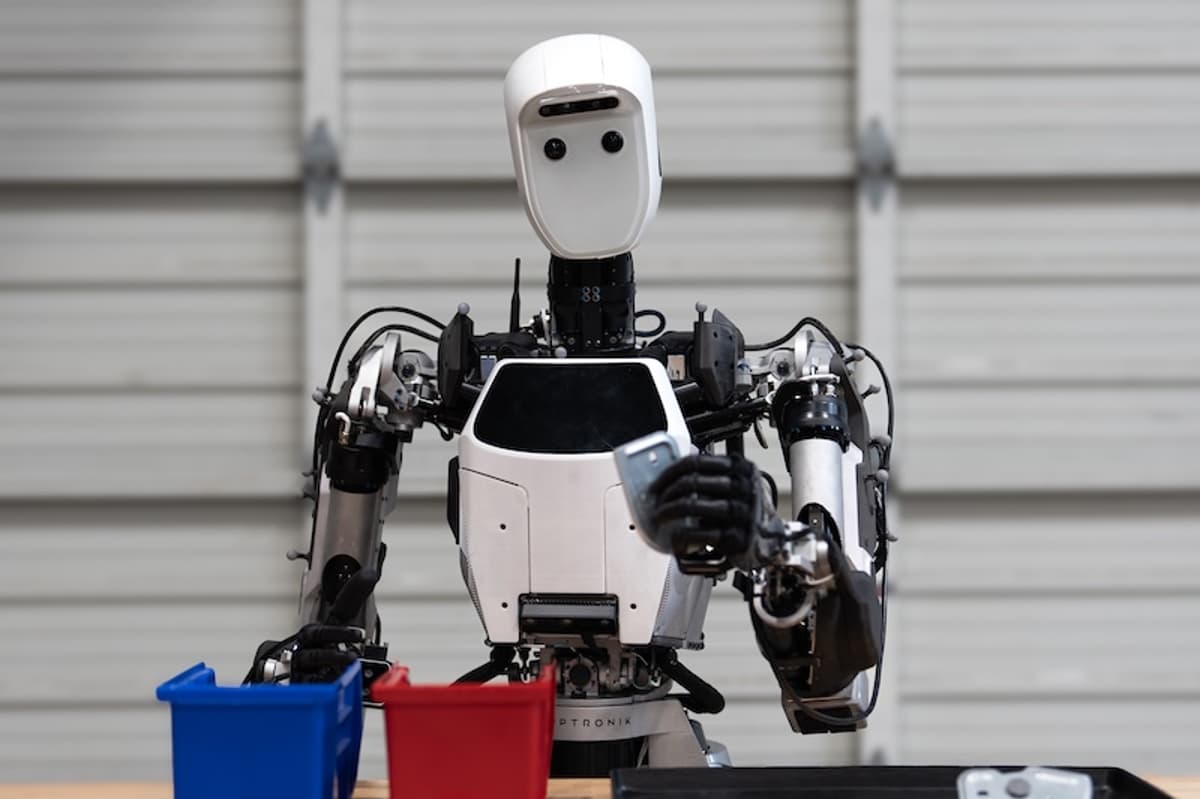
Interview: Jabil on Scaling Humanoid Robots From Prototype to Production

Why It Matters
Industrializing humanoid robots could unlock flexible automation in labor‑intensive warehouses, reshaping cost structures and competitive dynamics in the robotics market.
Key Takeaways
- •Jabil partners with Apptronik to industrialize the Apollo humanoid robot
- •Scaling humanoids demands design for manufacturability and embedded testability
- •Supply‑chain maturity for humanoids lags behind AMRs and AGVs
- •Cost competitiveness hinges on volume‑driven component price drops
- •Humanoids aim to operate in existing warehouse layouts without major redesign
Pulse Analysis
The push to commercialize humanoid robots is moving beyond laboratory demos toward real‑world deployment, and Jabil’s involvement highlights the manufacturing discipline required for that transition. By applying its global production footprint and supply‑chain expertise, Jabil helps convert the Apollo platform from a bespoke prototype into a repeatable product line. This effort mirrors the broader trend where tier‑one manufacturers act as the bridge between cutting‑edge robotics research and mass‑market automation, ensuring that each unit meets safety, reliability, and cost targets before it reaches a warehouse floor.
Unlike autonomous mobile robots (AMRs) and automated guided vehicles (AGVs), which benefit from standardized sensors and components, humanoid robots integrate a wide array of low‑volume parts—actuators, custom joints, and advanced power systems. Jabil’s strategy focuses on stabilizing these components, qualifying suppliers, and driving learning‑curve improvements that lower unit economics over time. The company also embeds testability into the design, turning validation from a downstream bottleneck into a production‑line step, thereby shortening cycle times and reducing variability. These manufacturing advances are essential for achieving the price points and uptime required for large‑scale warehouse adoption.
For end users, the promise of humanoid robots lies in their ability to work within human‑centric environments without costly facility redesigns. As Jabil refines production processes and supply chains, the total cost of ownership can become competitive with traditional automation or even human labor, especially in regions facing labor shortages and high turnover. The eventual success of humanoids will depend on their demonstrated multipurpose value, safety compliance, and reliable performance at scale—factors that Jabil is uniquely positioned to deliver. This industrialization pathway could accelerate the shift toward flexible, labor‑augmenting robotics across logistics and manufacturing sectors.
Interview: Jabil on scaling humanoid robots from prototype to production
Comments
Want to join the conversation?
Loading comments...