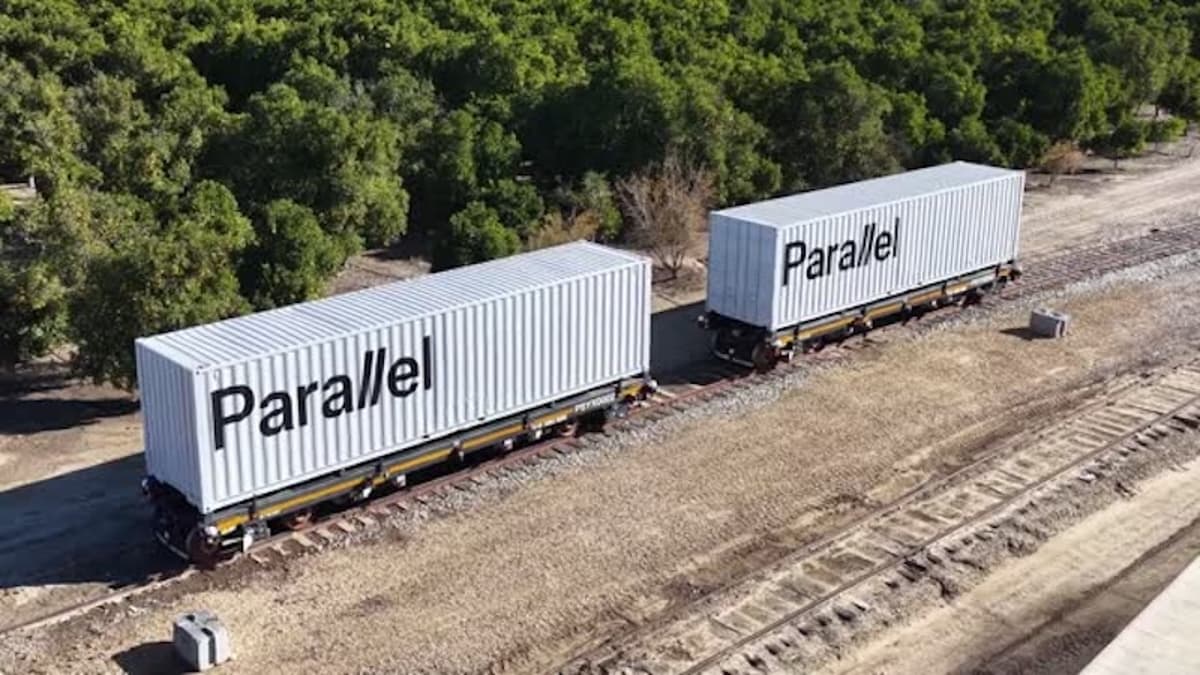
Interview: Parallel Systems CEO Matt Soule on Building ‘the World’s First Autonomous Freight Rail System’
Companies Mentioned
Why It Matters
Autonomous electric rail could dramatically cut logistics costs, reduce emissions, and reshape the $800 billion U.S. trucking market by capturing high‑value short‑haul freight.
Key Takeaways
- •Parallel Systems raised over $100 million for autonomous electric rail development.
- •Testing autonomous rail platoons with Genesee & Wyoming Railroad in Georgia.
- •Company targets shifting $100 billion freight from trucks to rail.
- •Backlog exceeds 300 self‑propelled railcars ready for commercial rollout.
- •Battery‑electric railcars promise zero emissions and on‑demand flexibility.
Pulse Analysis
The push toward autonomous freight rail arrives at a moment when the logistics sector is hungry for alternatives to diesel‑powered trucks. While autonomous trucking has dominated headlines, rail offers a naturally efficient backbone for moving bulk goods, and electrification adds a climate‑friendly edge. Parallel Systems leverages advances in battery technology, lidar, and AI‑driven orchestration to create modular railcars that can be dispatched in small, flexible platoons. This model sidesteps the rigidity of traditional long‑haul trains, making rail viable for the short‑haul, high‑frequency routes that e‑commerce and just‑in‑time manufacturing demand.
Technically, the company’s Generation 3 vehicles combine high‑energy‑density batteries with regenerative braking and redundant safety systems, allowing them to operate without a central locomotive. The self‑propelled design reduces coupling time and enables precise, software‑controlled spacing, which improves track utilization and lowers operating costs. Regulatory hurdles remain, as the Federal Railroad Administration must certify autonomous operations on shared corridors. Parallel’s partnership with Genesee & Wyoming Railroad provides a real‑world proving ground, demonstrating that safety standards can be met while delivering on‑demand service.
If Parallel’s projections hold, the shift could redirect up to $100 billion of freight from trucks to rail, trimming trucking volume out of ports by roughly 30 percent. Beyond cost savings, the transition promises substantial emissions reductions and a rebalancing of labor in the freight ecosystem. Autonomous railcars will create new roles in remote monitoring, maintenance, and micro‑terminal operations, while freeing truck drivers from grueling long‑haul routes. As AI routing, robotic warehouses, and autonomous trucks converge, a synchronized, low‑friction logistics network emerges—positioning electric rail as a critical “muscle” in the next decade’s supply‑chain architecture.
Interview: Parallel Systems CEO Matt Soule on building ‘the world’s first autonomous freight rail system’
Comments
Want to join the conversation?
Loading comments...