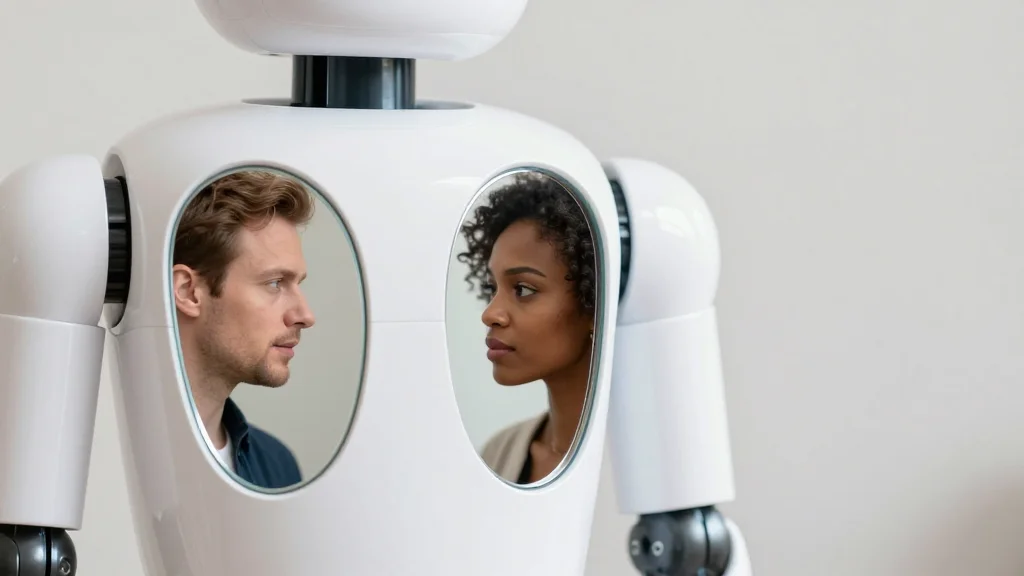
Introducing MirrorBot, a Robot Designed to Foster Human Connection
Why It Matters
MirrorBot demonstrates how embodied technology can bridge social gaps in shared spaces, offering a scalable tool for enhancing human connection. Its success signals new avenues for robots as facilitators rather than just conversational agents.
Key Takeaways
- •MirrorBot uses dual mirrors to prompt eye contact.
- •Study showed 12 of 16 groups initiated contact via mirrors.
- •MirrorBot outperformed robot without mirrors and plain mirrors.
- •Some participants felt discomfort, highlighting need for adaptive interaction.
- •Robots can act as spatial mediators in public waiting areas.
Pulse Analysis
The rise of personal devices has paradoxically increased physical proximity while eroding spontaneous social interaction. MirrorBot tackles this paradox by turning a simple reflective surface into a catalyst for eye contact, the most primal form of human connection. By positioning participants so they see themselves and the other person simultaneously, the robot creates a low‑stakes environment that reduces the anxiety of initiating conversation, a dynamic that traditional digital platforms cannot replicate.
Beyond the novelty of a mirror‑bearing robot, the research offers concrete evidence that embodied mediators can outperform static fixtures. In comparative trials, MirrorBot generated more genuine exchanges than a wall‑mounted mirror or a robot lacking reflective surfaces, underscoring the importance of mobility and contextual framing. The findings align with broader human‑robot interaction studies that emphasize physical presence and shared attention as critical levers for trust and engagement. For designers of public spaces—airports, hospitals, co‑working hubs—integrating such mediators could transform idle waiting periods into opportunities for networking, wellbeing, and community building.
However, the mixed participant reactions highlight a design imperative: robots must sense when to intervene and when to step back. Over‑enthusiastic facilitation can feel intrusive, suggesting future iterations will need adaptive algorithms that gauge social cues in real time. As MirrorBot heads to the CHI ‘26 conference, its trajectory points toward a new class of socially aware machines that prioritize human connection over task execution, potentially reshaping the role of robotics in everyday life.
Introducing MirrorBot, a robot designed to foster human connection
Comments
Want to join the conversation?
Loading comments...