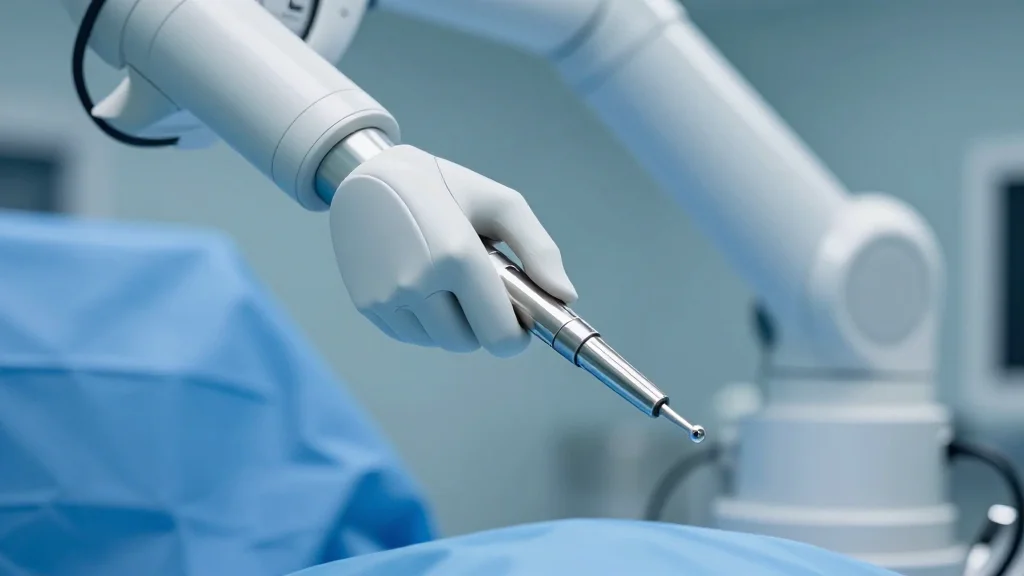
Intuitive Surgical’s Da Vinci Platform Powers 580% Stock Surge

Companies Mentioned
Why It Matters
Intuitive Surgical’s growth model illustrates how medical‑robotics firms can achieve durable profitability by coupling high‑margin hardware with consumable‑driven recurring revenue. The da Vinci platform’s expanding utilization rates not only improve patient outcomes but also create a predictable cash stream that can fund R&D, drive price‑setting power, and sustain high valuation multiples. As hospitals increasingly adopt robotic assistance across specialties, the parts‑and‑services paradigm could become the industry standard, shaping how future robotics companies structure their business models. The company’s success also raises broader questions for the robotics sector about the balance between hardware sales and service ecosystems. Firms that can lock in long‑term service contracts and develop a deep ecosystem of accessories may capture more value than those relying solely on equipment sales, a lesson that could influence investment strategies across industrial, logistics, and consumer robotics markets.
Key Takeaways
- •Intuitive Surgical’s stock up ~580% in ten years, versus S&P 500’s 240% gain.
- •11,395 da Vinci systems installed worldwide; Q1 2026 saw 431 new placements.
- •Surgeries performed with da Vinci robots rose 17% YoY in Q1 2026.
- •Instruments and accessories represent ~60% of revenue; services ~15%.
- •Company trades at a 58× price‑to‑earnings multiple, reflecting growth expectations.
Pulse Analysis
Intuitive Surgical has turned a niche surgical‑robot platform into a cash‑generating engine by mastering the consumables business. The 17% YoY jump in procedures, outpacing the 12% growth in installed units, signals that hospitals are not just buying robots—they are integrating them into routine care pathways. This higher utilization translates directly into higher instrument turnover and service contracts, creating a revenue stream that is both sticky and scalable.
The firm’s high P/E ratio reflects market belief that the parts‑and‑services flywheel will keep expanding. Yet that optimism is not without risk. New entrants such as Medtronic’s Hugo and Johnson & Johnson’s Verb Surgical are targeting the same hospital budgets, and price‑sensitivity in a cost‑constrained healthcare environment could compress margins on instruments. Intuitive’s answer appears to be diversification of its surgical portfolio—adding new procedure types and expanding into emerging specialties—to deepen the dependency of surgeons on its ecosystem.
For the broader robotics industry, Intuitive’s model offers a template: hardware can serve as a gateway to a recurring‑revenue business built on consumables, data services, and maintenance. Companies that can replicate this approach—whether in warehouse automation, autonomous vehicles, or consumer robotics—may achieve similar valuation premiums. The key will be creating a compelling value proposition that makes the robot indispensable, then monetizing every use case through accessories and services. As the sector matures, investors will likely reward firms that can demonstrate this virtuous cycle, while those that rely solely on one‑off equipment sales may see their valuations lag behind.
Intuitive Surgical’s da Vinci Platform Powers 580% Stock Surge
Comments
Want to join the conversation?
Loading comments...