Ionic Wind Cooling Enables High‐Frequency Shape Memory Alloy Actuators for Origami‐Inspired Soft Robotics
Why It Matters
By overcoming SMA’s slow thermal cycle, ionic wind cooling unlocks faster, more efficient soft‑robotic devices, expanding their viability in commercial and medical applications where compactness and speed are critical.
Key Takeaways
- •Ionic wind cuts SMA recovery time up to 70%
- •Needle‑ring design provides stable, compact cooling
- •Origami actuator delivers reversible 80° bidirectional rotation
- •Multi‑module arm enables coordinated twist, bend, grasp
Pulse Analysis
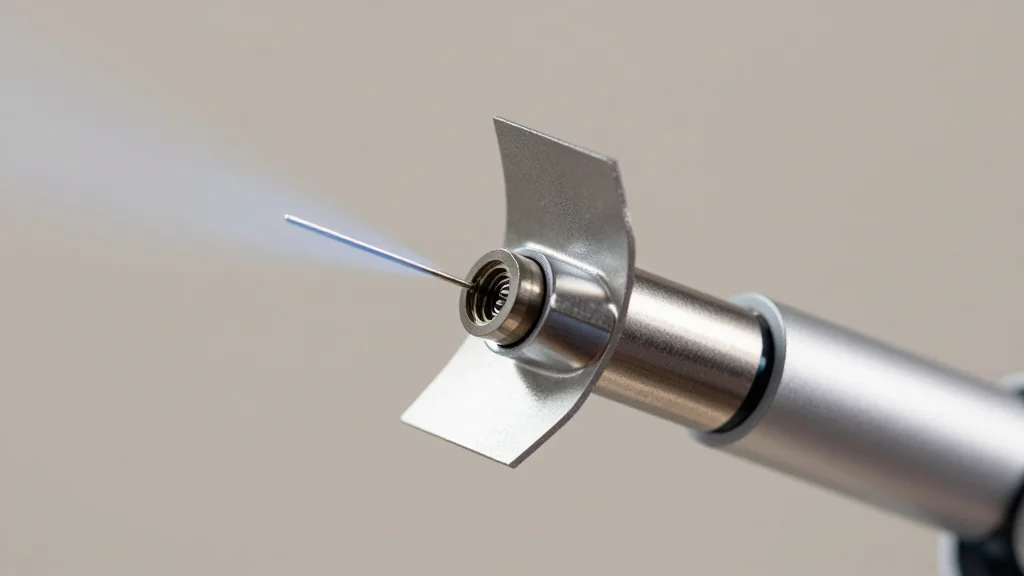
Ionic wind cooling leverages high‑voltage electric fields to generate a directed airflow without moving parts, offering a lightweight alternative to traditional fans or liquid cooling. In the context of SMA actuators, which rely on rapid heating and cooling to switch phases, this method provides localized heat extraction that shortens the cooling half‑cycle by orders of magnitude. The researchers’ comparative study of needle‑ring and needle‑plate configurations demonstrated that the former achieves comparable thermal performance while occupying less space, a crucial factor for soft‑robotic platforms that must remain flexible and unobtrusive.
The integration of this cooling strategy with an origami‑inspired compression‑twisting mechanism showcases a clever synergy between material science and geometric design. By folding thin sheets into a compact, high‑torque actuator, the team achieved reversible rotations beyond 80°, a benchmark for SMA‑driven soft robots that traditionally suffer from sluggish response. The modular nature of the design allows multiple units to be linked, forming a reconfigurable arm that can simultaneously twist, bend, and grasp objects. This multi‑modal capability addresses a long‑standing limitation in soft robotics, where achieving diverse motions often requires separate actuation subsystems.
From a market perspective, the ability to deliver high‑frequency SMA actuation in a compact package opens doors to applications ranging from minimally invasive surgical tools to adaptive manufacturing fixtures. Industries that demand rapid, precise motion without sacrificing payload capacity stand to benefit, as the ionic wind system adds only modest power overhead. Moreover, the solid‑state nature of the cooling method enhances reliability and reduces maintenance, aligning with the durability expectations of commercial robotics. As the technology matures, scaling the electrode arrays and optimizing power electronics could further lower energy consumption, making ionic wind‑cooled SMA actuators a compelling choice for next‑generation soft‑robotic solutions.
Ionic Wind Cooling Enables High‐Frequency Shape Memory Alloy Actuators for Origami‐Inspired Soft Robotics
Comments
Want to join the conversation?
Loading comments...