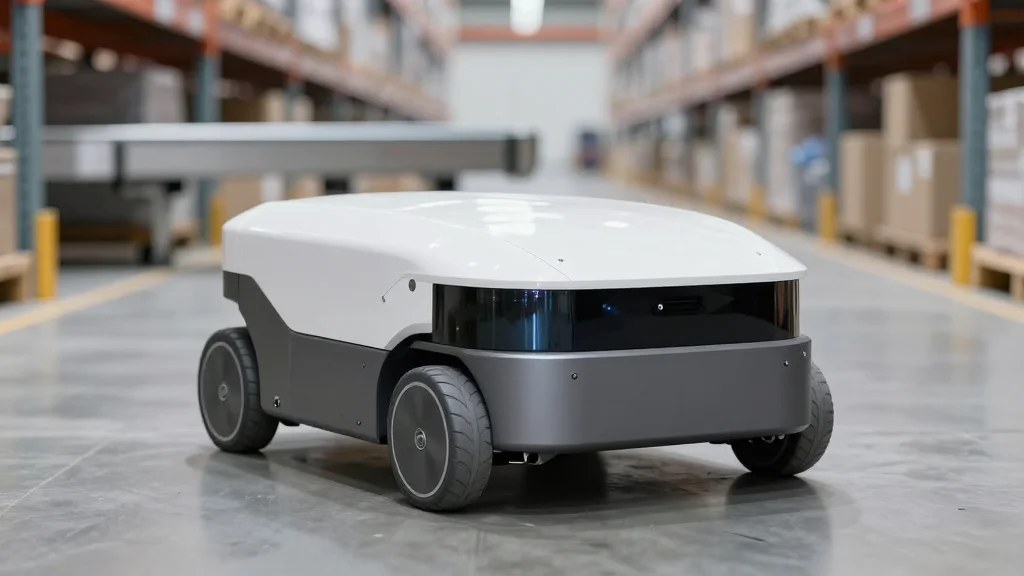
Isembard and Dexory Team Up to Scale Industrial Robot Production

Companies Mentioned
Why It Matters
The Isembard‑Dexory alliance tackles a core friction point in robotics: the gap between prototype and mass production. By marrying Dexory’s AI‑enabled robot platform with Isembard’s software‑centric manufacturing network, the partnership promises to shrink time‑to‑market and lower unit costs, making autonomous logistics solutions more accessible to mid‑size shippers. This could accelerate the broader digital transformation of supply chains, driving efficiency gains and reducing labor reliance in a sector facing chronic workforce shortages. Beyond logistics, the model demonstrates how robotics firms can achieve sovereign manufacturing footprints in multiple regions without the heavy capital outlay of building new factories. If replicated, it could spur a wave of cross‑border collaborations that diversify supply chains, mitigate geopolitical risk, and foster a more resilient global robotics ecosystem.
Key Takeaways
- •Isembard will manufacture Dexory robot components at sites in London, Exeter, Gosport, Texas and Missouri.
- •Production target: thousands of autonomous warehouse robots per year by the end of 2027.
- •Partnership leverages Isembard’s software‑driven factory network to shorten design‑to‑production cycles.
- •Dexory’s robots provide continuous real‑time inventory data, enhancing AI‑driven logistics decisions.
- •Both firms aim to deliver the first mass‑produced units by mid‑2025, with annual performance reviews.
Pulse Analysis
The Isembard‑Dexory deal is a textbook example of the ‘fab‑as‑a‑service’ model gaining traction in capital‑intensive hardware sectors. Historically, robotics startups have struggled to raise the billions needed for dedicated production lines, often stalling after successful prototype demonstrations. By outsourcing to a partner that already operates a distributed, software‑controlled manufacturing footprint, Dexory sidesteps the classic chicken‑and‑egg problem of needing volume to justify factories versus needing factories to achieve volume.
From a market perspective, the partnership could compress the logistics automation adoption curve. Current estimates suggest that only 10‑15% of global warehouse space is equipped with autonomous mobile robots, a figure that industry analysts expect to double within five years. The added capacity from Isembard may help meet that demand surge, especially as retailers grapple with post‑pandemic e‑commerce growth and labor shortages. Moreover, the dual‑region production strategy mitigates supply‑chain risks that have plagued other hardware sectors, such as semiconductors, by diversifying geographic exposure.
Looking forward, the success of this collaboration will likely influence venture capital allocation in robotics. Investors may favor startups that pair innovative AI or sensor technologies with proven manufacturing partners, reducing the perceived risk of scaling. If Isembard can deliver on its promise of rapid, software‑driven scaling, we could see a wave of similar alliances, reshaping the competitive landscape from vertically integrated giants to a more modular ecosystem of specialized innovators.
Isembard and Dexory Team Up to Scale Industrial Robot Production
Comments
Want to join the conversation?
Loading comments...