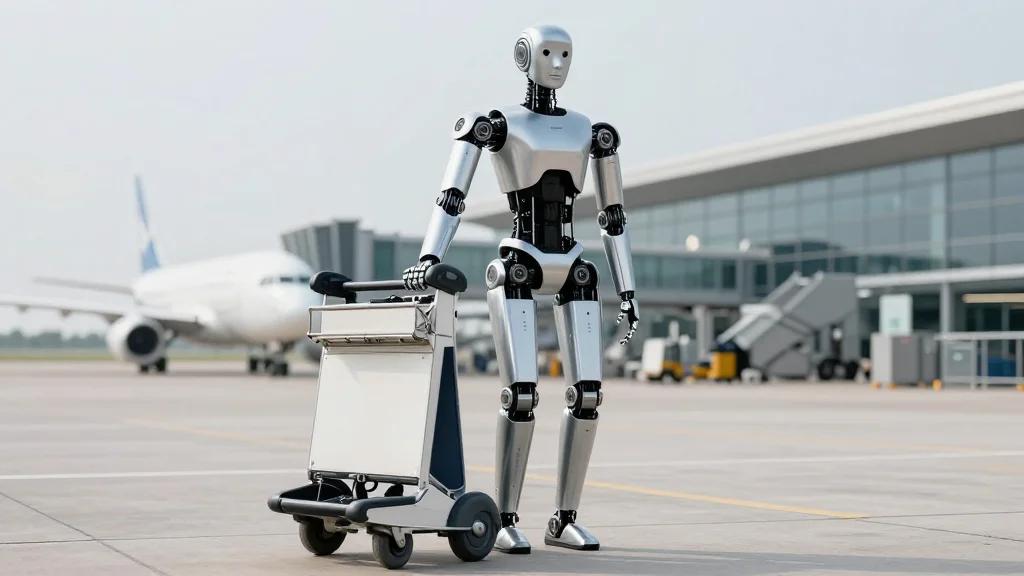
Japan Airlines Deploys Chinese Humanoid Robots at Haneda in First Large-Scale Trial

Companies Mentioned
Why It Matters
The Haneda trial tackles two intertwined challenges: Japan’s acute labor shortage in the aviation sector and the global race to commercialize affordable humanoid robots. By field‑testing Chinese robots in a high‑visibility, safety‑critical setting, the experiment could validate a new business model for mid‑tier humanoids, shifting the competitive balance away from legacy Japanese firms toward fast‑moving Chinese manufacturers. A successful rollout would also demonstrate that humanoid robots can move beyond research labs into everyday service roles, potentially accelerating adoption in other labor‑intensive industries such as hospitality, retail and healthcare. Moreover, the partnership highlights the growing interdependence of Asian tech ecosystems. China’s ability to export advanced robotics to a market as demanding as Japan signals a maturation of its supply chain, while Japan’s openness to foreign solutions reflects a pragmatic response to demographic pressures. The outcome will likely influence policy decisions on automation subsidies, cross‑border technology standards, and future investment flows in the robotics sector.
Key Takeaways
- •Japan Airlines begins a two‑year trial of Chinese humanoid robots at Haneda Airport in May 2026.
- •Unitree G1 (1.3 m, 35 kg) and UBTech Walker E (1.72 m, 73 kg) will handle baggage, cargo, towing and cleaning.
- •The trial runs through 2028 and is conducted with GMO AI & Robotics.
- •Japan’s aviation industry faces a labor shortage driven by a shrinking workforce and rising tourism.
- •Success could open new markets for Chinese robot makers and reshape Japan’s domestic robotics strategy.
Pulse Analysis
The Haneda deployment is more than a pilot; it is a strategic inflection point for the robotics value chain in Asia. Historically, Japan’s dominance in humanoid robotics—exemplified by Honda’s ASIMO and SoftBank’s Pepper—has been underpinned by a strong domestic supply base and a culture of incremental innovation. However, the high cost and limited scalability of those platforms left a gap that Chinese firms have been quick to fill with lower‑priced, mass‑produced units. Unitree and UBTech have leveraged economies of scale and aggressive pricing to produce robots that, while less sophisticated than their Japanese predecessors, meet the functional thresholds required for logistics work.
From a market perspective, the trial offers a rare data point on total cost of ownership (TCO) for humanoids in a live airport environment. If Japan Airlines can demonstrate a measurable reduction in labor expenses—say, a 10‑15% saving on ground‑handling staff—while maintaining safety and throughput, the economics will become compelling for other carriers facing similar demographic headwinds. This could trigger a cascade of procurement contracts across the region, effectively turning the Haneda test into a de‑facto standard‑setter.
Strategically, the move also forces Japanese robotics firms to reassess their product roadmaps. The pressure to compete on price and rapid deployment may accelerate collaborations between Japanese AI specialists and Chinese hardware manufacturers, or push incumbents to innovate faster in areas like autonomous navigation and AI‑driven perception. In the broader geopolitical context, the partnership underscores a pragmatic shift: technology transfer is increasingly dictated by market need rather than national allegiance. The outcome of this trial will likely inform not only corporate strategies but also policy frameworks governing cross‑border robotics deployment in critical infrastructure.
Japan Airlines Deploys Chinese Humanoid Robots at Haneda in First Large-Scale Trial
Comments
Want to join the conversation?
Loading comments...