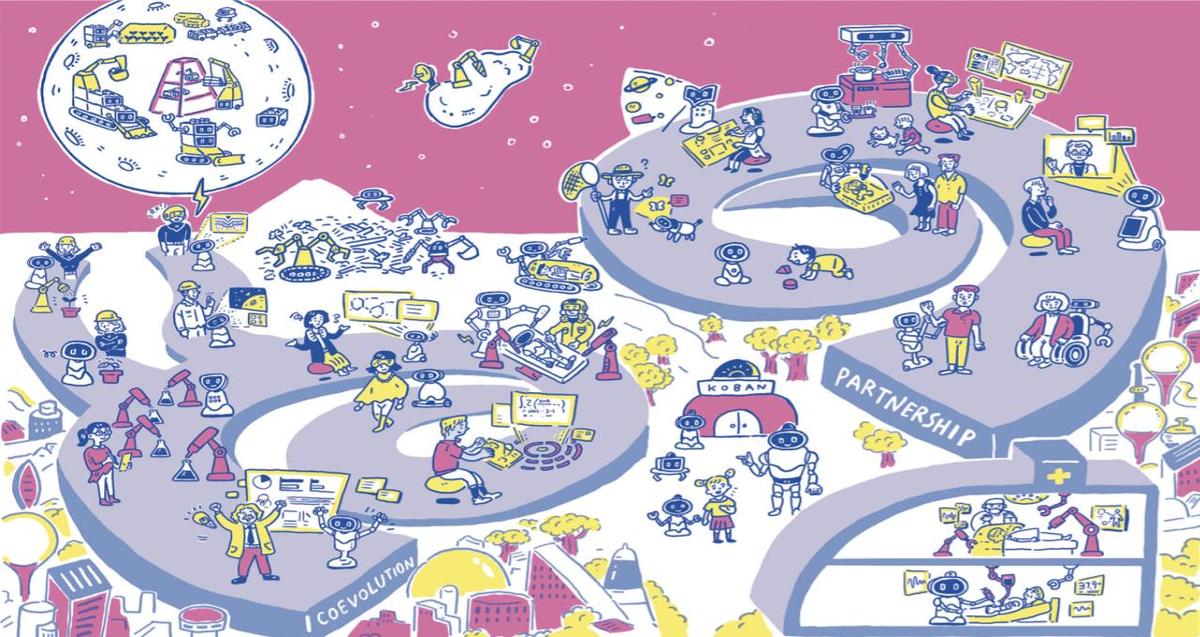
Japan Science and Technology Agency Develops NVIDIA-Powered Moonshot Robot for Elderly Care
Companies Mentioned
Why It Matters
With Japan’s elderly population soaring, autonomous care robots could alleviate labor shortages and set a global benchmark for AI‑enabled senior assistance.
Key Takeaways
- •JST's Moonshot program targets 2050 AI caregiving robots.
- •AIREC robots embed NVIDIA GPUs and Jetson Orin modules.
- •Isaac Sim accelerates training for force estimation and repositioning.
- •Research demonstrates safe patient repositioning with force prediction.
- •Showcasing progress at 2026 International Symposium on System Integration.
Pulse Analysis
Japan’s demographic shift is creating an urgent demand for scalable senior‑care solutions, and the Moonshot initiative positions the country at the forefront of this transformation. By leveraging the nation’s robust research ecosystem, the program aims to embed autonomous robots into daily life, reducing the strain on a shrinking caregiver workforce. The focus on goal No. 3—elderly care—aligns with government priorities and offers a testbed for broader applications such as early disease detection and resource circulation, reinforcing Japan’s reputation as a technology incubator.
At the hardware level, the AIREC robots showcase a dense stack of NVIDIA AI accelerators. Dry‑AIREC carries two high‑performance GPUs, while the lighter AIREC‑Basic relies on three Jetson Orin NX modules to deliver real‑time inference at the edge. Coupled with Isaac Sim’s photorealistic physics engine, developers can iterate robot behaviors virtually before deploying them on physical platforms. This simulation‑to‑reality pipeline shortens development cycles, enables precise force modeling for delicate tasks like patient repositioning, and ensures compliance with safety standards essential for human‑centric robotics.
The commercial implications extend beyond Japan’s borders. Successful deployment of AI‑driven caregiving robots could catalyze a new market segment for autonomous service robots worldwide, prompting OEMs and cloud providers to invest in specialized AI chips and robotics middleware. However, challenges remain in regulatory approval, public acceptance, and the nuanced ethics of machine‑assisted personal care. Continued breakthroughs in perception, manipulation, and human‑robot interaction will be critical to scaling these solutions from research labs to homes and care facilities globally.
Japan Science and Technology Agency Develops NVIDIA-Powered Moonshot Robot for Elderly Care
Comments
Want to join the conversation?
Loading comments...