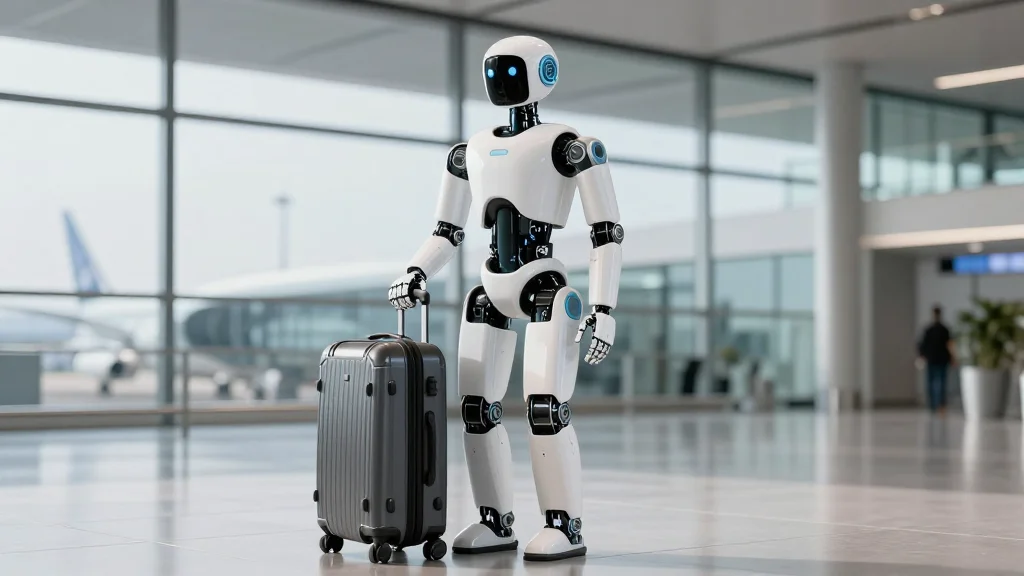
Japanese Airports Trial Humanoid Robots for Baggage Handling Amid Labor Shortage

Companies Mentioned
Why It Matters
The Haneda pilots signal a shift from niche research prototypes to commercial‑grade humanoid robots in high‑volume logistics. By proving that relatively low‑cost units can handle physically demanding tasks alongside humans, the project could accelerate adoption across airports, seaports, and warehouses worldwide, reshaping labor dynamics in sectors facing demographic headwinds. Moreover, the trial offers a real‑world testbed for safety standards, human‑robot interaction protocols, and maintenance regimes that will be critical for scaling the technology. If successful, the deployment may also influence policy debates in Japan about immigration and automation, providing a domestic alternative to foreign labour while addressing public concerns about job displacement. The experiment thus sits at the intersection of technology, economics, and social policy, making its results a reference point for governments and corporations navigating similar labor shortages.
Key Takeaways
- •Japan Airlines and GMO Internet Group began a humanoid robot trial at Haneda Airport in early May, set to run until 2028
- •Unitree G1 baseline model costs about $13,500; robots operate 2‑3 hours before recharging
- •Haneda handles >60 million passengers annually, with flights arriving roughly every two minutes
- •Ground‑crew numbers fell from 26,300 in 2019 to 23,700 in 2023, highlighting the labor gap
- •Robots will initially work in designated zones while safety‑critical tasks remain human‑controlled
Pulse Analysis
The Haneda trial arrives at a moment when the economics of robotics are finally aligning with operational needs. Historically, humanoid platforms have been dismissed as too expensive and unreliable for industrial use, but the $13,500 price point of Unitree’s G1 suggests a new cost curve driven by Chinese mass‑production capabilities. This price compression could unlock a wave of incremental automation, where robots supplement rather than replace human workers, a model that fits Japan’s cultural preference for mixed‑skill environments.
From a competitive standpoint, the partnership pits legacy airline operators against agile Chinese hardware firms. JAL gains access to cutting‑edge robotics without the R&D burden, while Unitree and UBTECH secure a high‑visibility showcase that could open doors to other global hubs. The trial’s success criteria—throughput, error rate, and worker acceptance—will likely become industry benchmarks. Should the robots meet or exceed human performance, airlines may accelerate procurement, prompting a cascade effect across logistics sectors that share similar labour constraints.
Looking ahead, the key risk lies in safety integration. Airports operate on razor‑thin margins for turnaround time; any robot‑induced delay could erode confidence quickly. Therefore, the pilot’s phased approach—identifying safe zones before broader rollout—reflects a prudent balance between innovation and operational continuity. If the safety protocols prove robust, the Haneda experiment could become a template for regulatory frameworks worldwide, paving the way for humanoid robots to transition from novelty to necessity in the global supply chain.
Japanese Airports Trial Humanoid Robots for Baggage Handling Amid Labor Shortage
Comments
Want to join the conversation?
Loading comments...