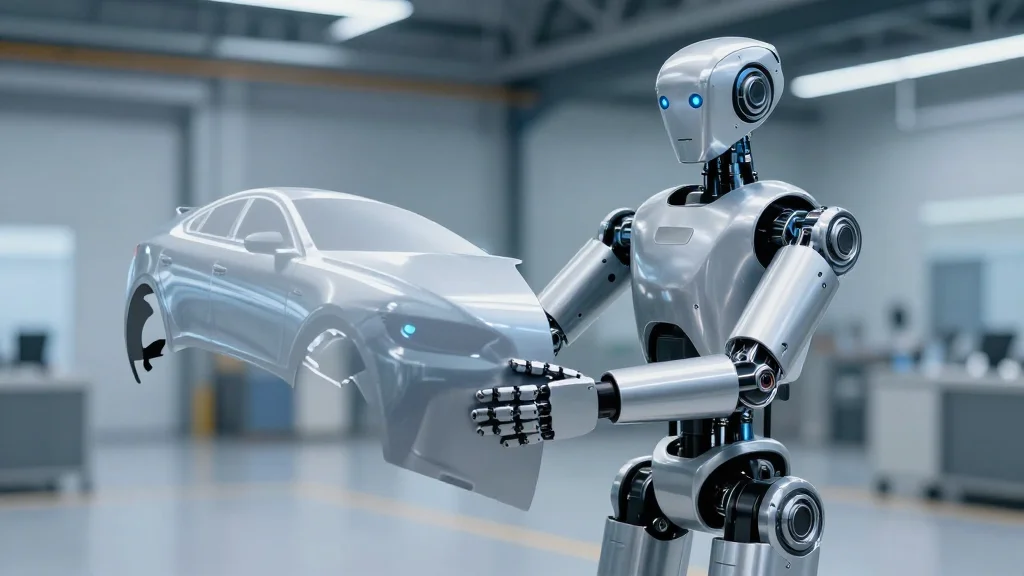
Kia to Deploy Boston Dynamics' Atlas Humanoids on Georgia Assembly Line in 2029

Companies Mentioned

Why It Matters
The deployment of Atlas humanoids at Kia’s Georgia plant represents a watershed moment for industrial robotics, moving the technology from research labs into high‑volume automotive production. Success could validate the economic case for humanoid robots in tasks that are difficult for traditional arms, potentially reshaping labor models and prompting other manufacturers to accelerate similar programs. Beyond the factory floor, Kia’s integration of Atlas with PBVs, Spot and Stretch points to a convergent ecosystem where manufacturing, logistics and last‑mile delivery are tightly linked through robotics. This could spur new business models, drive demand for advanced AI control stacks, and accelerate standards for safety and human‑robot collaboration across the supply chain.
Key Takeaways
- •Kia will install Atlas humanoid robots at its Georgia plant in H2 2029, covering 16 core assembly tasks.
- •Boston Dynamics' Jae Kowalski confirmed the 16‑process deployment plan for overseas automotive sites.
- •Kia’s five‑year robotics, autonomous driving and SDV investment totals $15.7 billion, 43% of its $36.7 billion capital plan.
- •The rollout follows Hyundai’s 2028 Atlas pilot, intensifying competition among Korean OEMs.
- •Kia aims to pair Atlas with PBVs, Spot and Stretch robots for an integrated manufacturing‑to‑delivery service by 2031.
Pulse Analysis
Kia’s Atlas rollout is more than a headline; it is a strategic bet that humanoid robots can deliver measurable ROI in a sector where marginal gains translate into billions of dollars. Historically, automotive factories have relied on fixed‑axis robotic arms for repetitive tasks. Atlas, with its bipedal mobility and dexterity, promises to fill gaps where flexibility and reach are essential—areas that have traditionally required skilled human labor. If Kia can demonstrate cost parity or superiority, the technology could unlock new production layouts, reduce line retooling time, and mitigate labor shortages in high‑skill roles.
The competitive dynamic with Hyundai adds urgency. Both firms are leveraging the same Boston Dynamics platform, but Kia’s broader ecosystem—linking Atlas to PBVs, Spot and Stretch—creates a more holistic value proposition that extends beyond the shop floor. This integrated approach may set a new benchmark for end‑to‑end automation, compelling suppliers and software partners to develop interoperable solutions. Moreover, Kia’s partnership with NVIDIA for massive data collection underscores the importance of AI‑driven optimization in extracting performance from humanoid fleets.
Looking forward, the market will gauge success by throughput improvements, defect reduction, and total cost of ownership. Regulators will also scrutinize safety protocols for robots operating alongside humans. Should Kia meet its targets, we could see a cascade of humanoid deployments across sectors such as aerospace, electronics and consumer goods, accelerating the broader shift toward flexible, AI‑augmented manufacturing.
Kia to Deploy Boston Dynamics' Atlas Humanoids on Georgia Assembly Line in 2029
Comments
Want to join the conversation?
Loading comments...