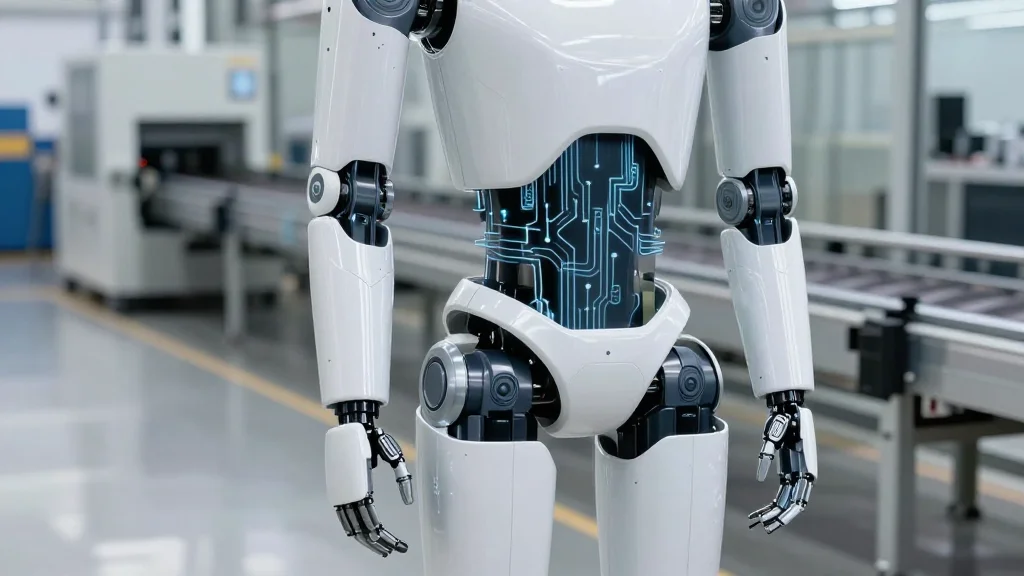
Kia to Test Boston Dynamics' Atlas Humanoid Robots at Georgia Plants Starting 2028

Companies Mentioned

Why It Matters
The planned deployment of Atlas marks the first large‑scale field test of a humanoid robot in a high‑volume automotive factory, moving the technology from research labs into real production environments. Success could validate the economic case for humanoids in heavy‑duty manufacturing, potentially reshaping labor strategies and supply‑chain resilience for automakers worldwide. Moreover, Hyundai's commitment to produce 30,000 units annually signals confidence that the market for industrial humanoids could expand beyond niche applications, prompting competitors to accelerate their own robotics programs. For the broader robotics ecosystem, the pilots provide a rare data set on how humanoid platforms handle repetitive, high‑force tasks at scale. The outcomes will inform standards for safety, integration with existing automation lines, and the design of future generations of collaborative robots that can work side‑by‑side with human operators in complex assembly settings.
Key Takeaways
- •Kia will test Boston Dynamics' Atlas robot at Hyundai's Metaplant America in Georgia in 2028.
- •A second Atlas pilot is scheduled for Kia's Georgia plant in 2029.
- •Hyundai aims to mass‑produce 30,000 humanoid units annually by 2028.
- •No IPO timing for Boston Dynamics has been decided; investment ratios between Hyundai and Kia remain under review.
- •Successful pilots could enable rapid rollout across global vehicle plants with similar layouts.
Pulse Analysis
Kia's announcement is more than a corporate PR move; it signals a strategic bet that humanoid robots can solve a specific bottleneck in automotive assembly—handling heavy, ergonomically challenging components. Historically, industrial robots have excelled in repetitive, high‑precision tasks, but their limited dexterity and reach have kept them out of many human‑centric operations. Atlas, with its bipedal form factor, promises to bridge that gap, offering a flexible platform that can navigate existing workstations without extensive retooling.
The timing aligns with a broader industry push toward automation amid tightening labor markets and rising wage pressures in the United States. By targeting Georgia, a state with a growing automotive hub, Kia and Hyundai can benchmark performance against a backdrop of skilled labor scarcity. If Atlas can demonstrably reduce cycle times or improve safety, the business case for scaling to 30,000 units per year becomes compelling, potentially unlocking a new revenue stream for Hyundai Motor Group and justifying the capital outlay for mass production facilities.
However, the path forward is fraught with challenges. Humanoid robots must meet stringent safety standards, integrate with legacy PLC systems, and prove reliability under continuous operation—metrics that have historically tripped up early adopters. Moreover, the lack of a clear IPO timeline for Boston Dynamics suggests that the parent company is still gauging market appetite for a publicly traded robotics entity. Investors will be watching the 2028‑2029 pilots closely; positive results could accelerate capital market interest, while setbacks might delay or even derail the planned mass‑production rollout. In any case, Kia's move puts the spotlight on humanoid robotics as the next frontier of factory automation.
Kia to Test Boston Dynamics' Atlas Humanoid Robots at Georgia Plants Starting 2028
Comments
Want to join the conversation?
Loading comments...