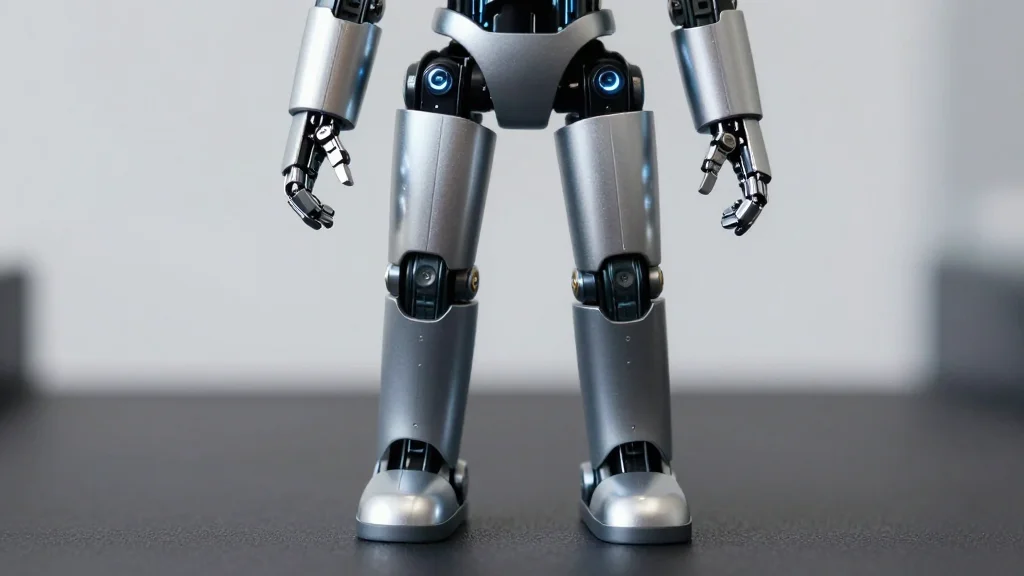
KIMM Unveils KAIROS Humanoid Robot on 50th Anniversary, Aiming to Lead Intelligent Machine Era

Why It Matters
KAIROS marks a tangible step toward Korea’s ambition to become a global hub for humanoid robotics, a sector traditionally dominated by Japan, Europe, and the United States. By integrating advanced AI with a human‑like form factor, the platform could accelerate the deployment of collaborative robots in sectors where safety and flexibility are paramount, such as healthcare, eldercare, and precision manufacturing. The robot also serves as a litmus test for the K‑Moonshot initiative, which seeks to blend government policy, academic research, and private investment into a cohesive innovation pipeline. If KAIROS demonstrates commercial viability, it could unlock further public funding and attract multinational partners, reshaping the competitive dynamics of the robotics industry in East Asia.
Key Takeaways
- •KIMM unveiled the AI humanoid KAIROS at its 50th‑anniversary ceremony in Daejeon.
- •KAIROS is the flagship of the K‑Moonshot national strategic technology project.
- •President Ryu Seok‑hyun emphasized the institute’s 50‑year vision to lead the intelligent‑machine era.
- •The robot is designed for human‑compatible movement, real‑time perception, and adaptive learning.
- •Field trials are planned for late 2026 in a hospital and an automotive assembly line.
Pulse Analysis
KAIROS arrives at a moment when the global robotics market is transitioning from isolated automation cells to integrated, AI‑driven collaborators. Historically, South Korea’s strength has lay in high‑volume manufacturing robots, but the country has lagged in humanoid platforms that can safely operate alongside people. By unveiling KAIROS, KIMM signals a strategic pivot toward the higher‑margin, service‑oriented segment of the market, where human‑robot interaction (HRI) is a differentiator.
The K‑Moonshot framework mirrors similar national initiatives in China and Japan, yet it distinguishes itself by mandating open‑source AI components and a developer‑first approach. If KIMM can deliver a robust SDK and foster a community around KAIROS, it could create a network effect that lowers entry barriers for startups and accelerates innovation cycles. This could erode the dominance of established players like Boston Dynamics and SoftBank Robotics, especially in Asian markets that value domestic supply chains and data sovereignty.
However, the robot’s success hinges on more than technical prowess. Adoption will depend on clear value propositions for end users, regulatory approvals for safety, and the ability to scale production cost‑effectively. KIMM’s next challenge will be to translate the prototype into a commercially viable product line, a step that will test the efficacy of the public‑private partnership model underpinning K‑Moonshot. The coming months of field trials and developer outreach will be critical indicators of whether KAIROS can move from a showcase to a market‑ready solution.
KIMM Unveils KAIROS Humanoid Robot on 50th Anniversary, Aiming to Lead Intelligent Machine Era
Comments
Want to join the conversation?
Loading comments...