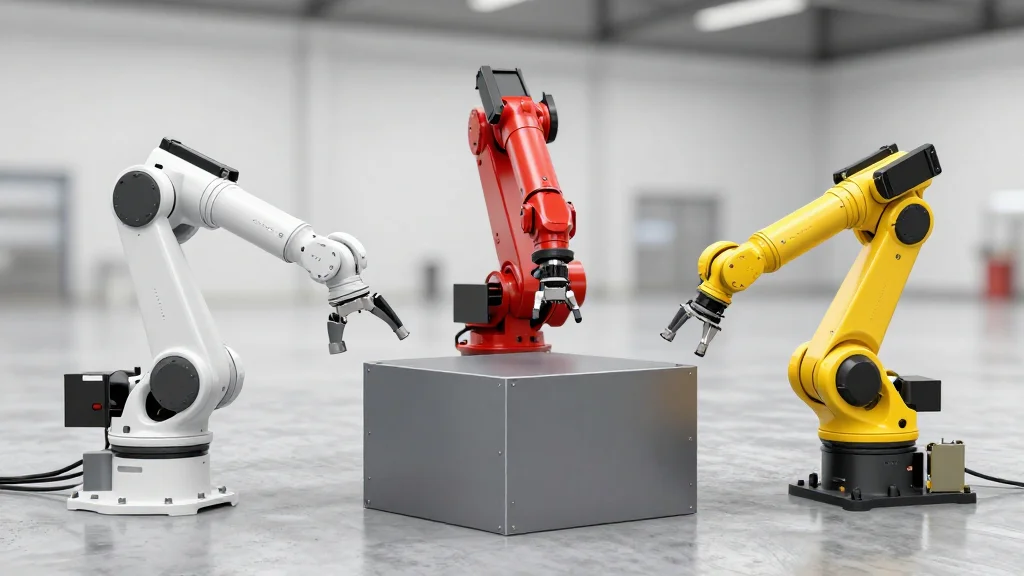
Kinematic Intelligence Lets Three Different Robots Learn the Same Task Safely
Why It Matters
By enabling cross‑robot skill transfer without bespoke coding, manufacturers can reduce downtime and labor costs, accelerating adoption of flexible automation. The approach also supports sustainable fleet upgrades as hardware evolves.
Key Takeaways
- •Kinematic intelligence converts human demos into robot-agnostic movement strategies
- •Three distinct commercial robots reproduced a push‑place‑throw task safely
- •Framework automatically adapts motions to each robot’s joint limits
- •Eliminates need for robot‑specific reprogramming during fleet upgrades
- •Future extensions target natural‑language commands and human‑robot collaboration
Pulse Analysis
Manufacturers have long wrestled with the costly reality that each new robot often requires a fresh programming effort, even when the machines perform similar functions. This fragmentation hampers scalability and inflates the total cost of ownership, especially as production lines evolve to meet changing market demands. The ability to transfer a learned skill across heterogeneous platforms promises a more sustainable model, where software investments retain value despite hardware turnover, aligning with broader Industry 4.0 goals of flexibility and efficiency.
The kinematic intelligence framework tackles the transfer problem by first capturing a human demonstration with motion‑capture sensors and converting it into a mathematically abstracted movement plan. A systematic classification of each robot’s mechanical constraints—joint ranges, stability margins, and actuation limits—feeds an algorithm that reshapes the abstract plan into robot‑specific trajectories that remain within safe operating envelopes. In a controlled experiment, three robots with differing kinematics successfully executed a sequence of pushing a block off a conveyor, placing it on a bench, and throwing it into a basket, demonstrating both safety and reliability without manual retuning.
Beyond the laboratory, this technology could reshape how factories deploy automation. By removing the need for specialist programmers, firms can accelerate robot rollouts, lower labor expenses, and respond faster to product variations. Future integrations with natural‑language interfaces may let operators issue commands like “move the part to the inspection station” without writing code, opening doors to collaborative human‑robot workspaces. As robotic hardware continues to advance, a transferable skill layer ensures that software assets remain future‑proof, making large‑scale automation more economically viable for a wider range of industries.
Kinematic intelligence lets three different robots learn the same task safely
Comments
Want to join the conversation?
Loading comments...